Rock Climbing with Rainier Athletes
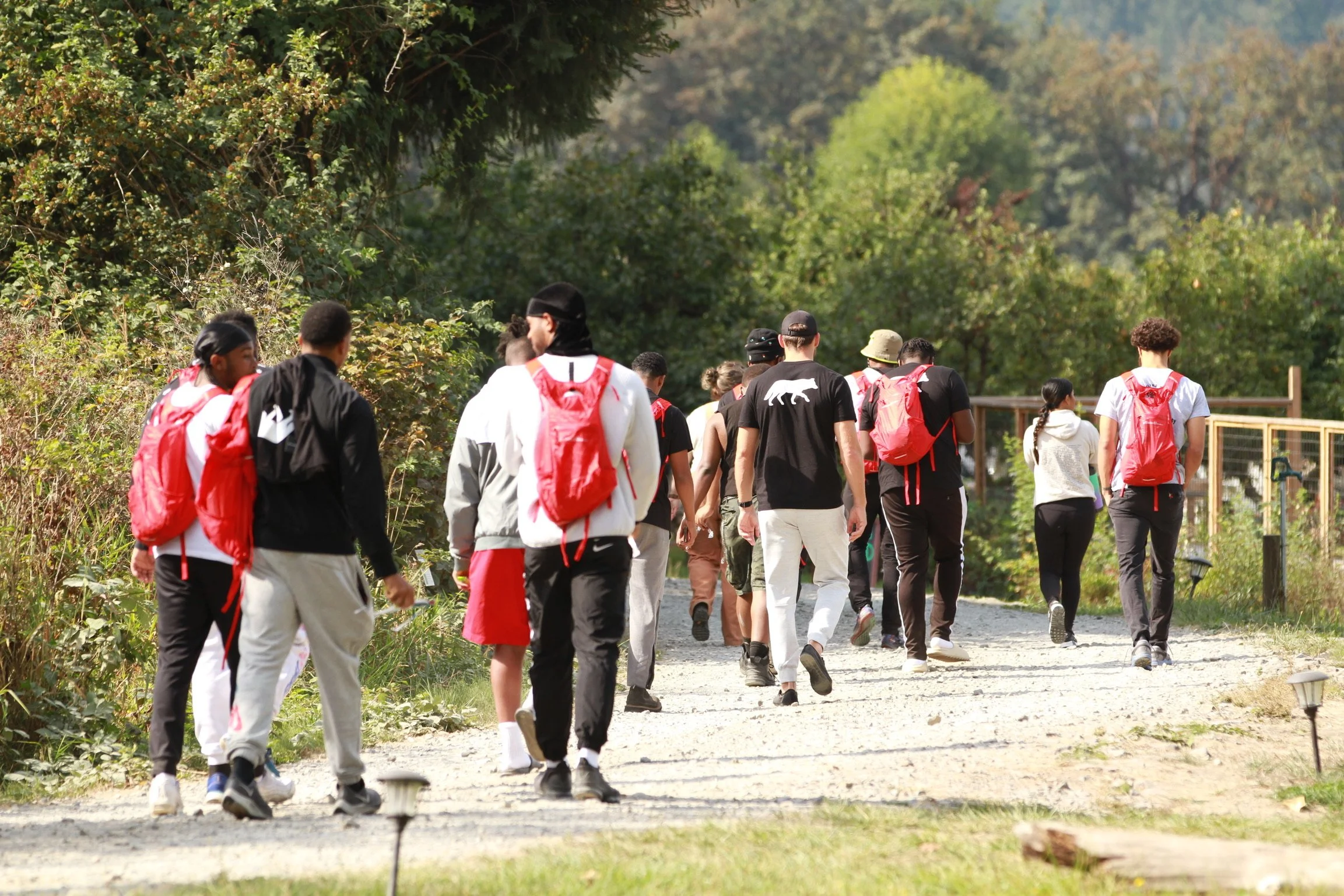
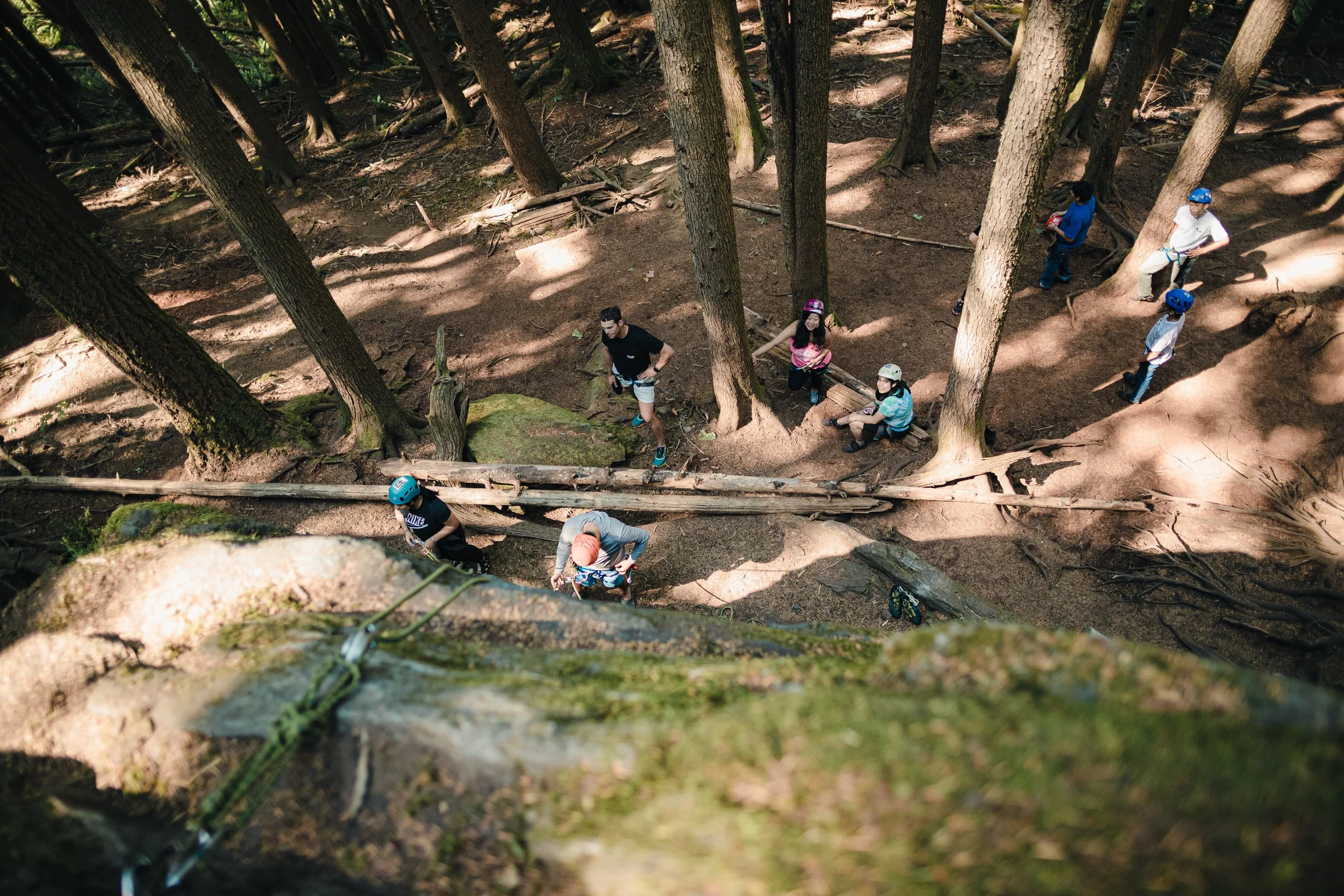
The forest on the way up was green and lush, the kind of quiet that asked you to slow down and pay attention. We asked the teens to walk in silence through the woods to the rock wall. Silence is not something any of us get very often in our lives, and there was something in that walk, just the sound of feet on the trail and trees overhead, that began to shift something before the day had even officially started.
Mt Baker Snoqualamie Forest, WA
Challenge by Choice
The Nature Project x Rainier Athletes x The Mountaineers
The forest on the way up was green and lush, the kind of quiet that asked you to slow down and pay attention. We asked the teens to walk in silence through the woods to the rock wall. Silence is not something any of us get very often in our lives, and there was something in that walk, just the sound of feet on the trail and trees overhead, that began to shift something before the day had even officially started.
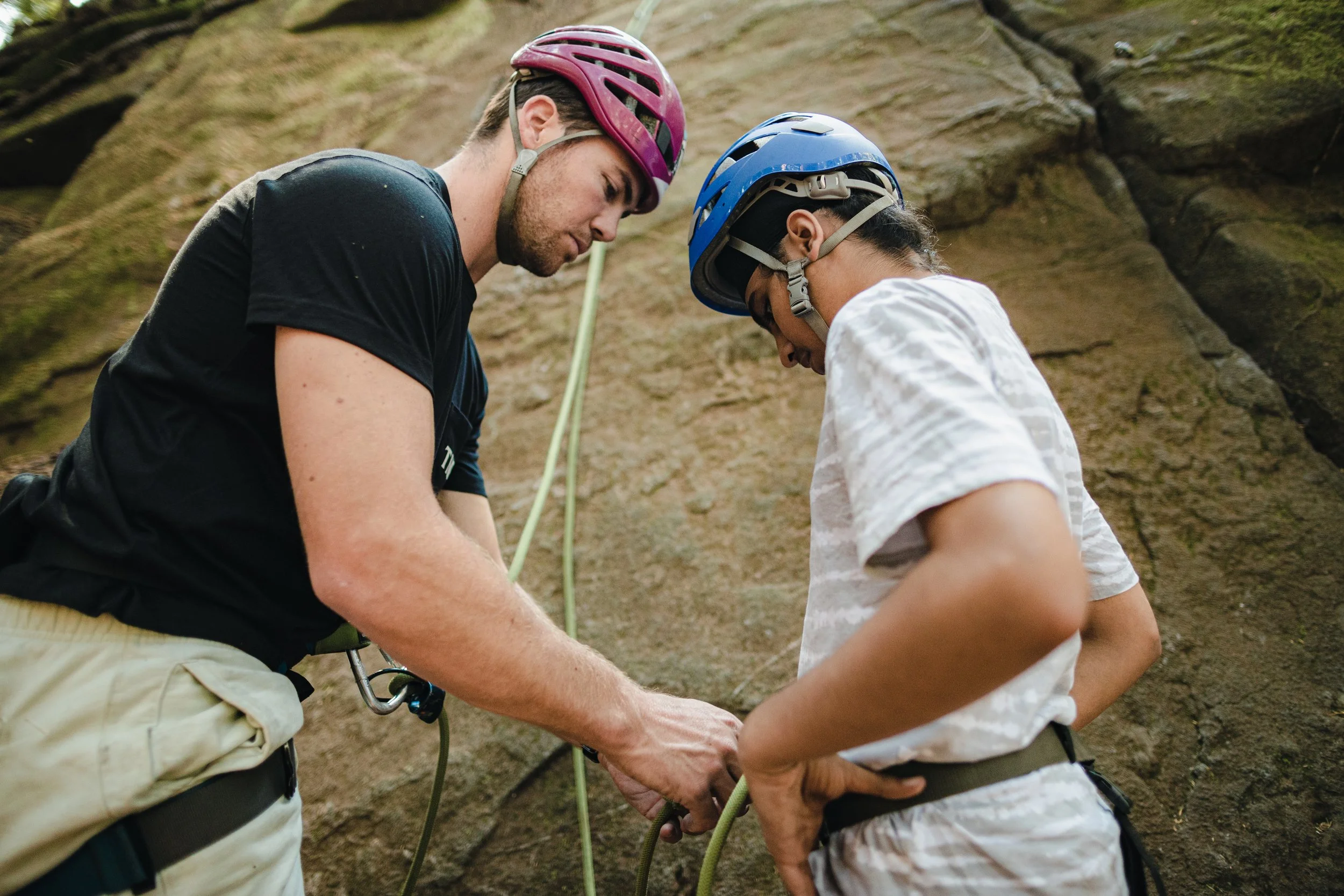
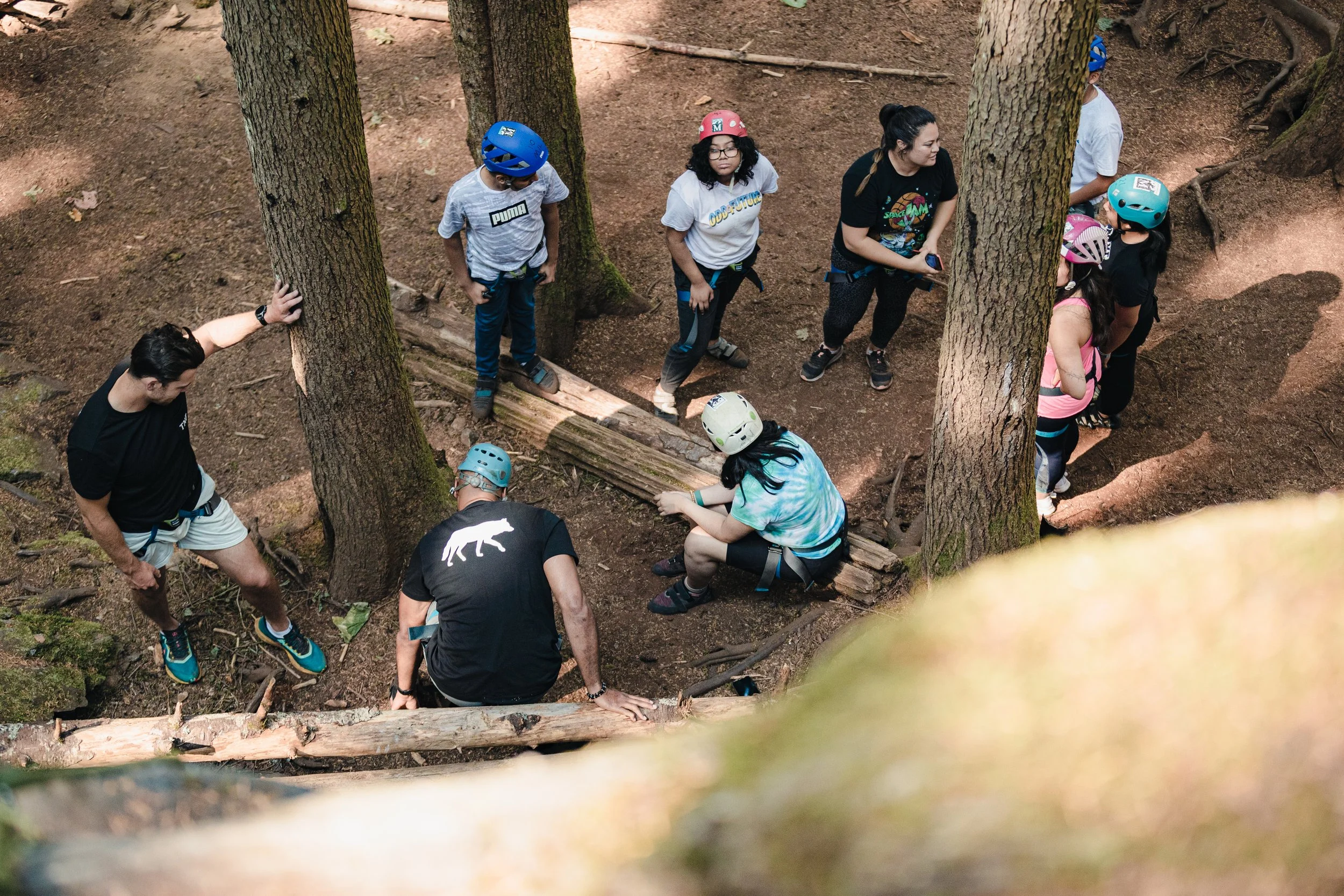
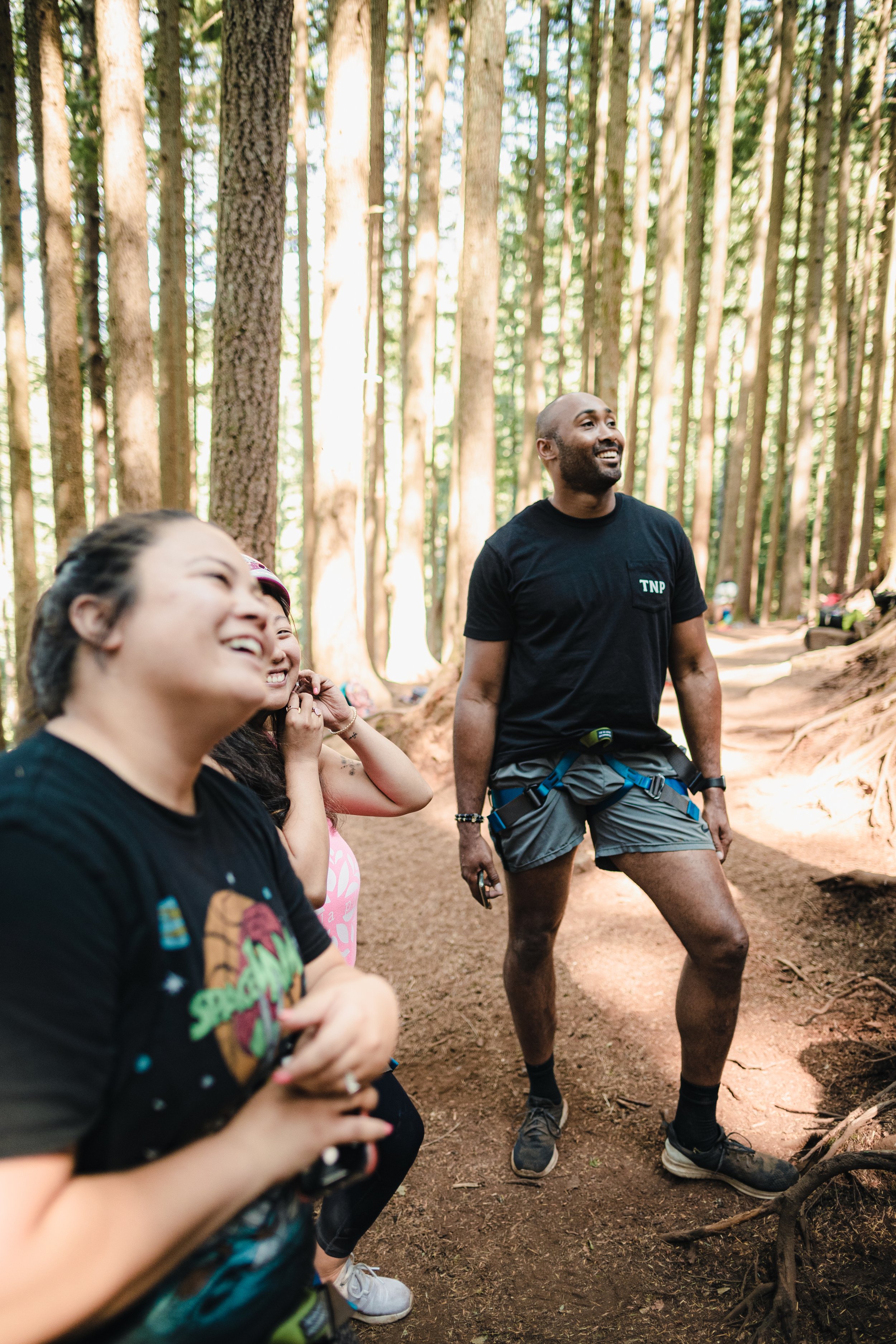
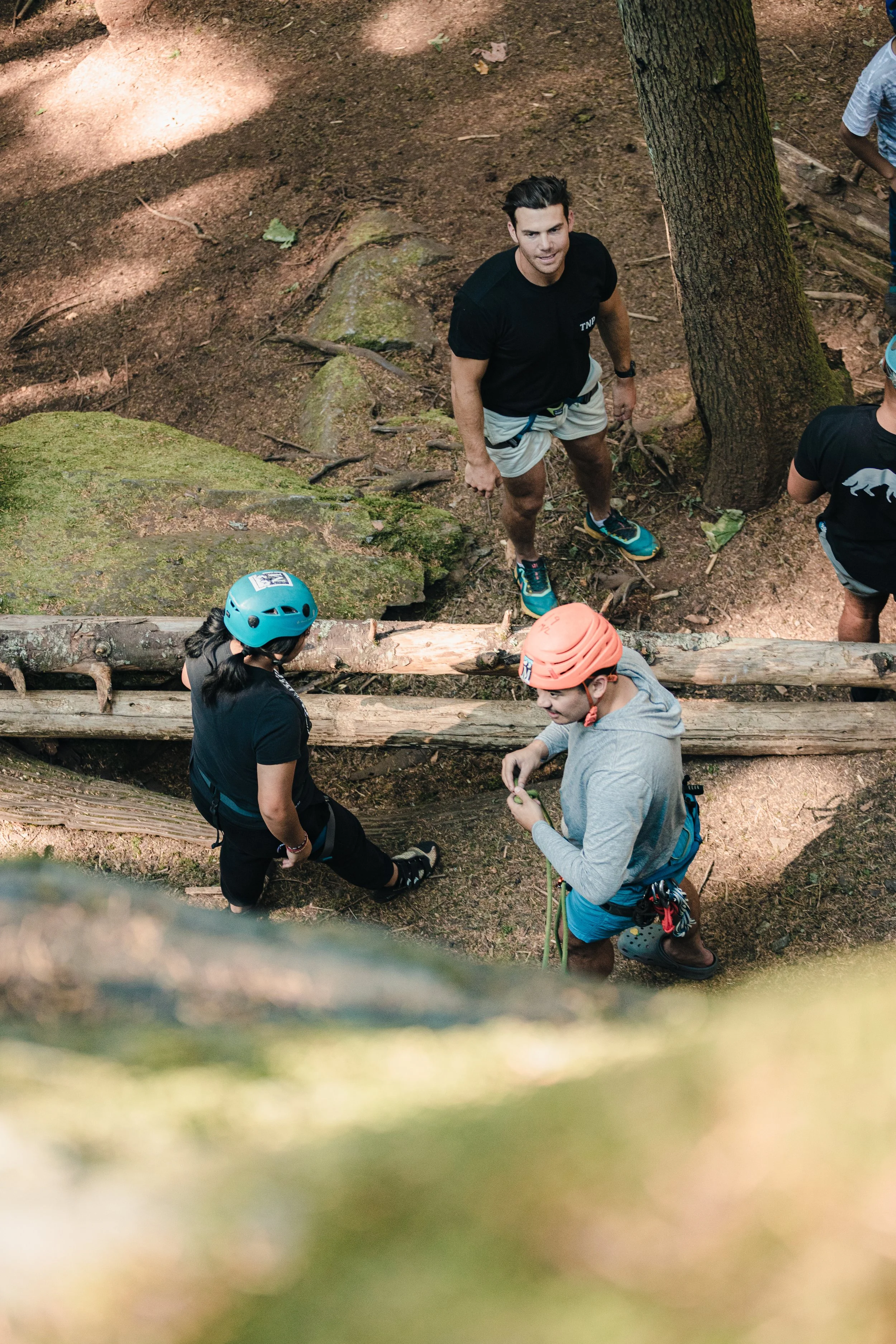
Once the group arrived, TNP volunteer and mindset and yoga instructor Angeline Corpuz gathered everyone together to circle up. Before anything else, before the harnesses and the helmets, there was breathwork and intention-setting. What did you want to carry with you today? What did you want to leave behind? The Rainier Athletes teens arrived as individuals and left the circle as a group ready to move together.
They carried their gear up as a team. Not because they had to, but because that's what being part of something means.
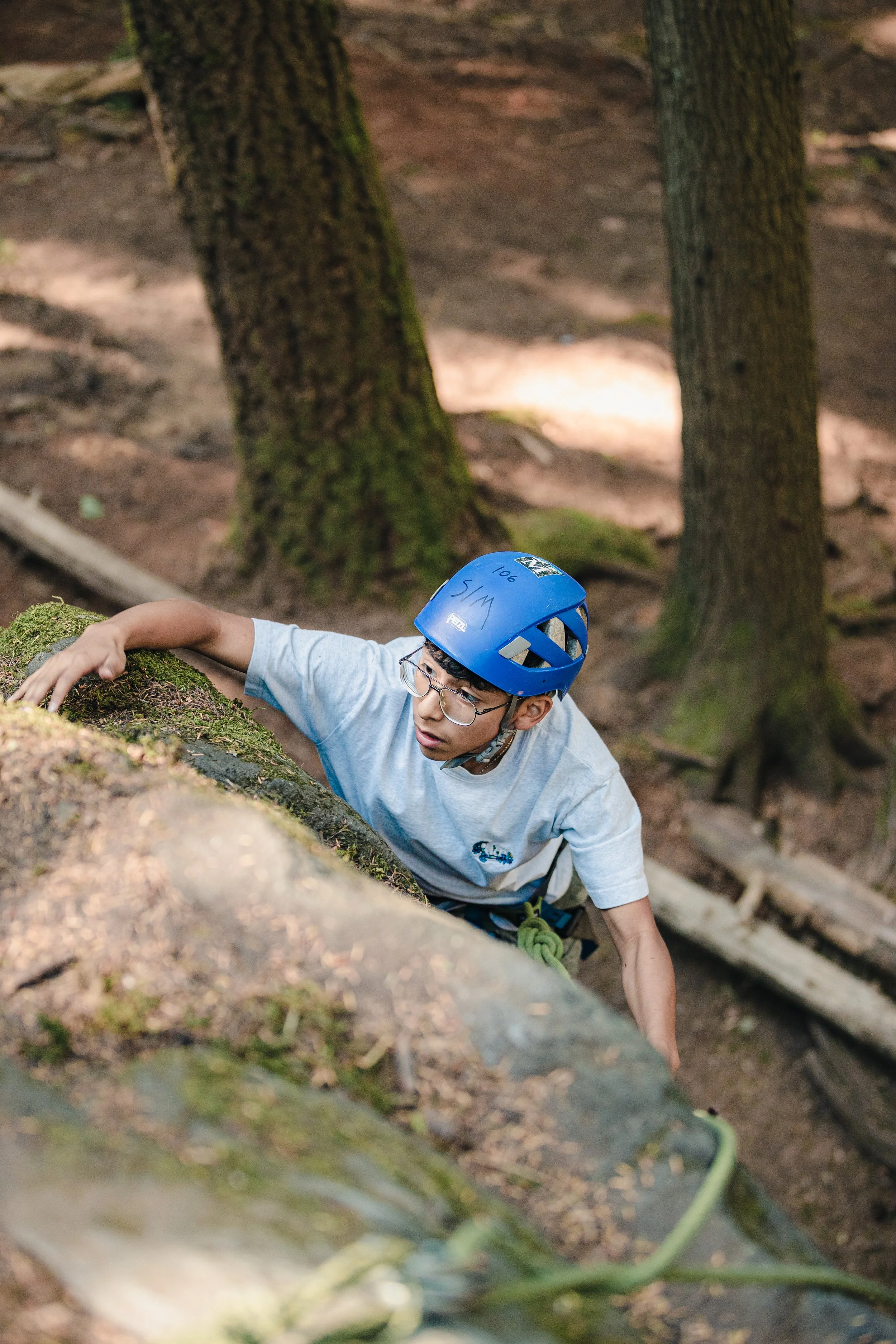
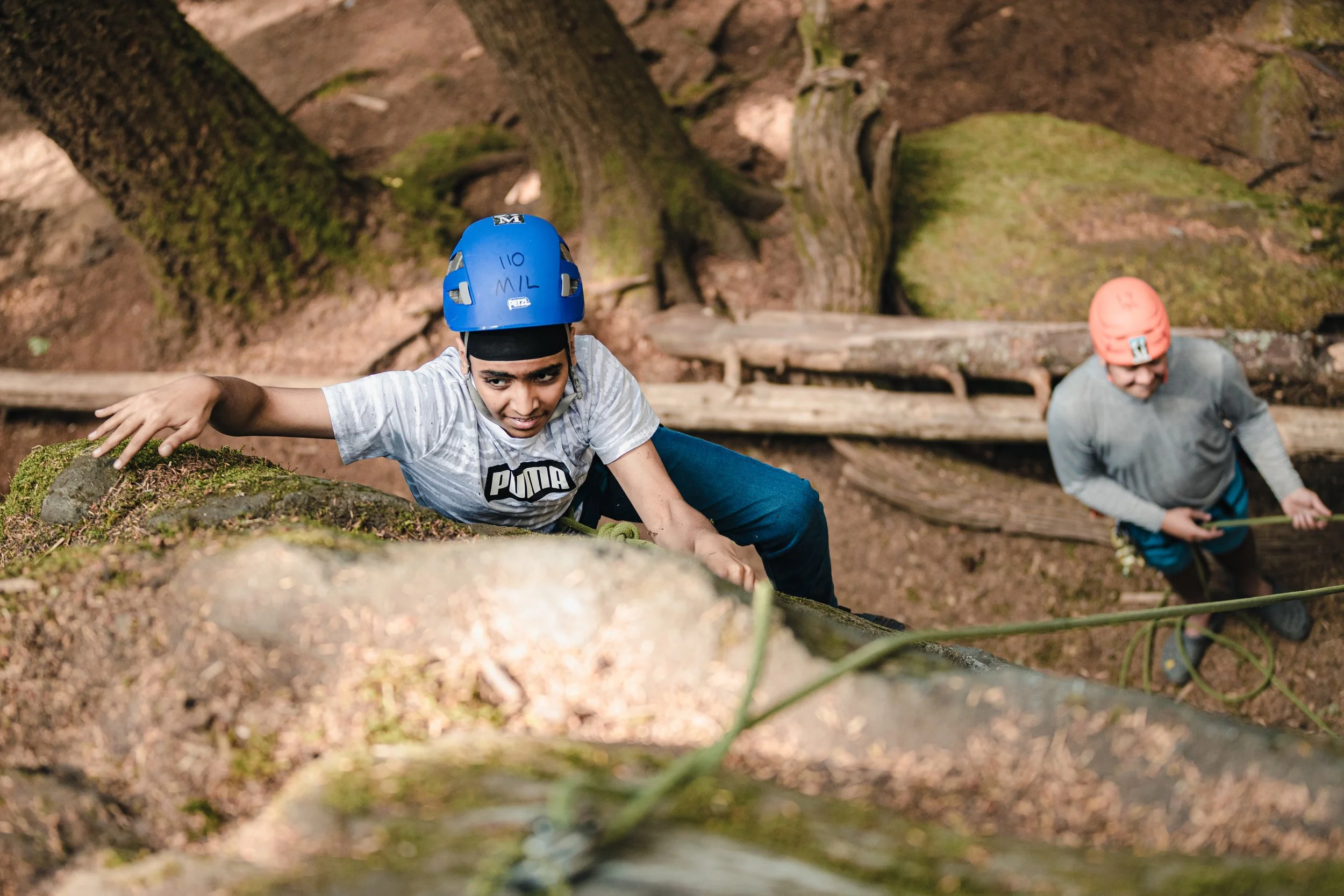
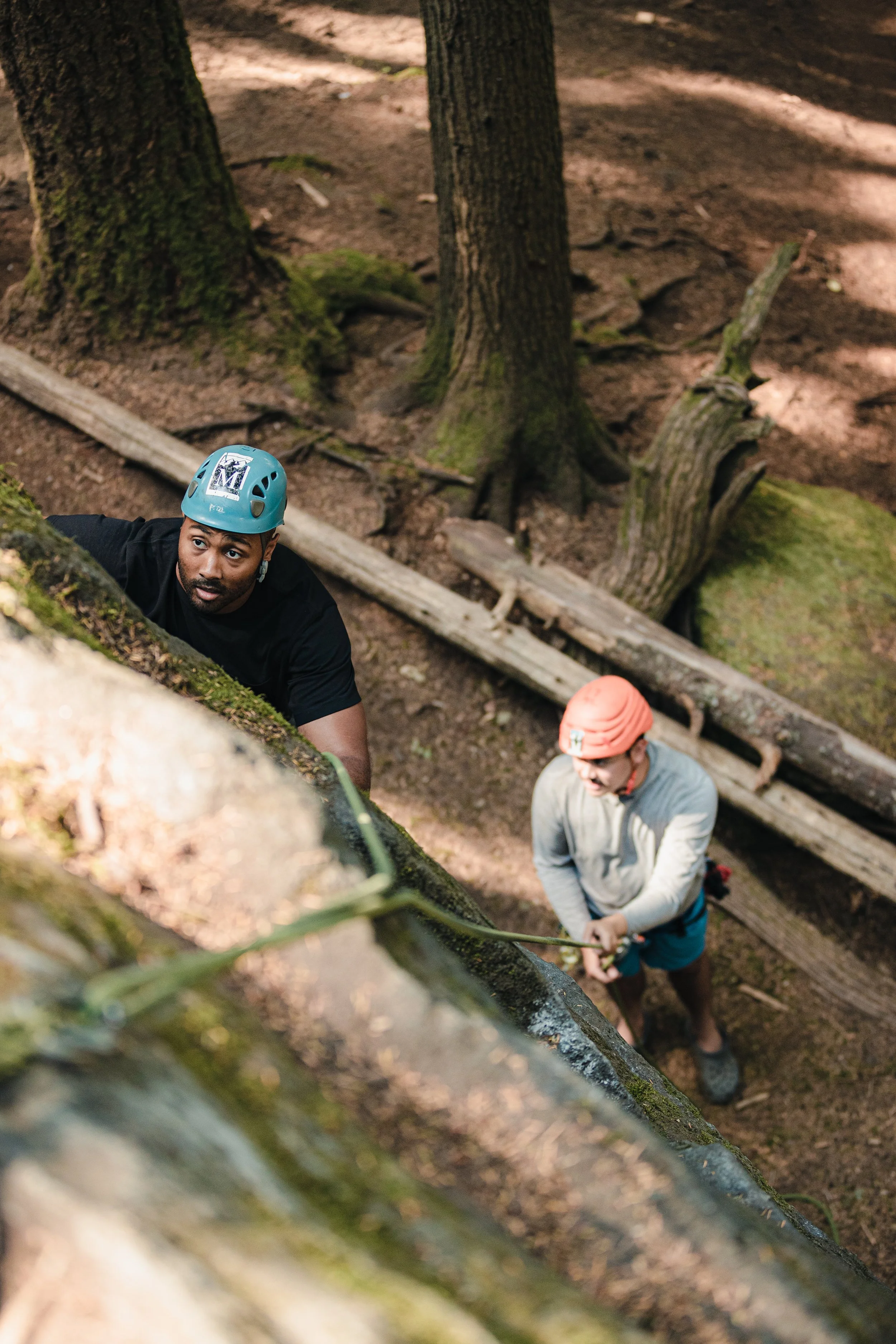
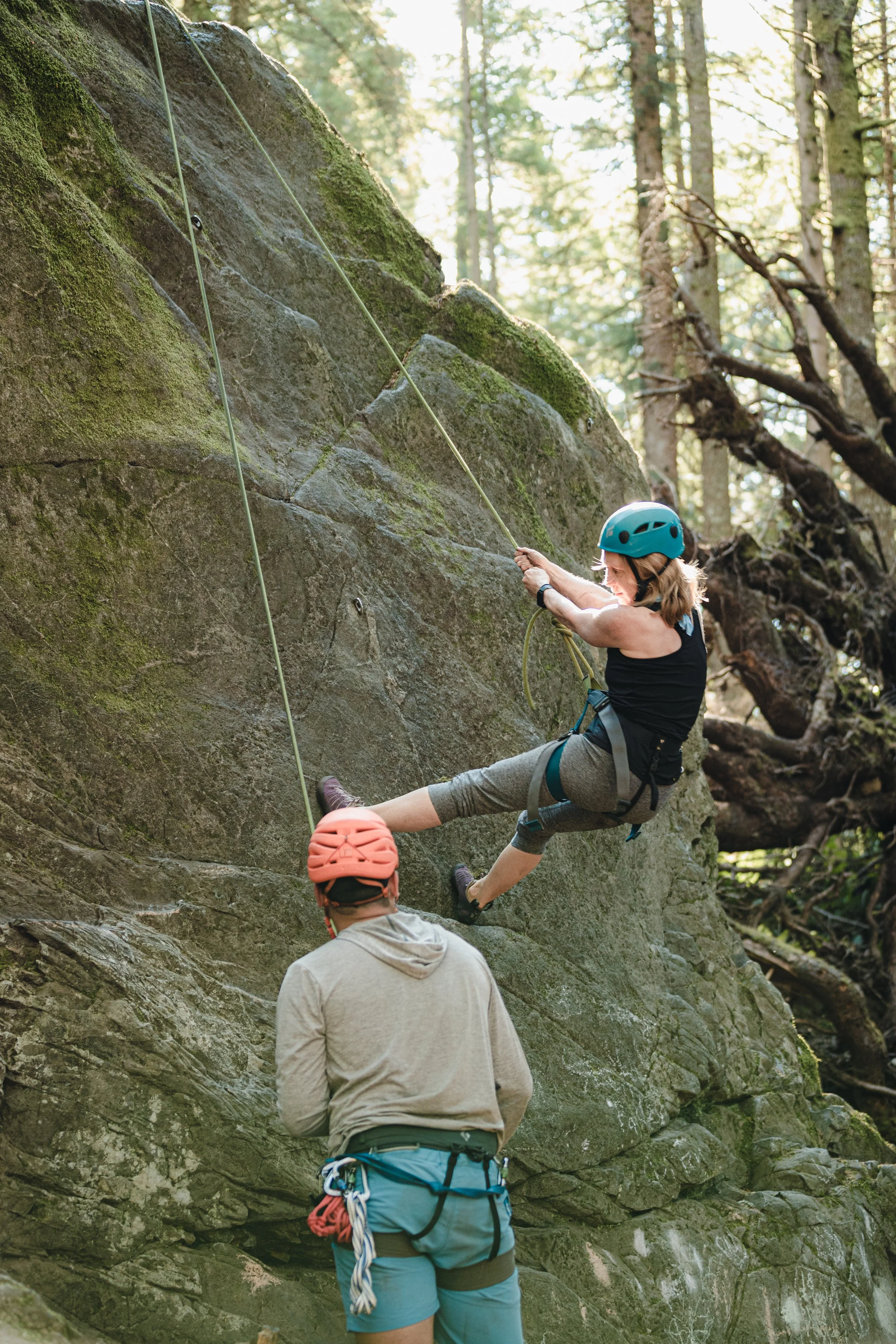
The Mountaineers led the safety skills portion of the morning, walking everyone through what they needed to know before they touched the rock face. But before the first pitch, TNP led a conversation that might have been the most important part of the day: how did you want to be supported? Did you want cheers? Did you want silence? How did you ask for what you needed, not just there on the rock, but at home, at school, from your friends, from your teammates? How did you let people in when things got hard?
It's not a question most teenagers get asked. It's not a question most adults ask themselves either.
The rock face became a metaphor for every hard thing. The challenge of a new school year, a difficult relationship, a moment when you didn't know if you could take the next step. TNP athlete mentors shared honestly about how they navigated that, how they asked for support, how they pushed into things that were new and uncomfortable and did it anyway. Their stories made space for the teens to think about their own.
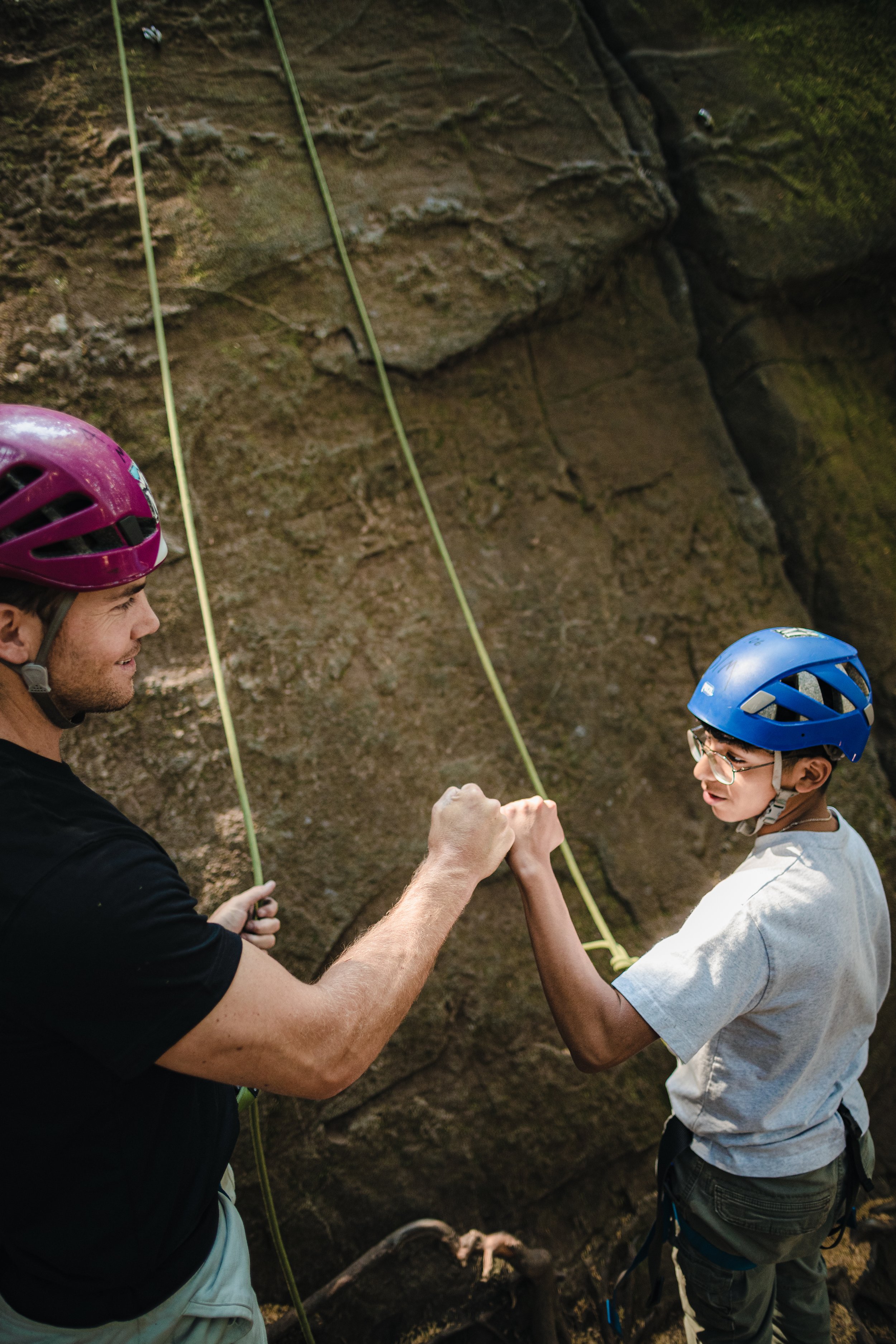
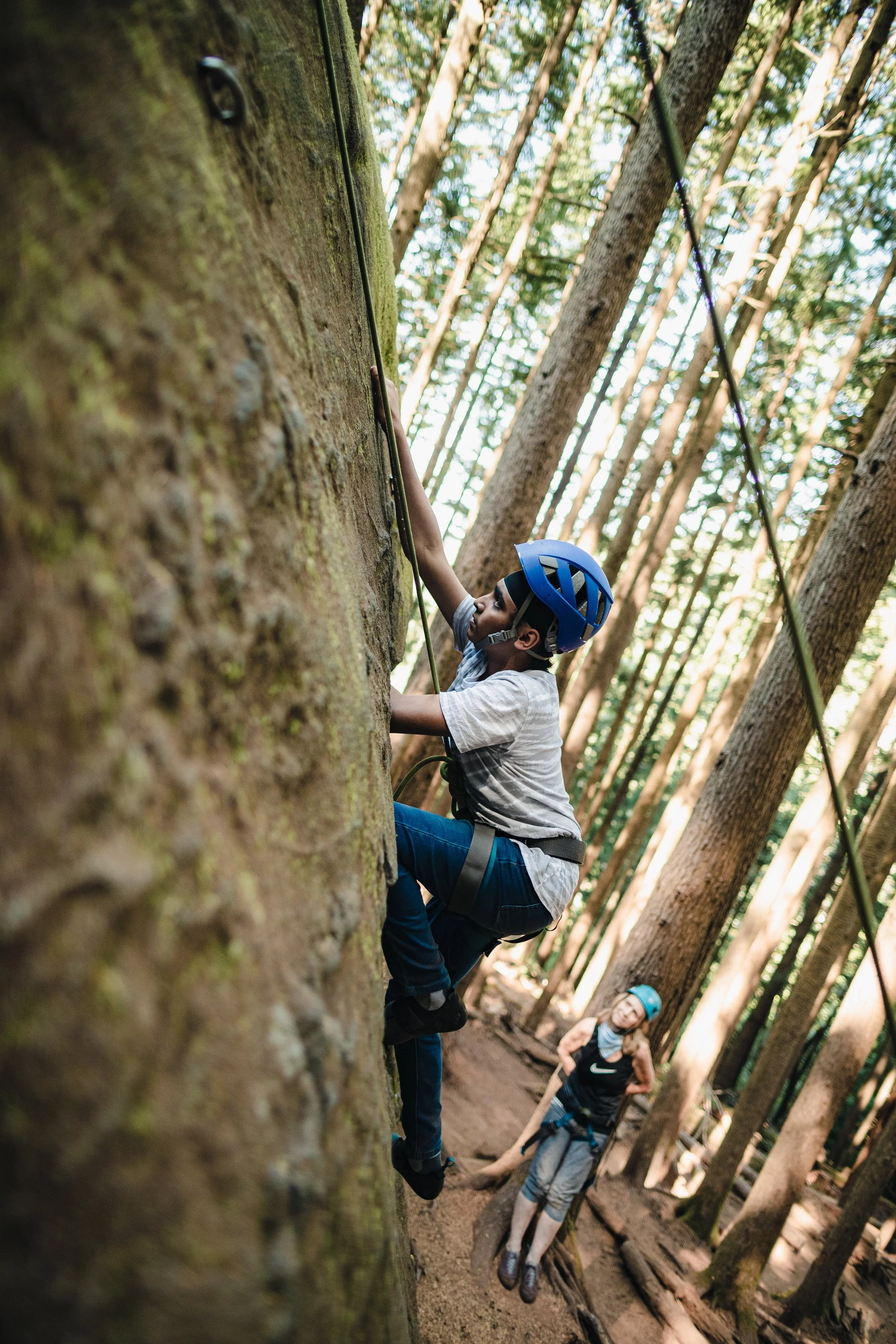
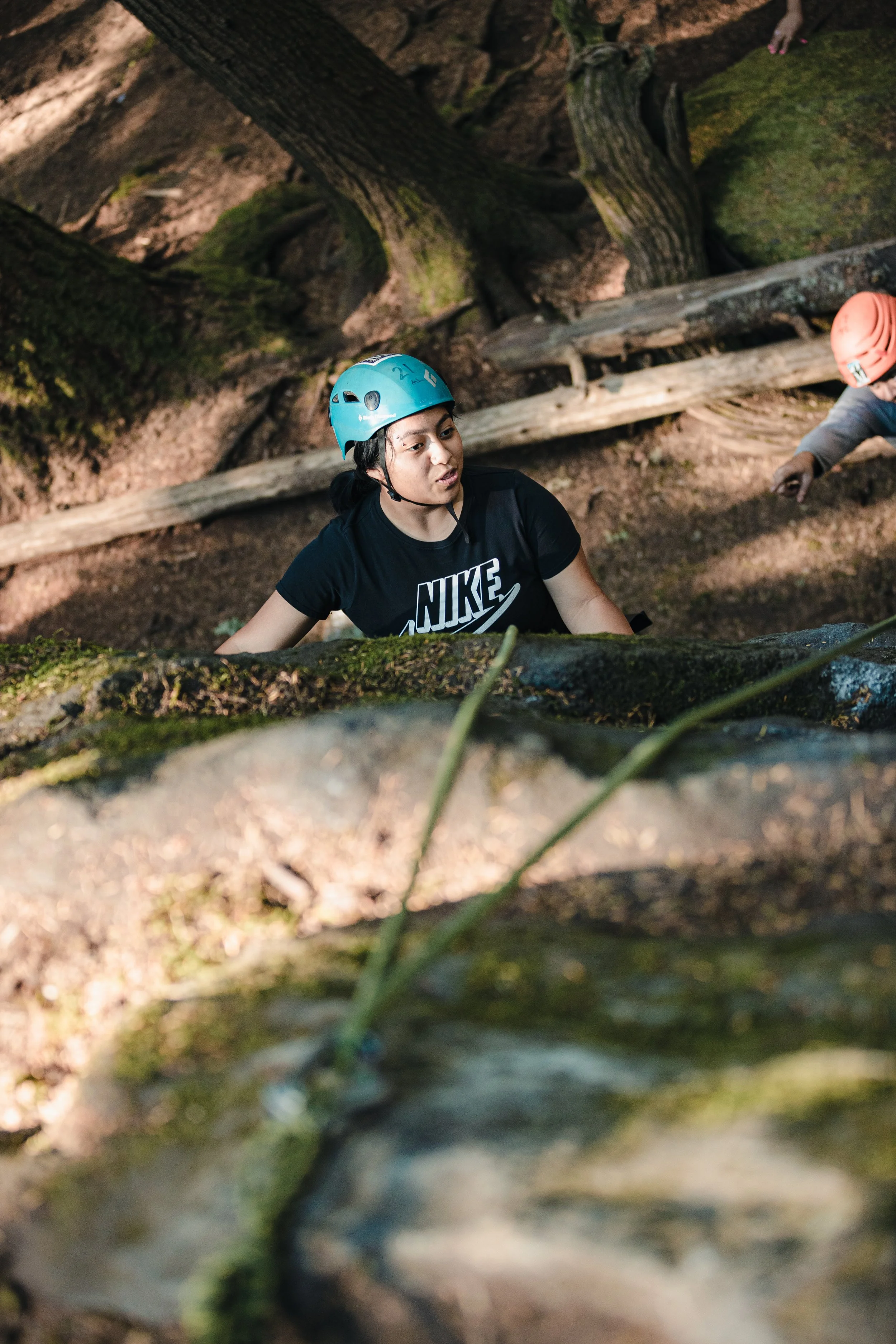
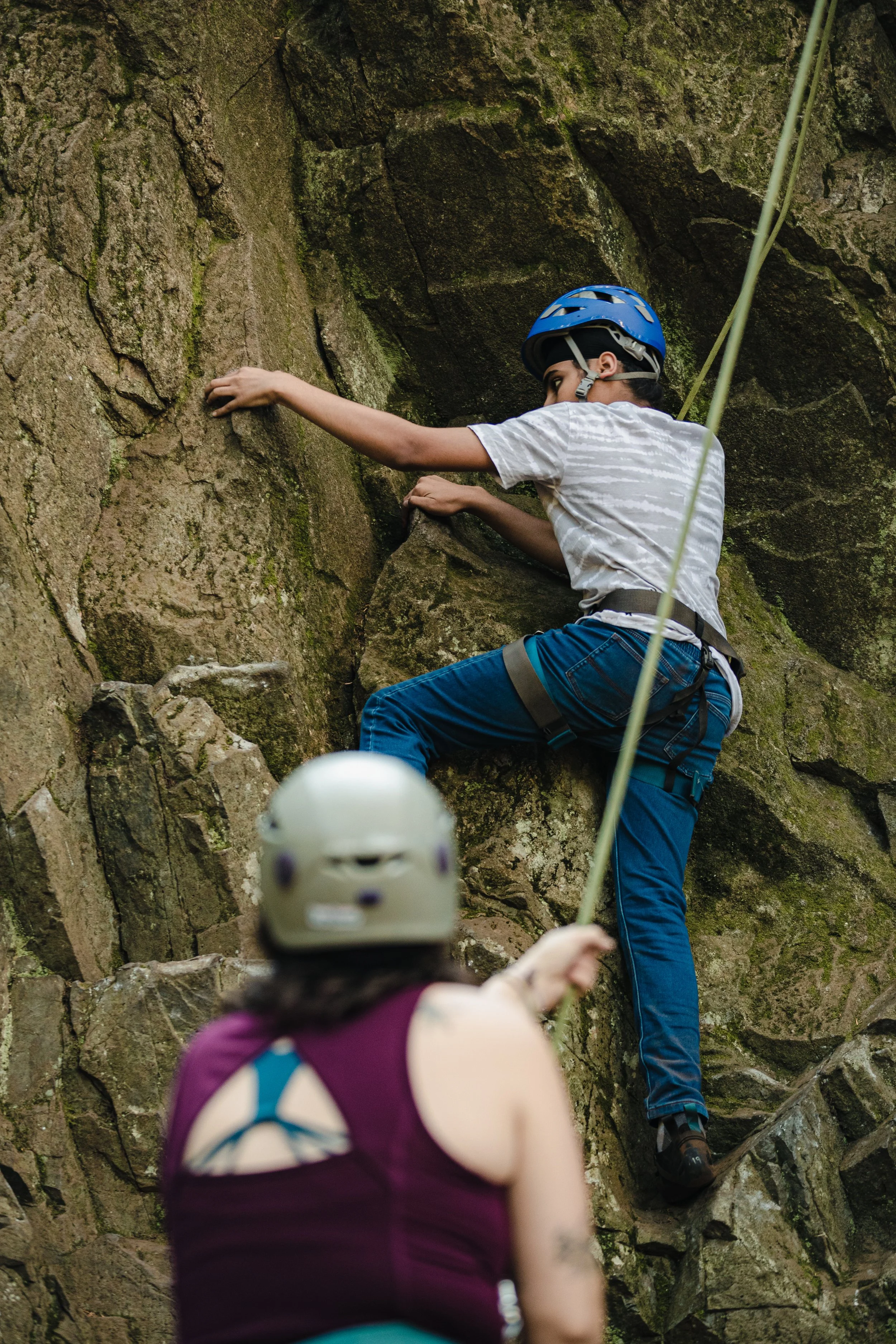
Then each teen got on the rock. Multiple pitches, challenge by choice, every step their own decision. Some moved fast. Some moved slow. All of them moved.
In the orchard, the group harvested apples and took part in a meaningful ritual: each person wrote on an apple something they no longer wanted to carry, something to release, and launched it with the big slingshot. There were plenty of giggles and laughs, but the intention behind it was real.
Being out in nature, in the quiet and the peace, gave everyone space to connect: with the land, with each other, and with their own culture. That sense of belonging and rootedness was at the heart of the day.
Every teen said yes that day. Yes to showing up, yes to new experiences, and yes to something bigger. In the woods and on the trails, they said yes to physical challenges that pushed them past what they thought was possible. And in the quiet moments of reflection, they said yes to thinking about the hard things in life, difficult times, family struggles, the pressures of school, and to carrying the confidence they built on those trails back with them.
Snowshoeing with Congolese Integration Netwrk M.U.S.T.
Something About Snow
The Nature Project x Congolese Integration Network x YMCA B.O.L.D. & G.O.L.D.
There is something that happens when someone experiences snow for the first time. Not just sees it, but walks out into it, picks it up, throws it, falls in it. You can't manufacture that. You can only make space for it.
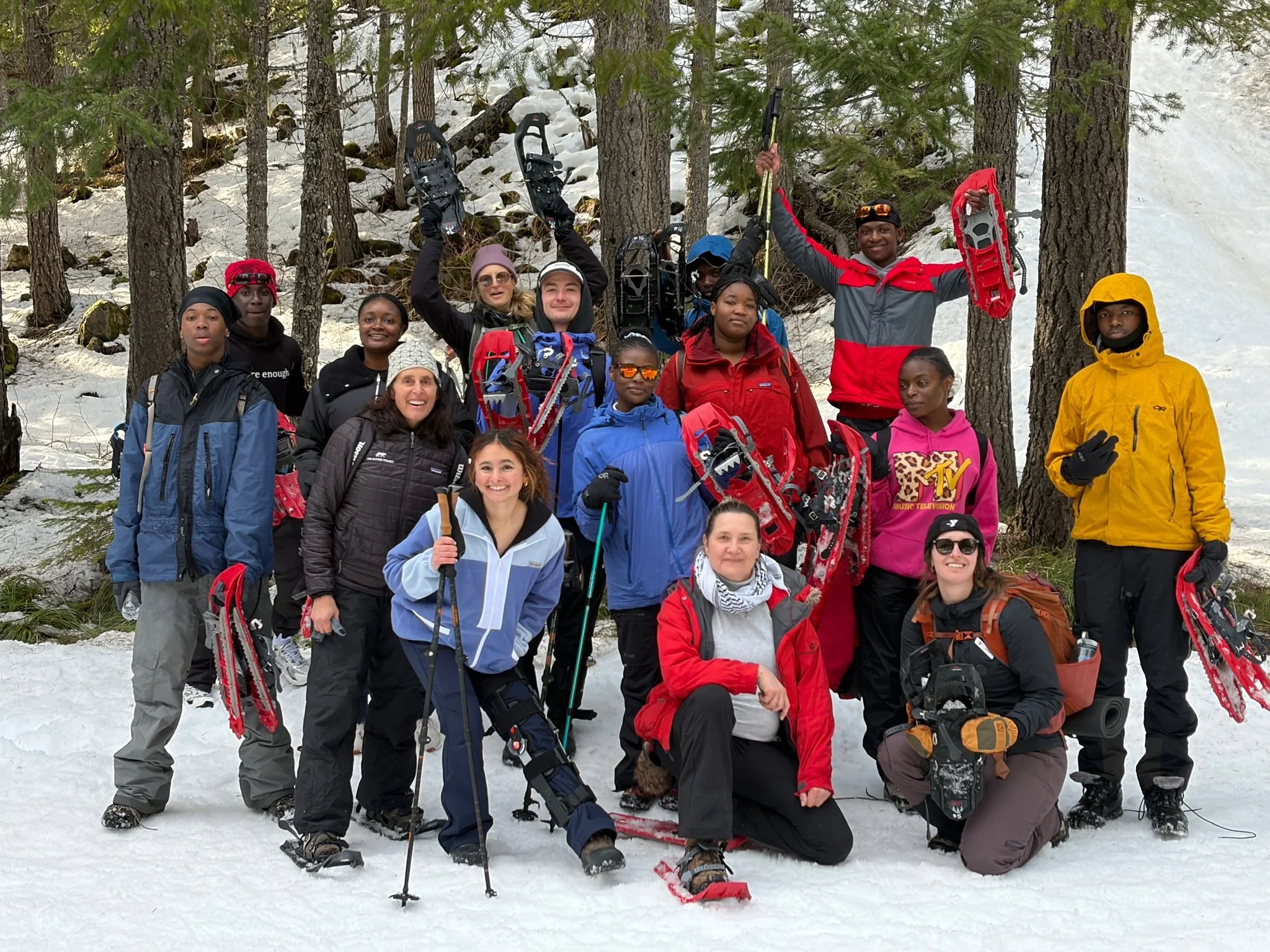
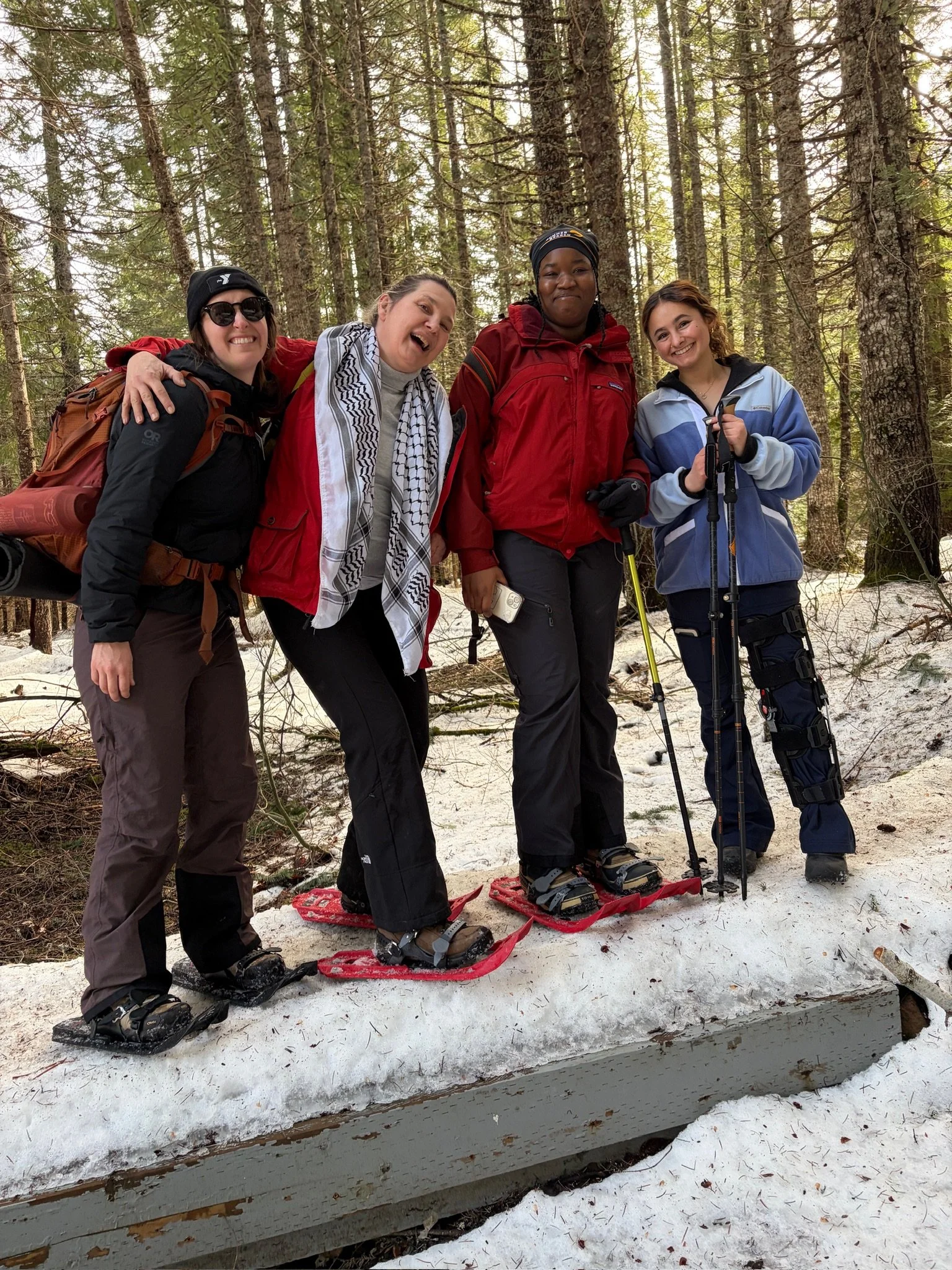
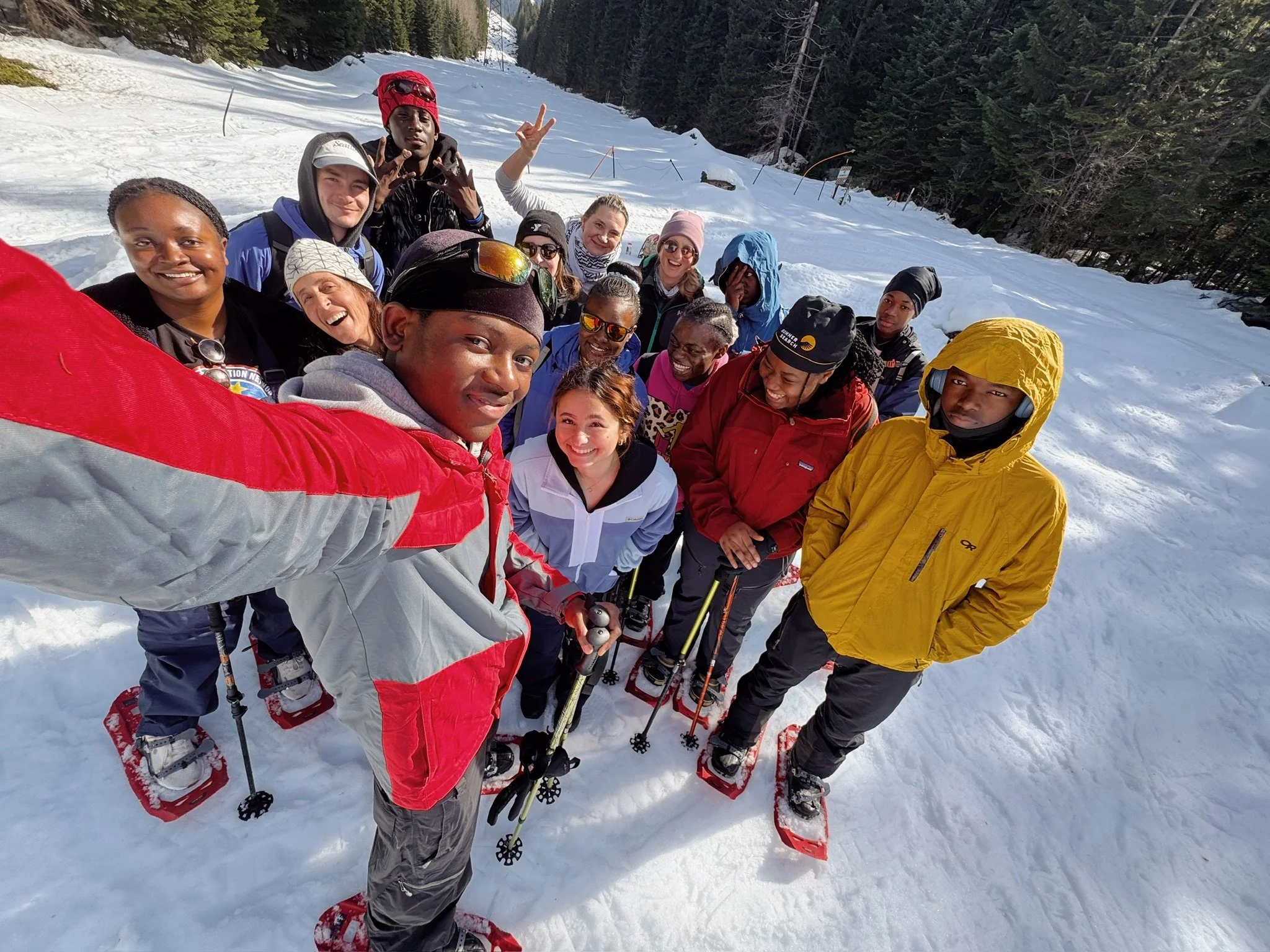
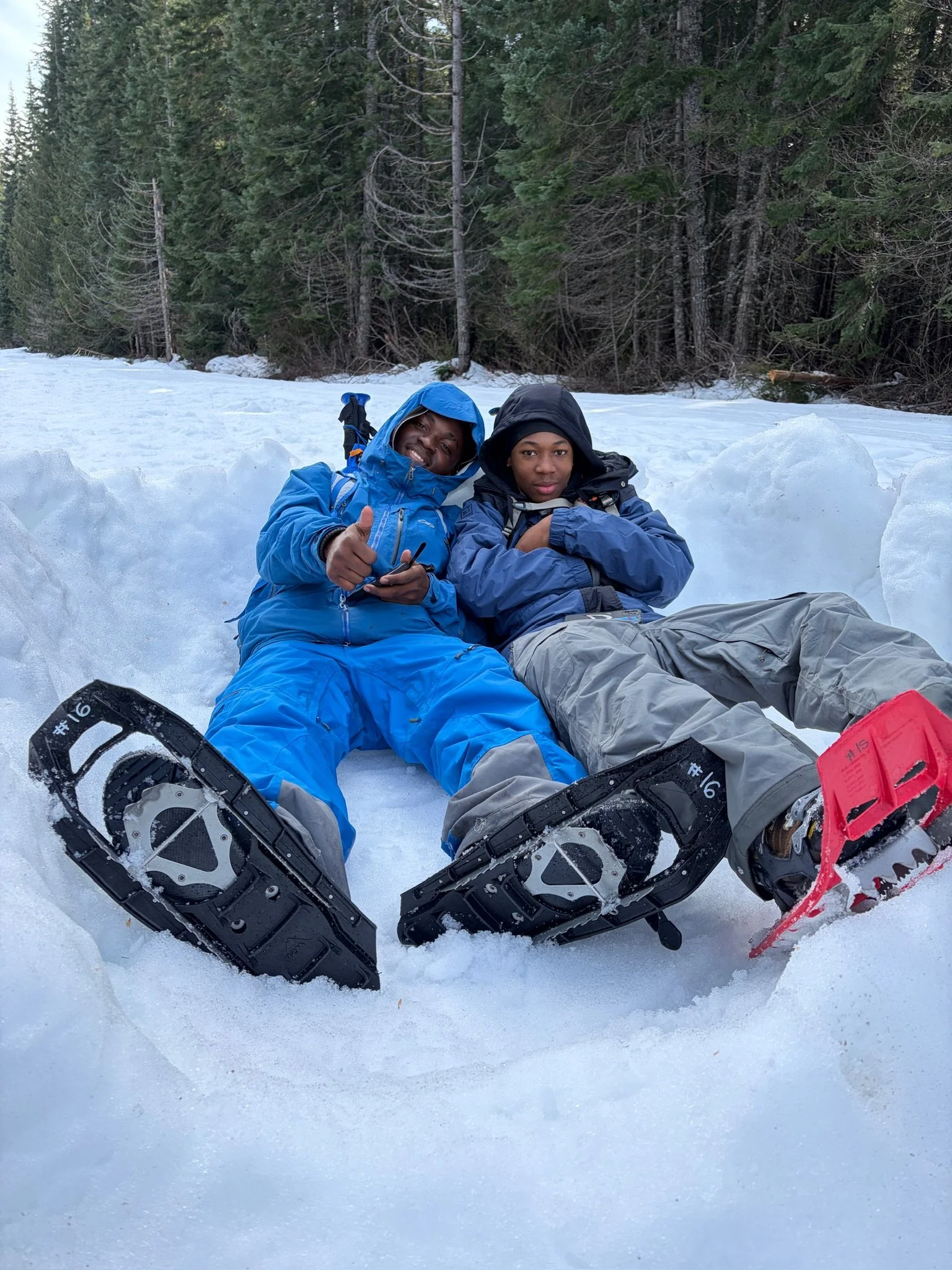
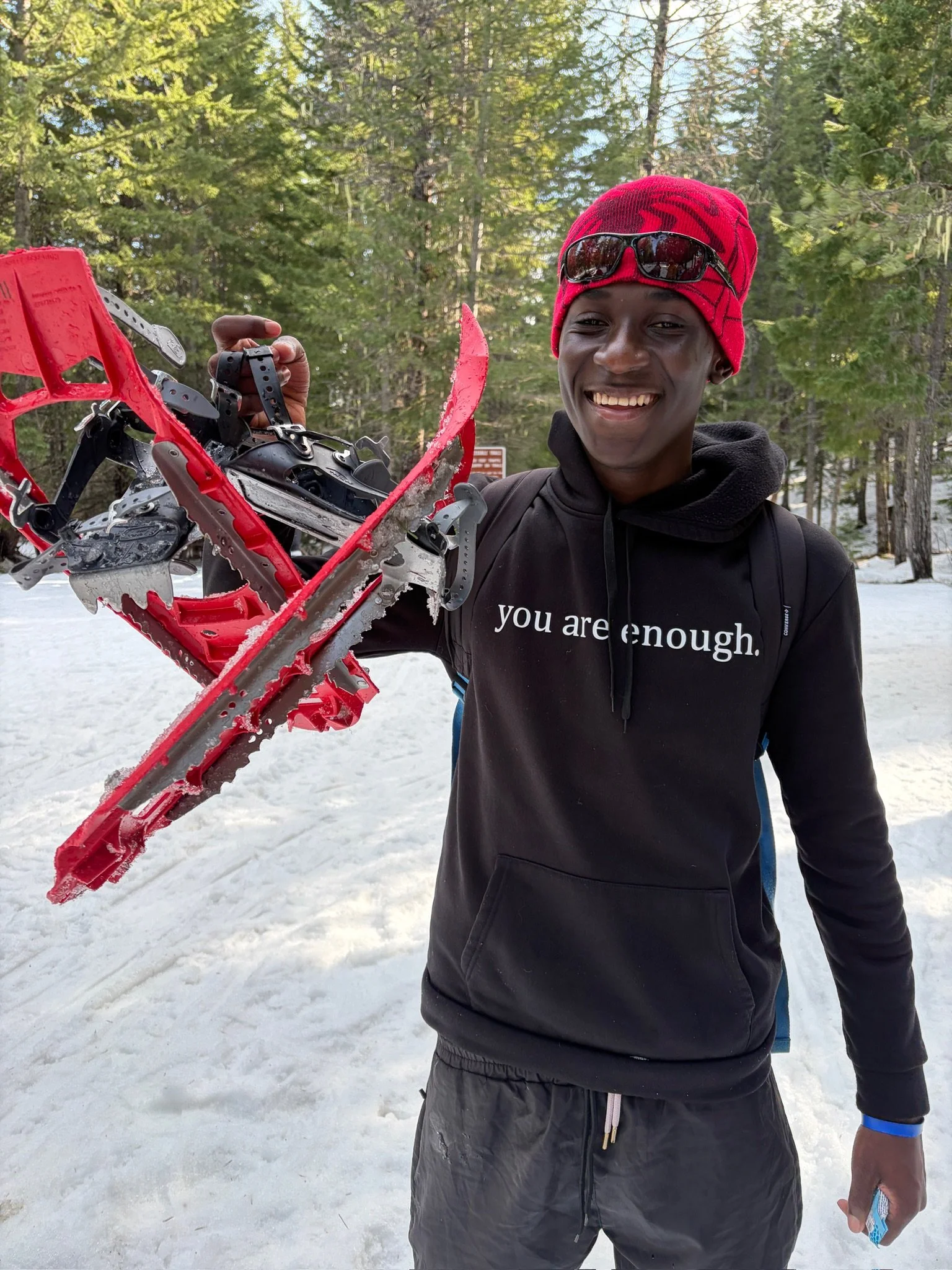
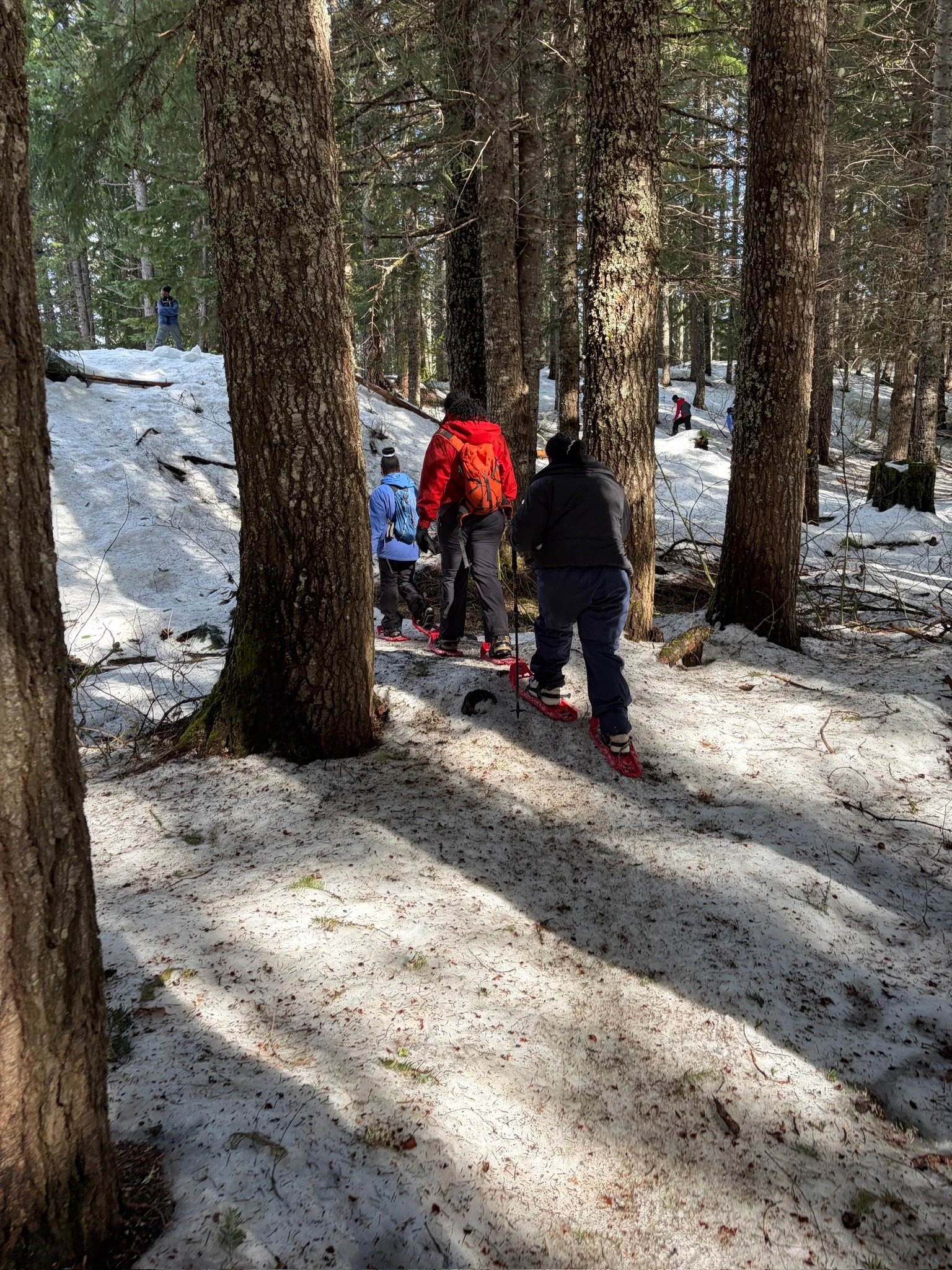
On February 28, 2026, The Nature Project brought teens from the Congolese Integration Network and YMCA B.O.L.D. & G.O.L.D. out into the snow for a day of learning, exploring, and a lot of laughter. For many of the teens, it was their first time. By the end of the day you would not have known it.
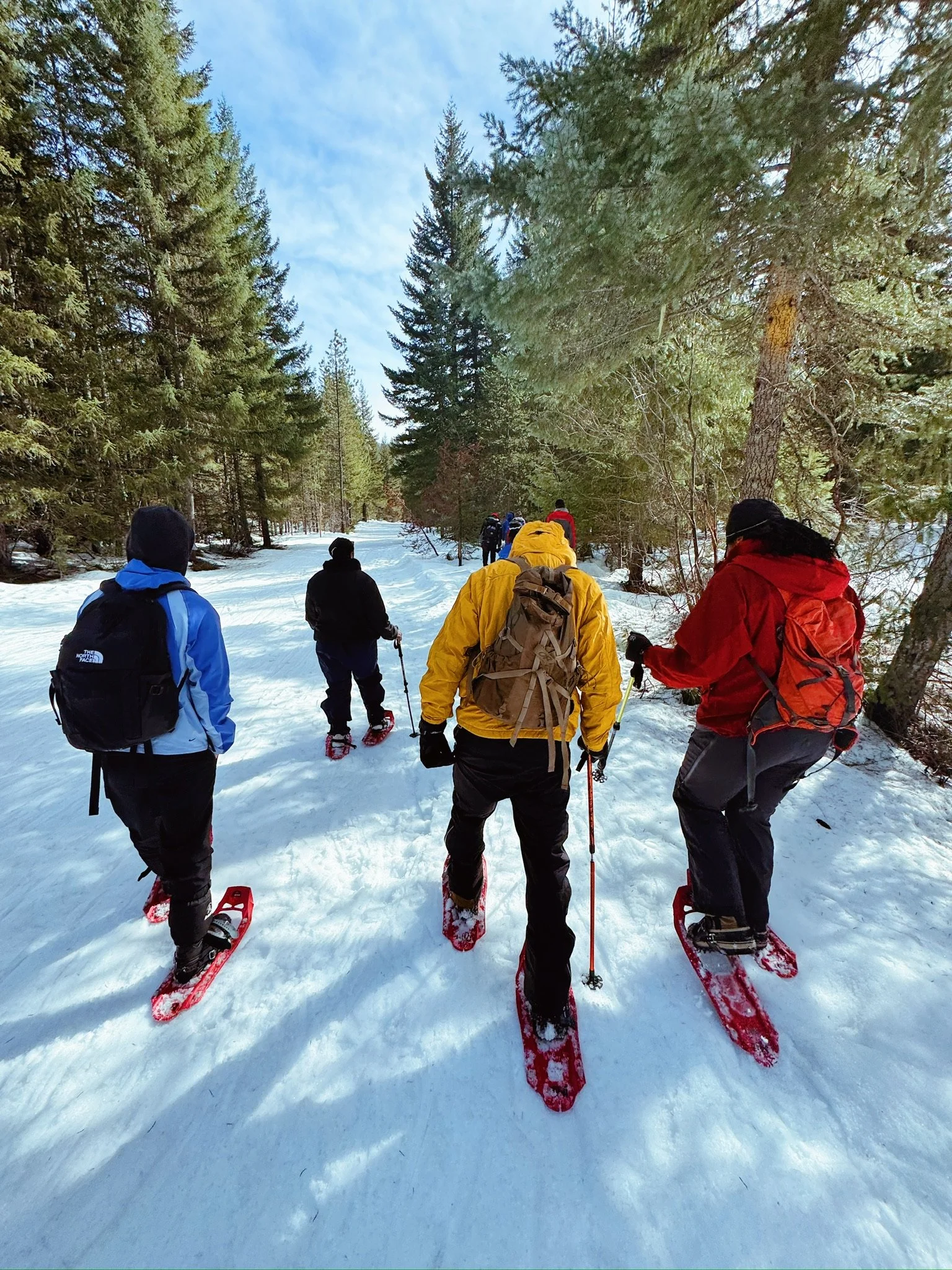
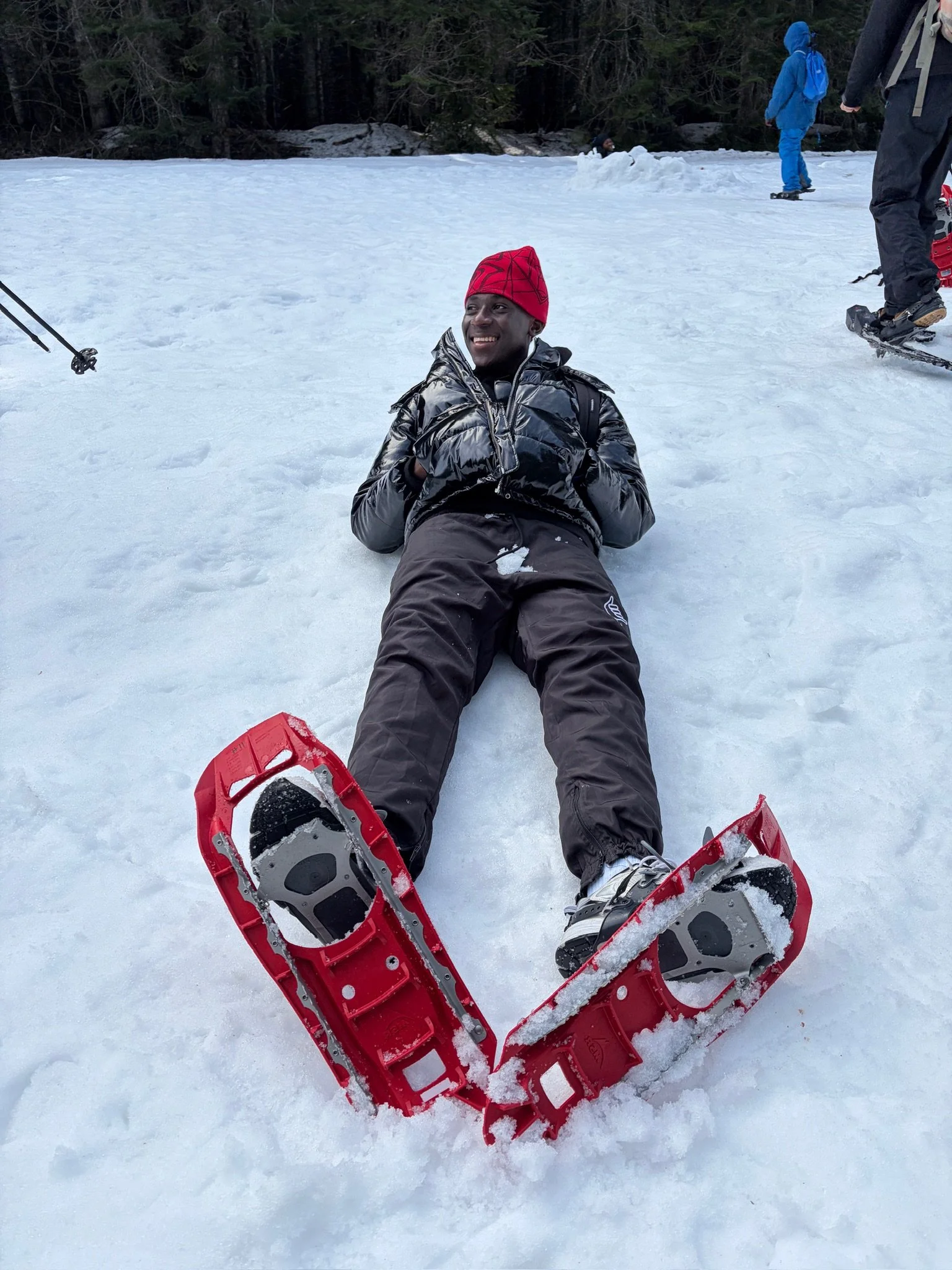
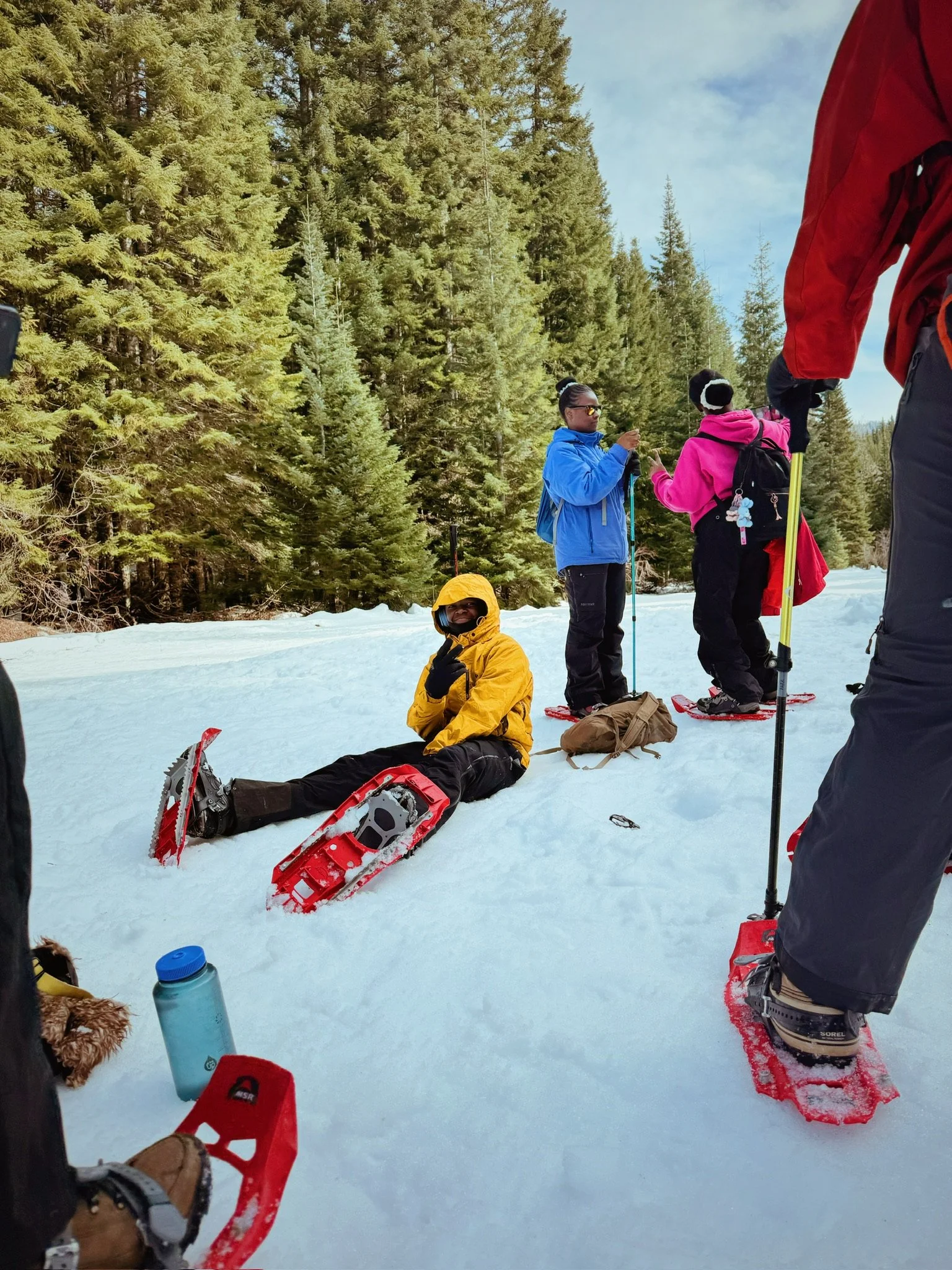
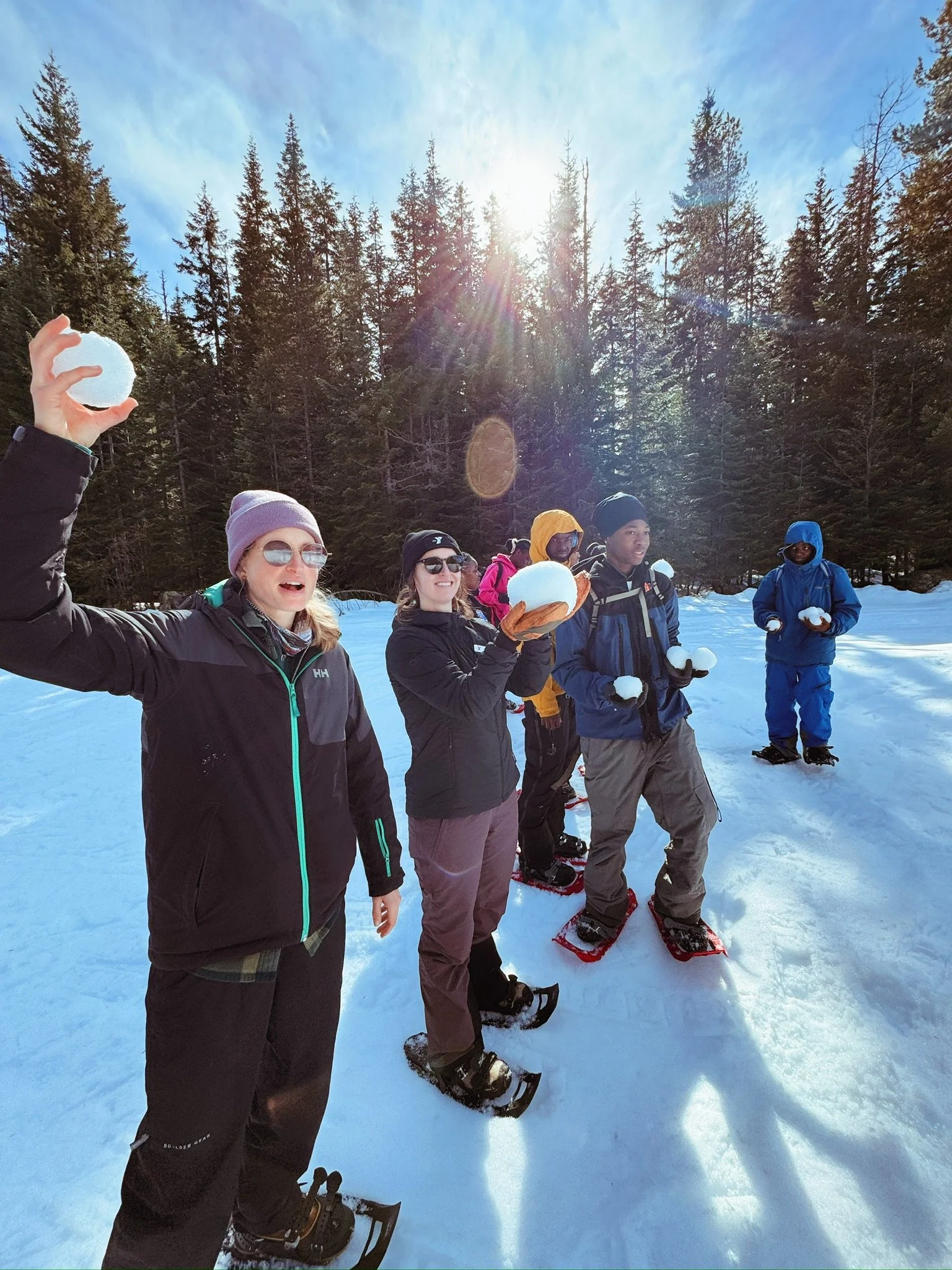
Everything the teens needed was there waiting for them. Warm coats, pants, gloves, socks, boots, and snowshoes, all provided so that nothing stood between them and the day ahead. We started the morning learning how to walk in snowshoes, the techniques, the safety, how to move with them and not against them. It did not take long before they made it their own. Races broke out. Games appeared from nowhere. A snowball fight erupted. Different teens stepped up to lead at different moments throughout the day, finding confidence on a trail they had never walked before.
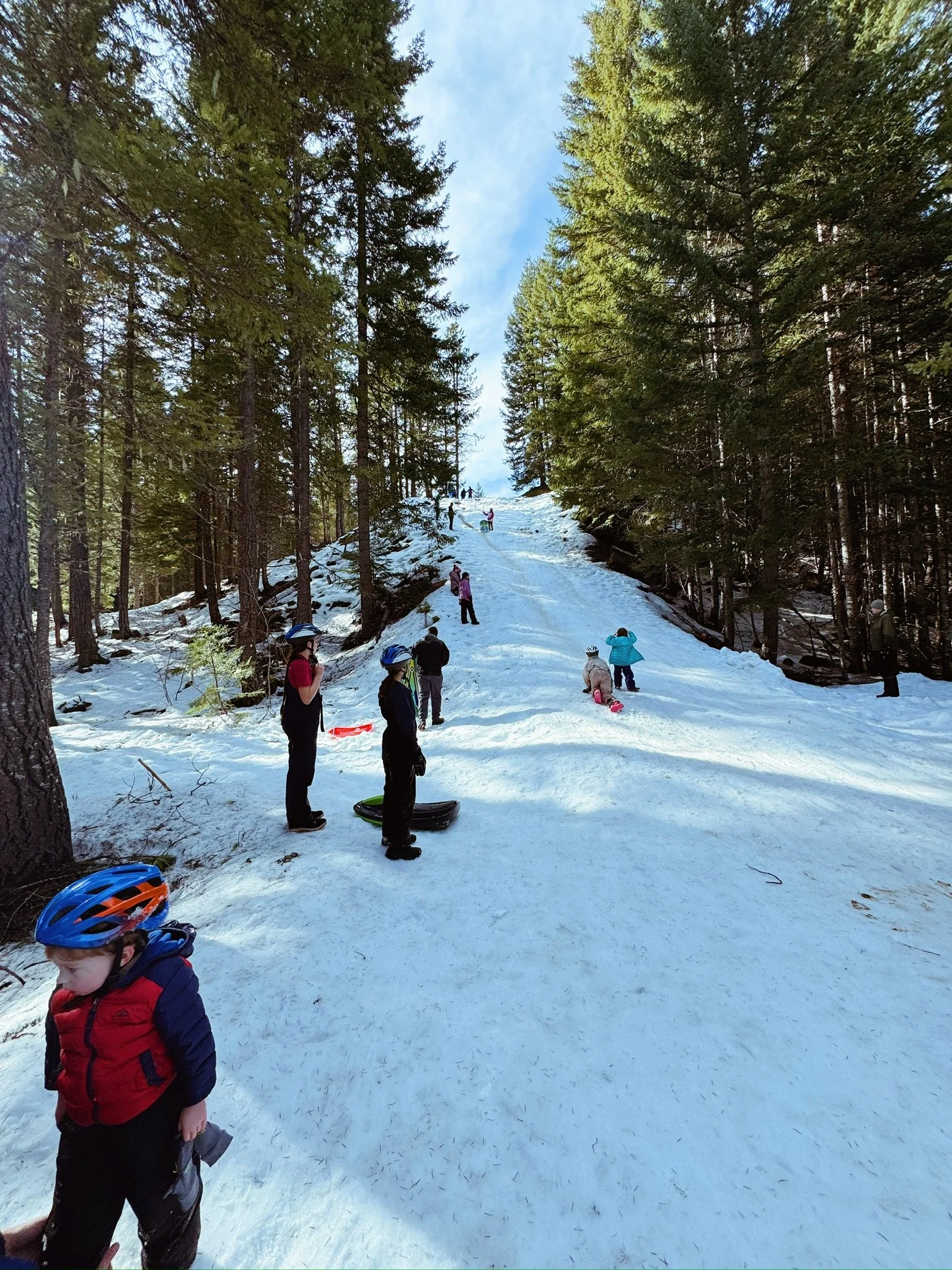
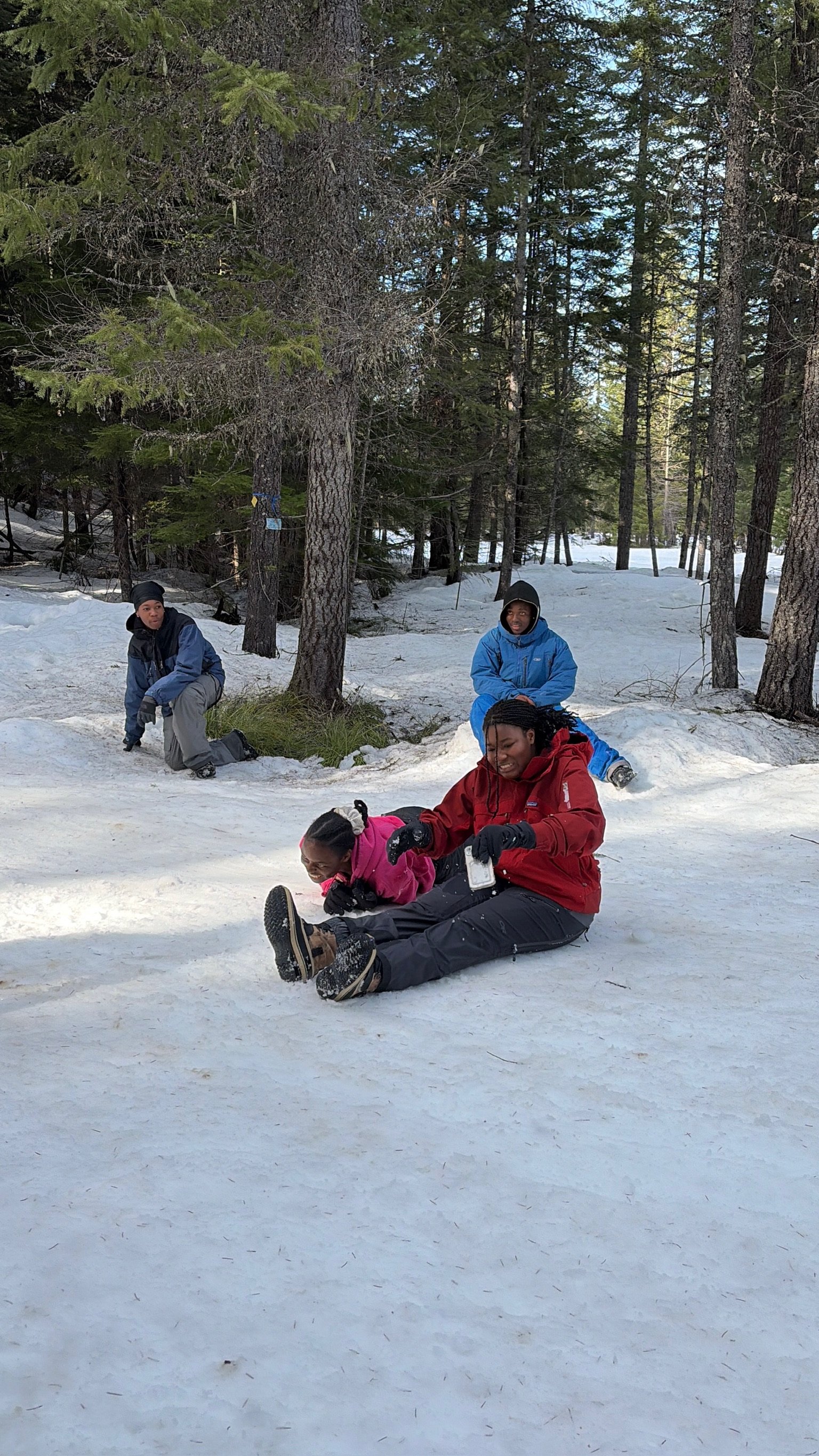
Then someone found the hill. The sledding that followed brought out a kind of joy that is hard to describe and easy to recognize. Peals of laughter all the way down, over and over again. For young people carrying a lot right now, that hill gave something back.
TNP athlete Zjada Baydass, professional soccer player with the Reign, and Bailey White, soccer coach and TNP athlete, shared their stories with the group. They talked openly about what the outdoors has meant to them, how they use nature to step away from the pressure and noise of competition and everyday life, and what it looks like to take care of your mental and physical health. The teens listened and asked good questions. Those conversations mattered.
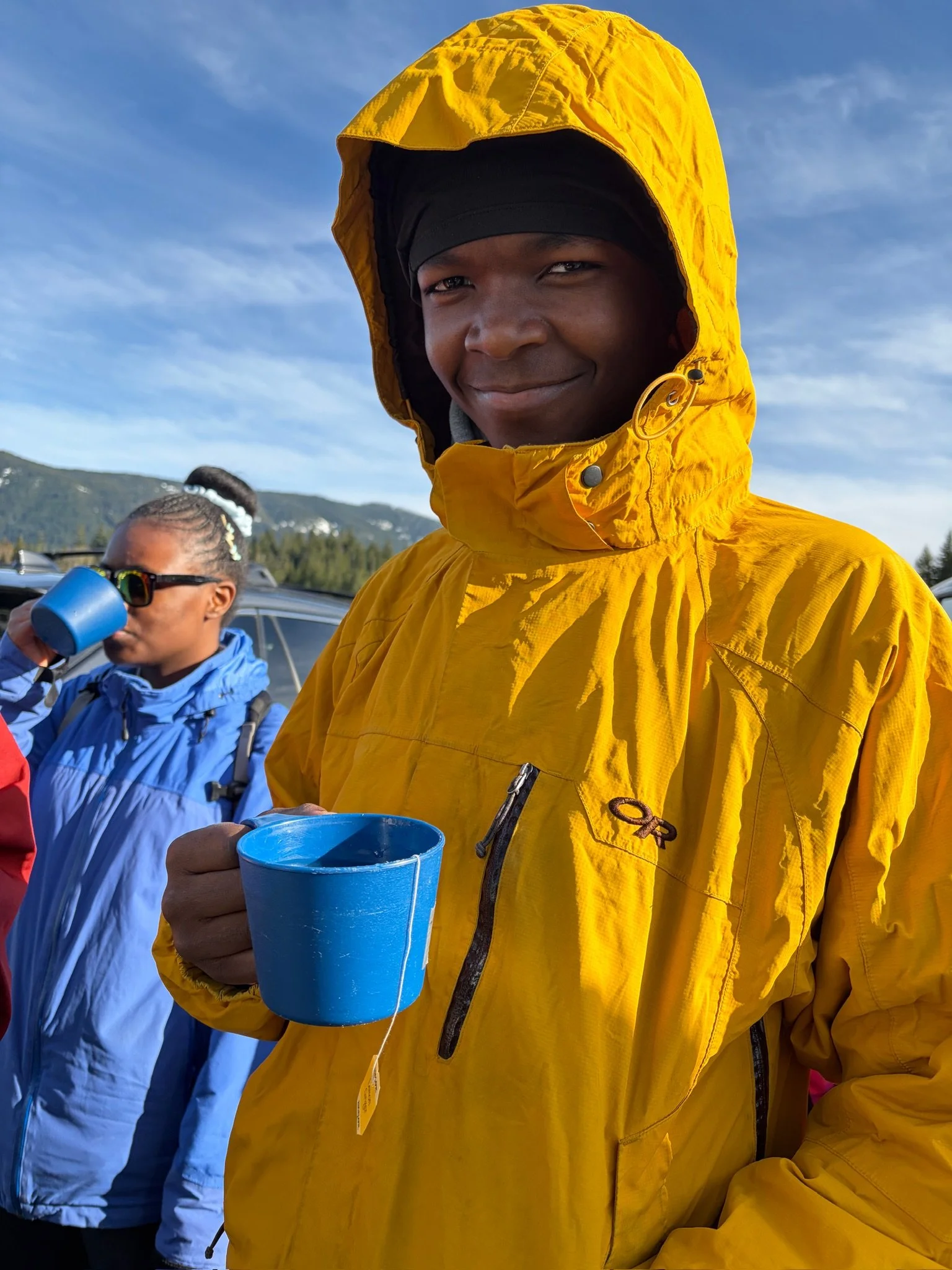
We stopped for a picnic in the snow. Hot chocolate, sunshine, blue skies, and nobody else around. Just the group, the cold air, and the kind of stillness you forget exists. A real break from everything, and everyone felt it.
We talked about Leave No Trace, about what it means to move through a place with care and leave it exactly as you found it. We talked about sharing multi-use trails with skiers and other visitors, about being respectful and present. These are public lands. They belong to all of us, and that includes these teens. That is something we always want them to walk away knowing.
Before the day ended we gathered for a TNP discussion about why being in nature matters, what it does for our mental and physical health, and what it means to truly disconnect and be present. The teens were honest and reflective. The conversation was real.
Some of them had never seen snow before that morning. By the afternoon they were flying down hills and laughing the whole way down. That is what this work looks like. That is why we do it. Getting teens outside, alongside TNP athletes who show up not just as role models but as real people willing to share their stories, is at the heart of everything we do. That combination, nature and connection and honest conversation, is what makes the difference.
Mountain Biking with M.U.S.T.
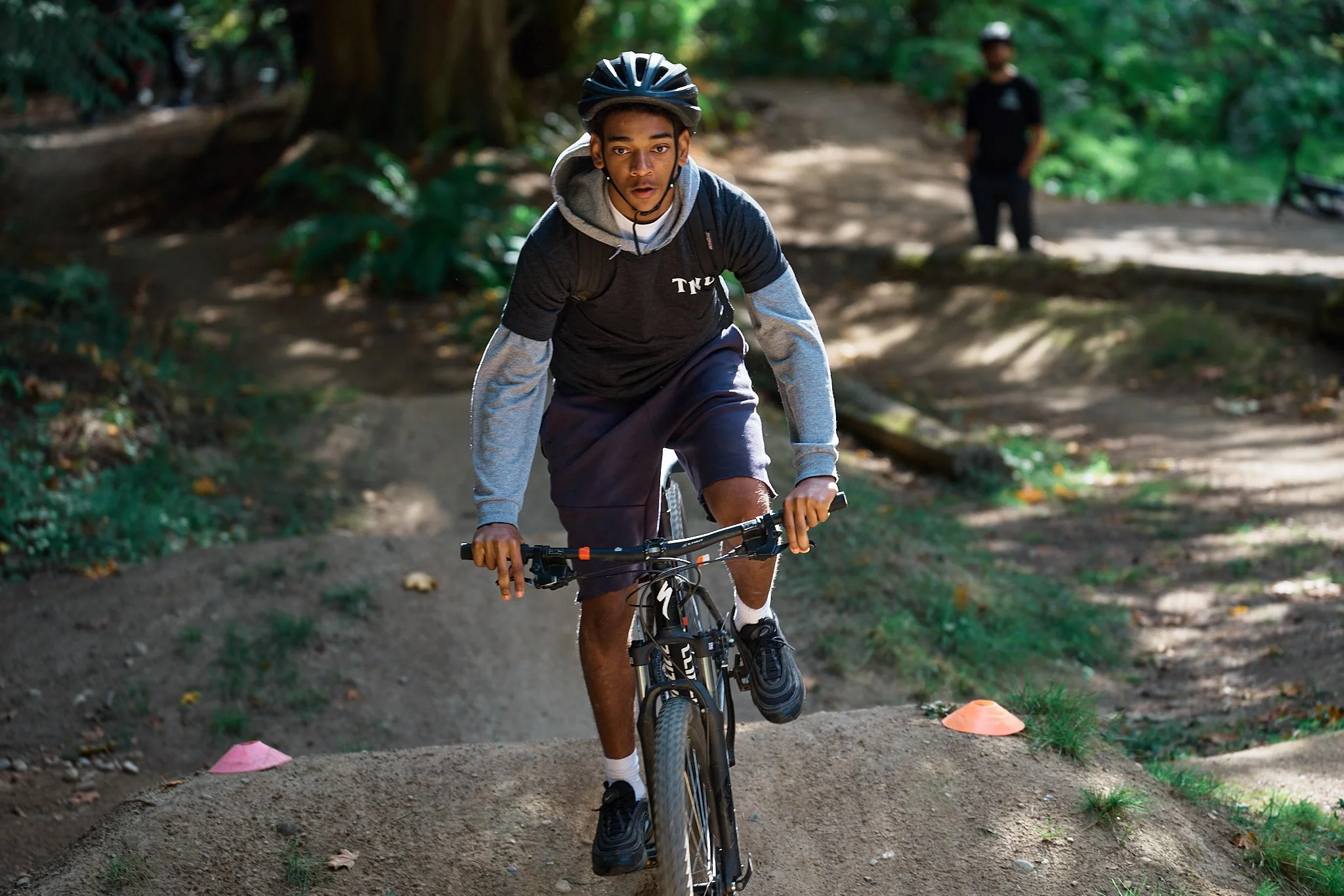
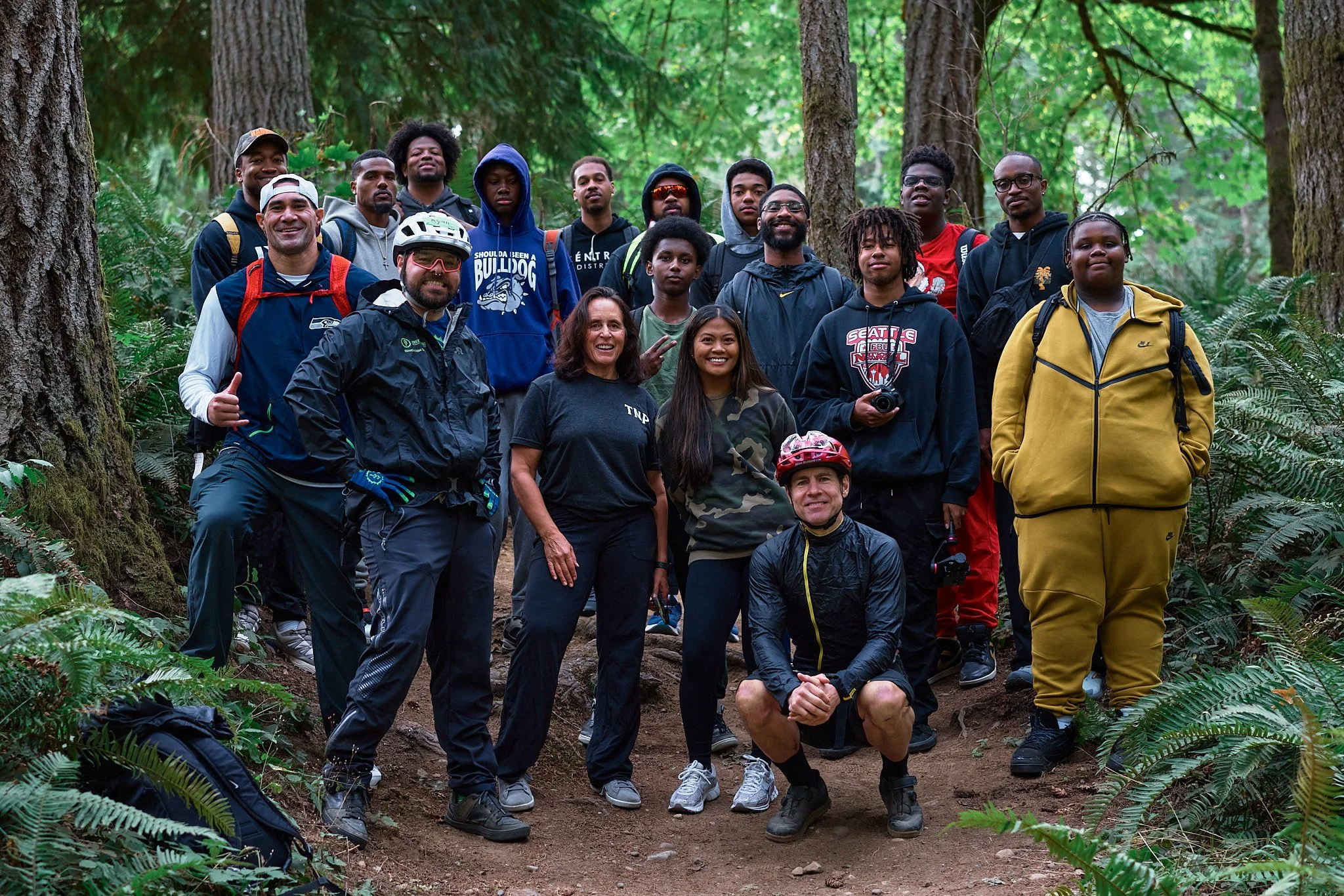
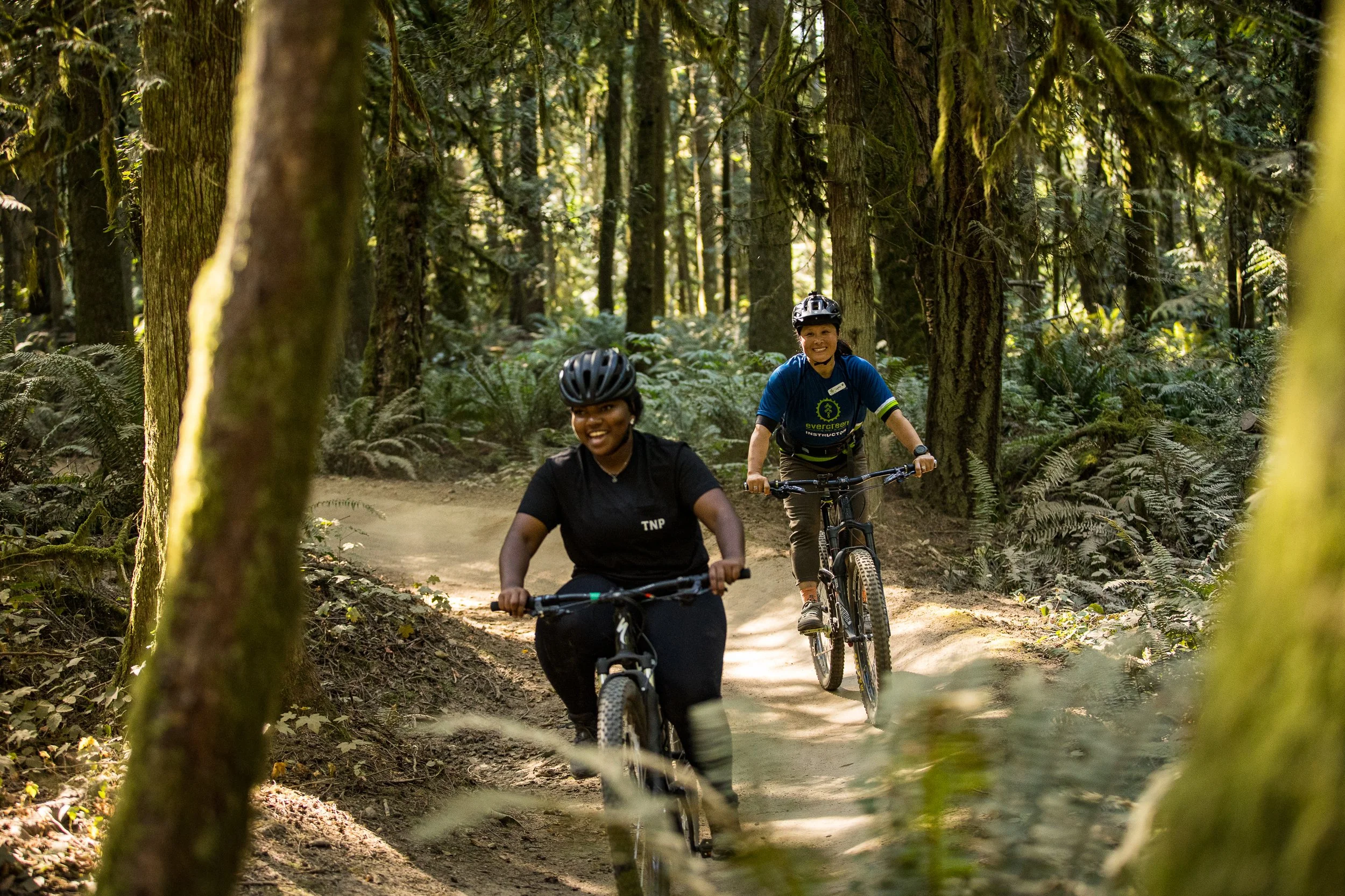
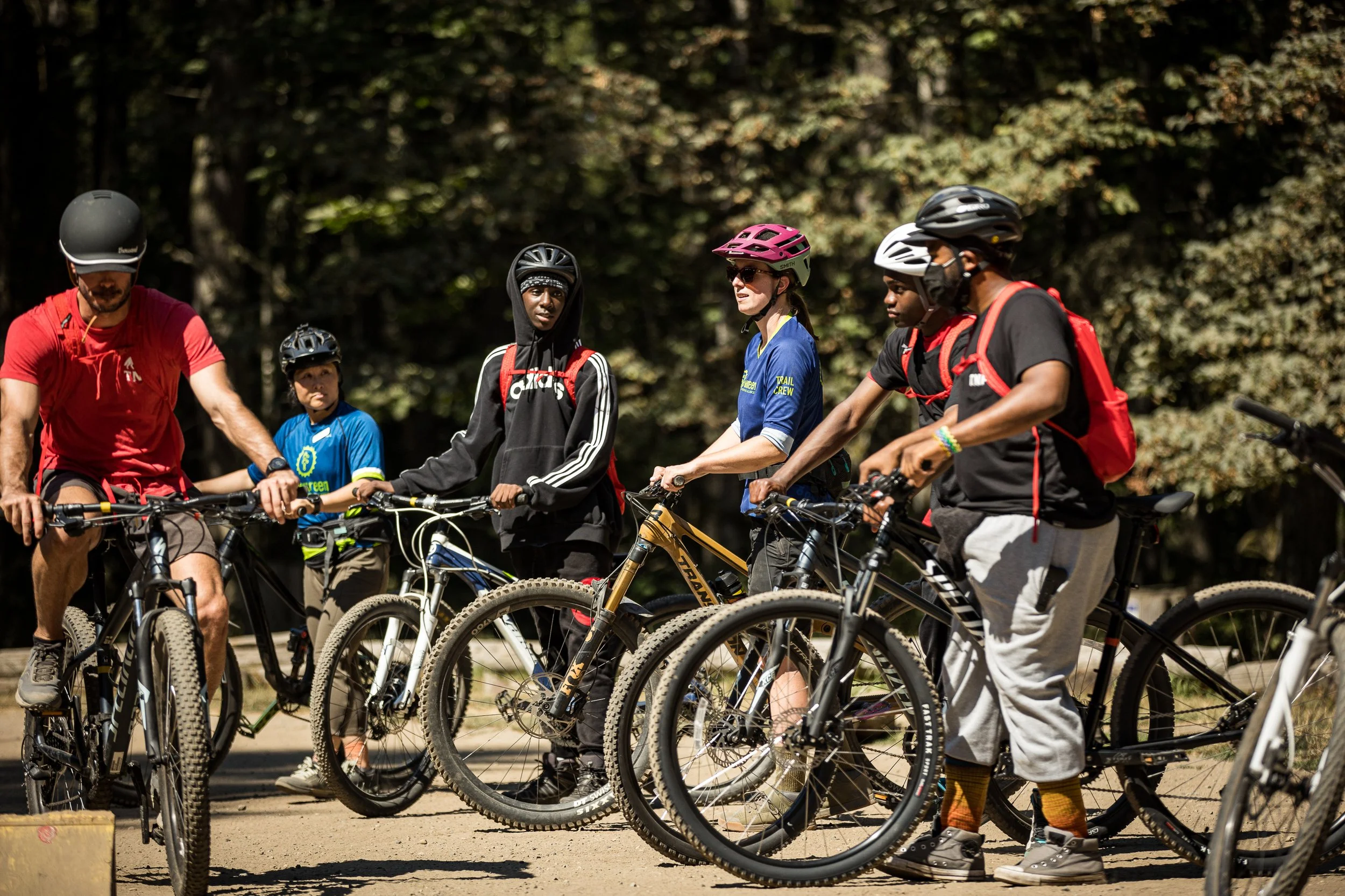
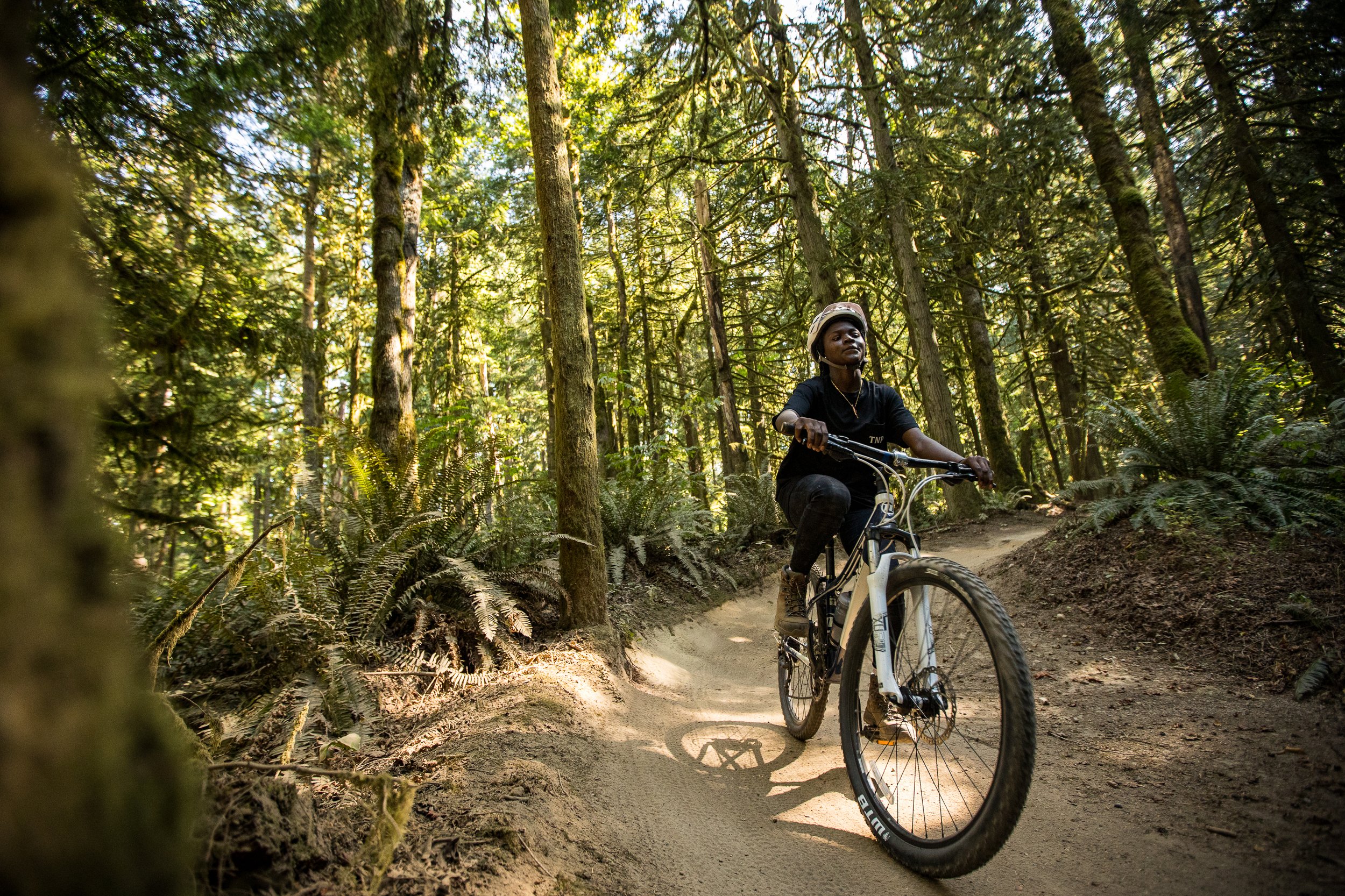
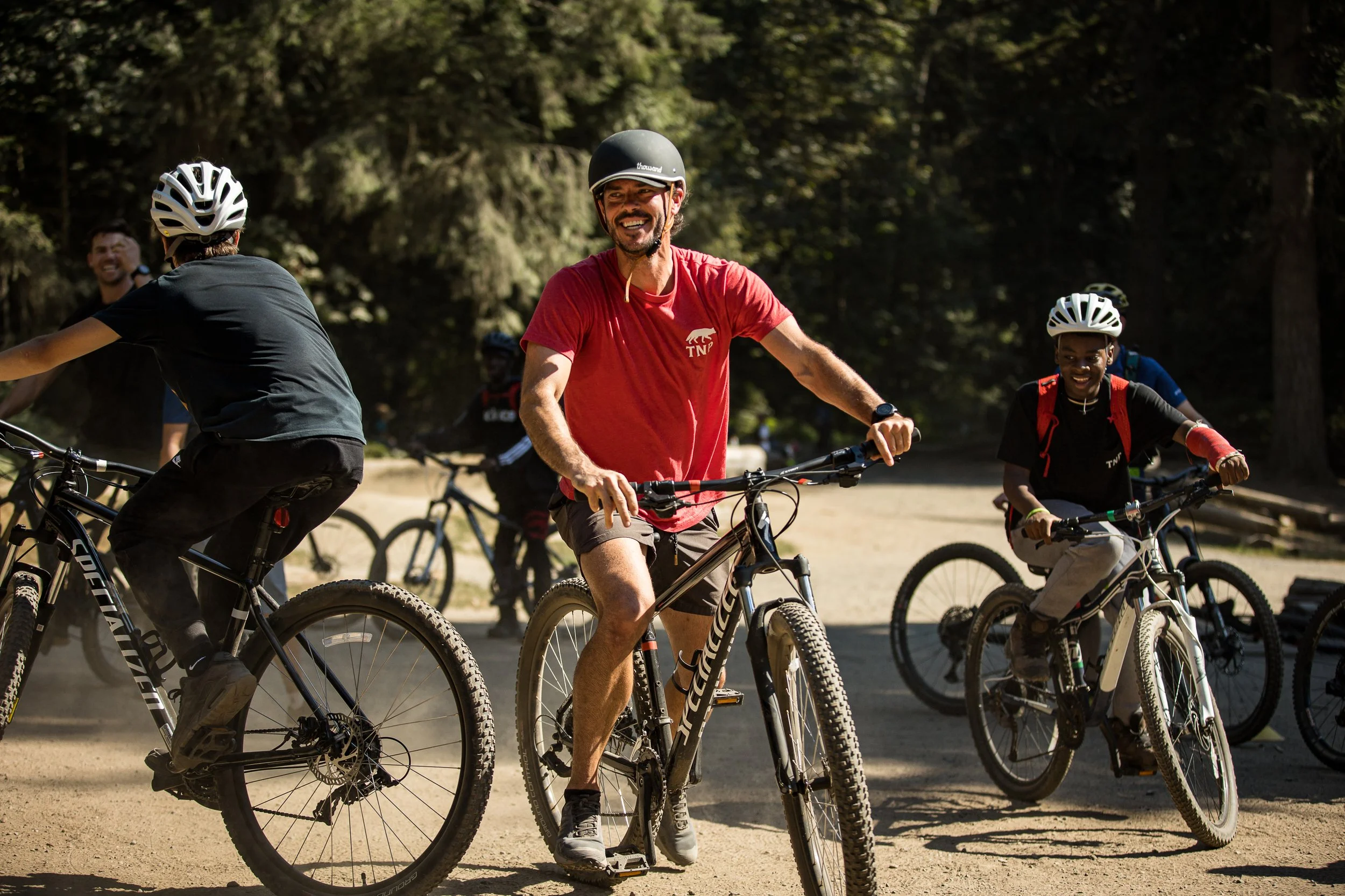
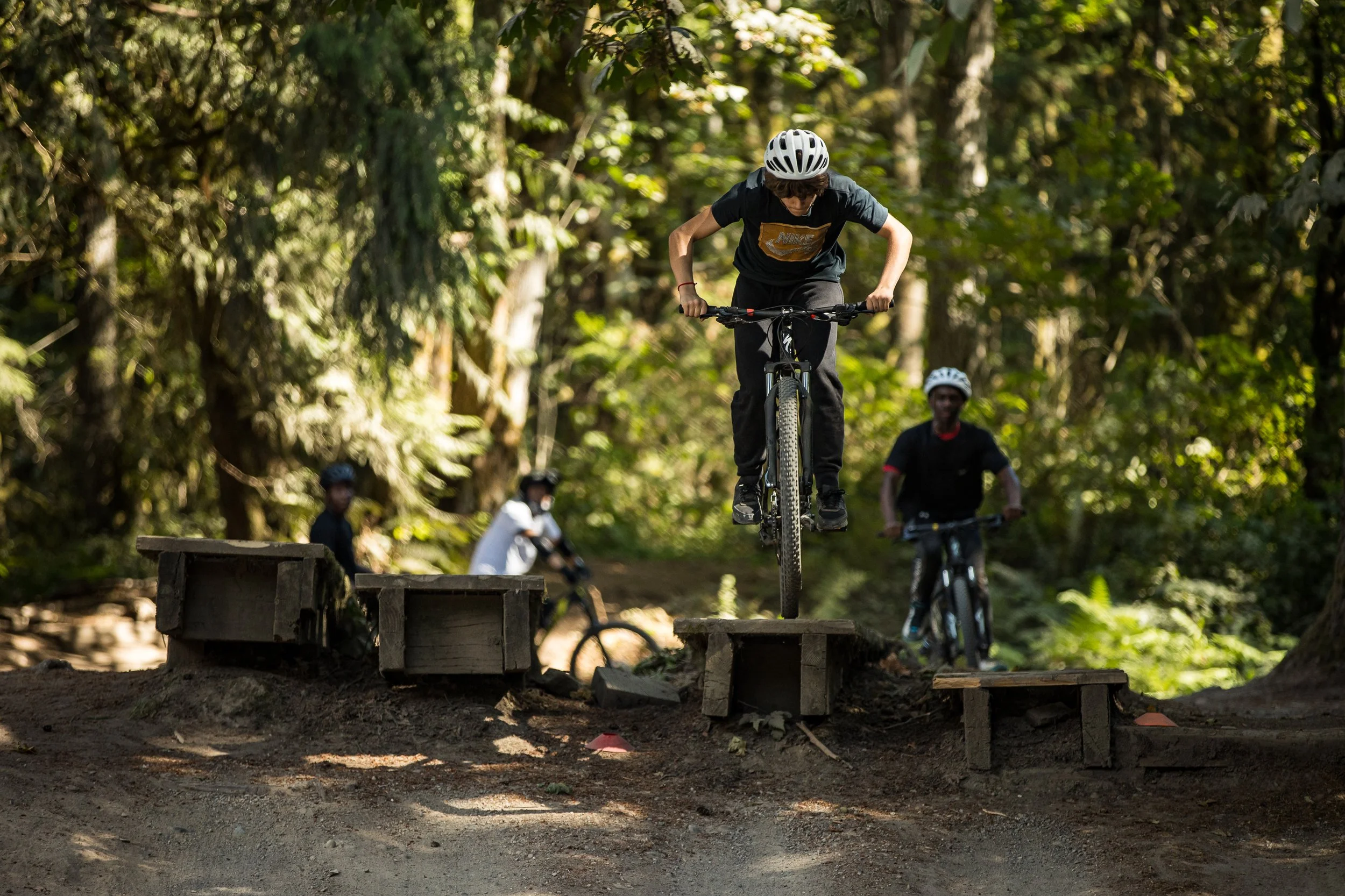
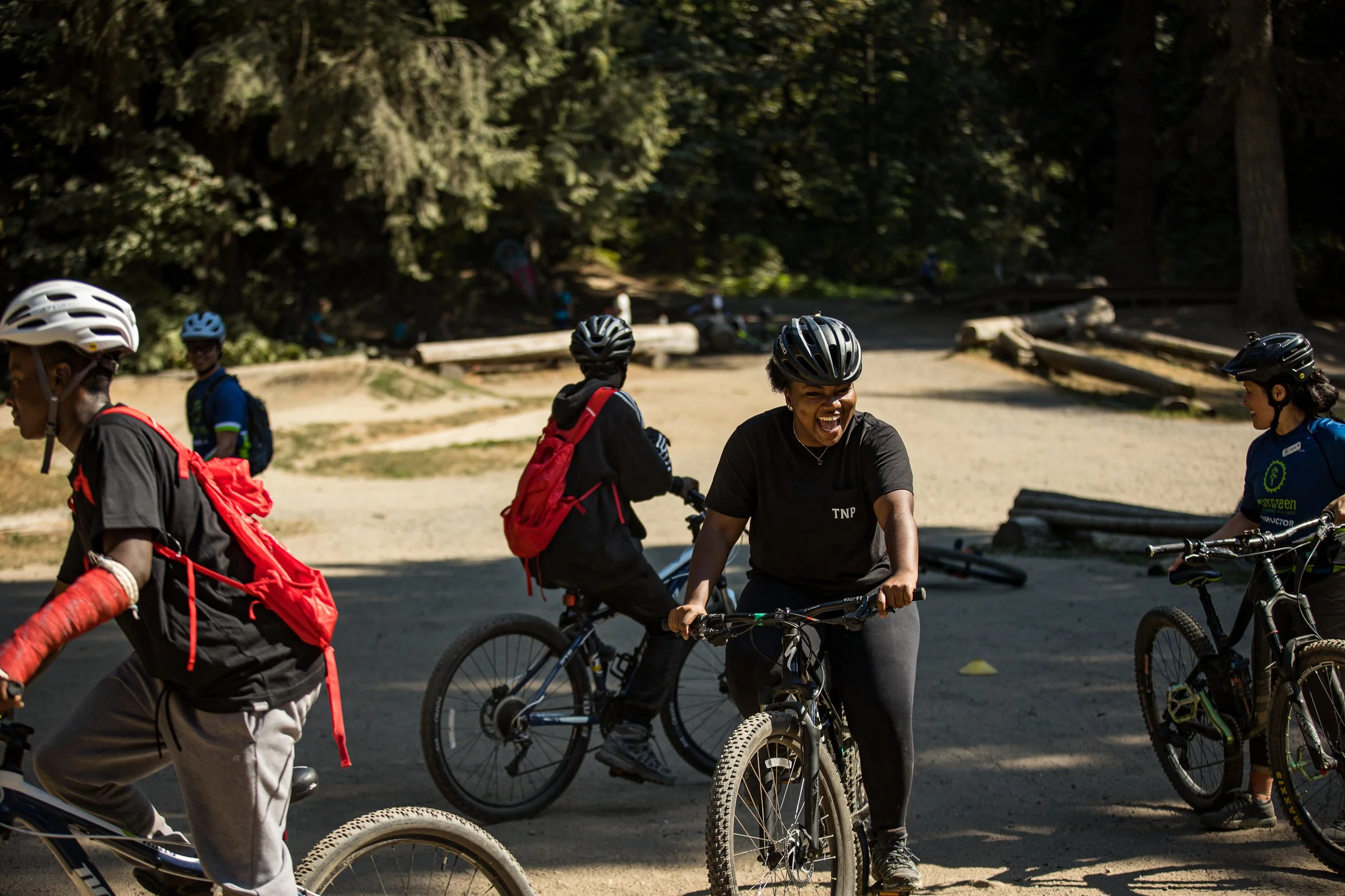
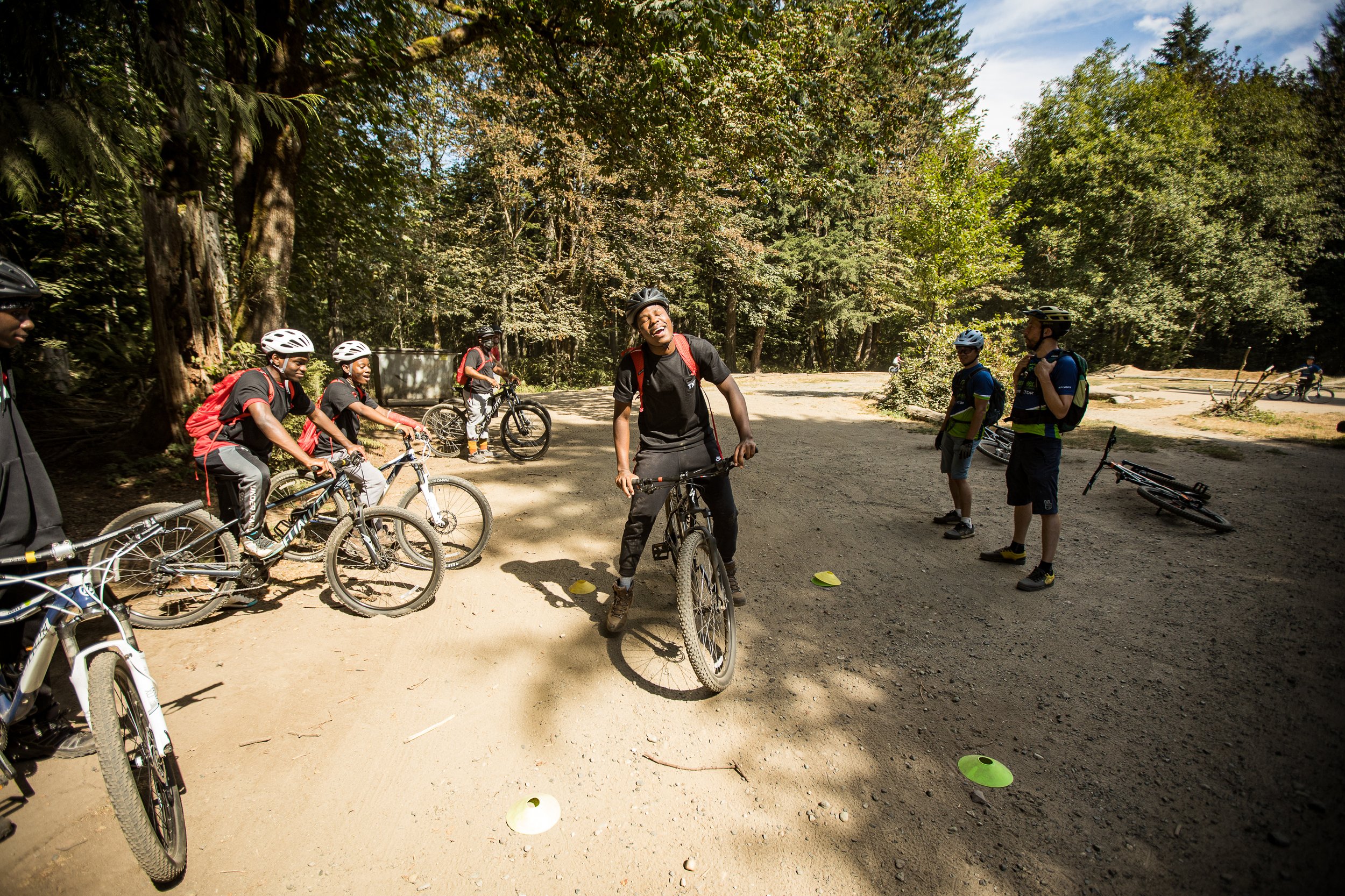
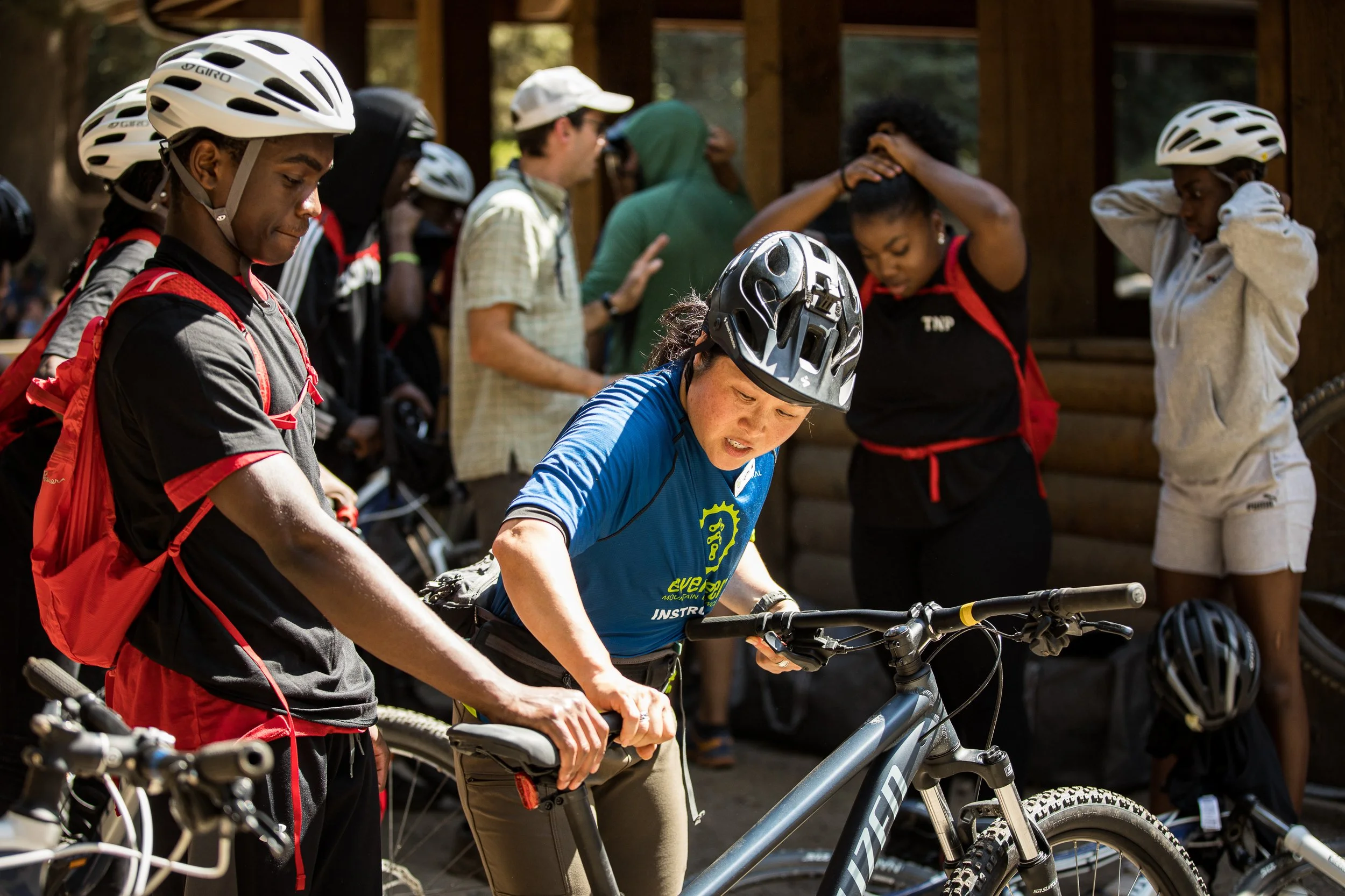
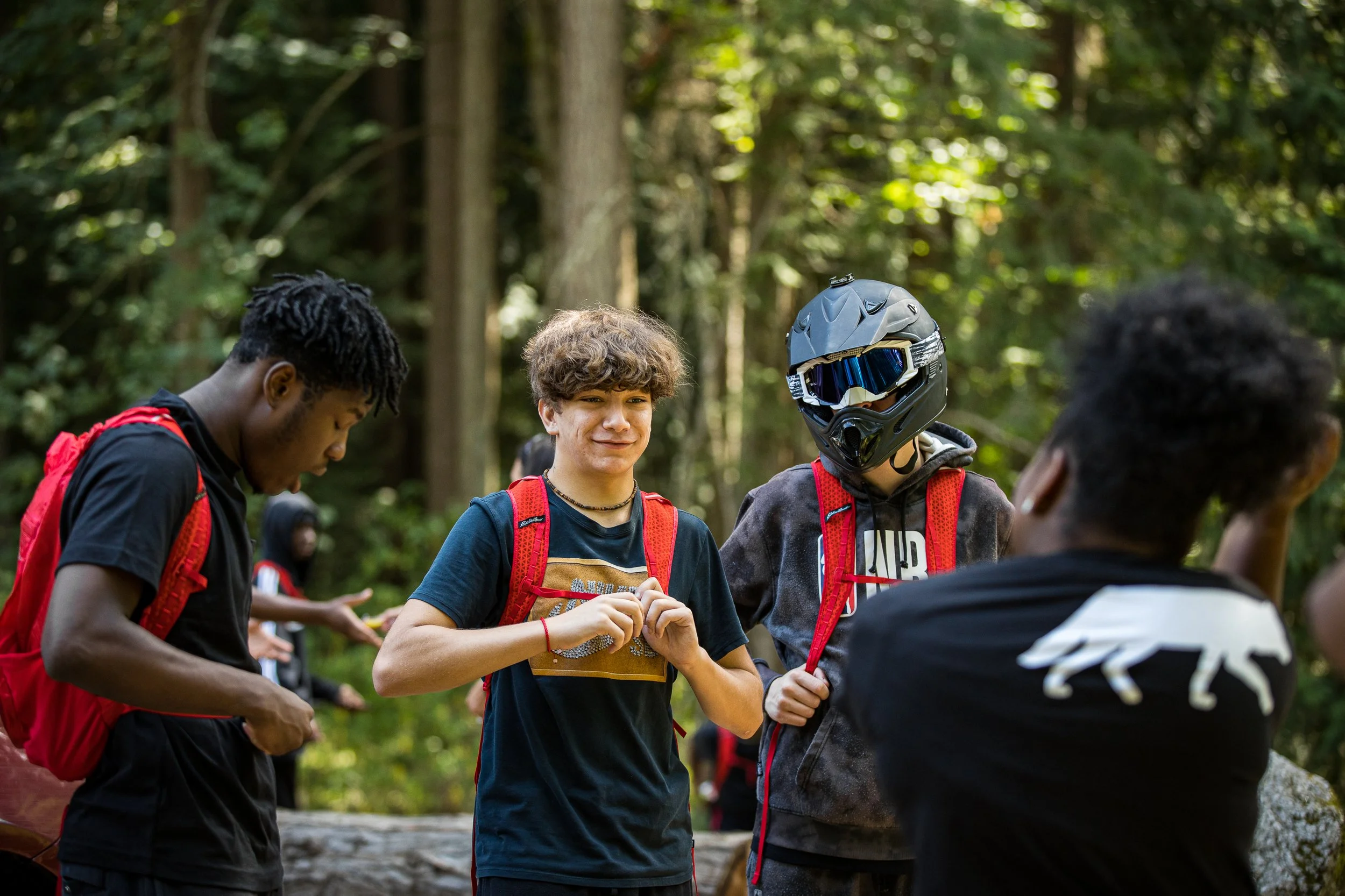
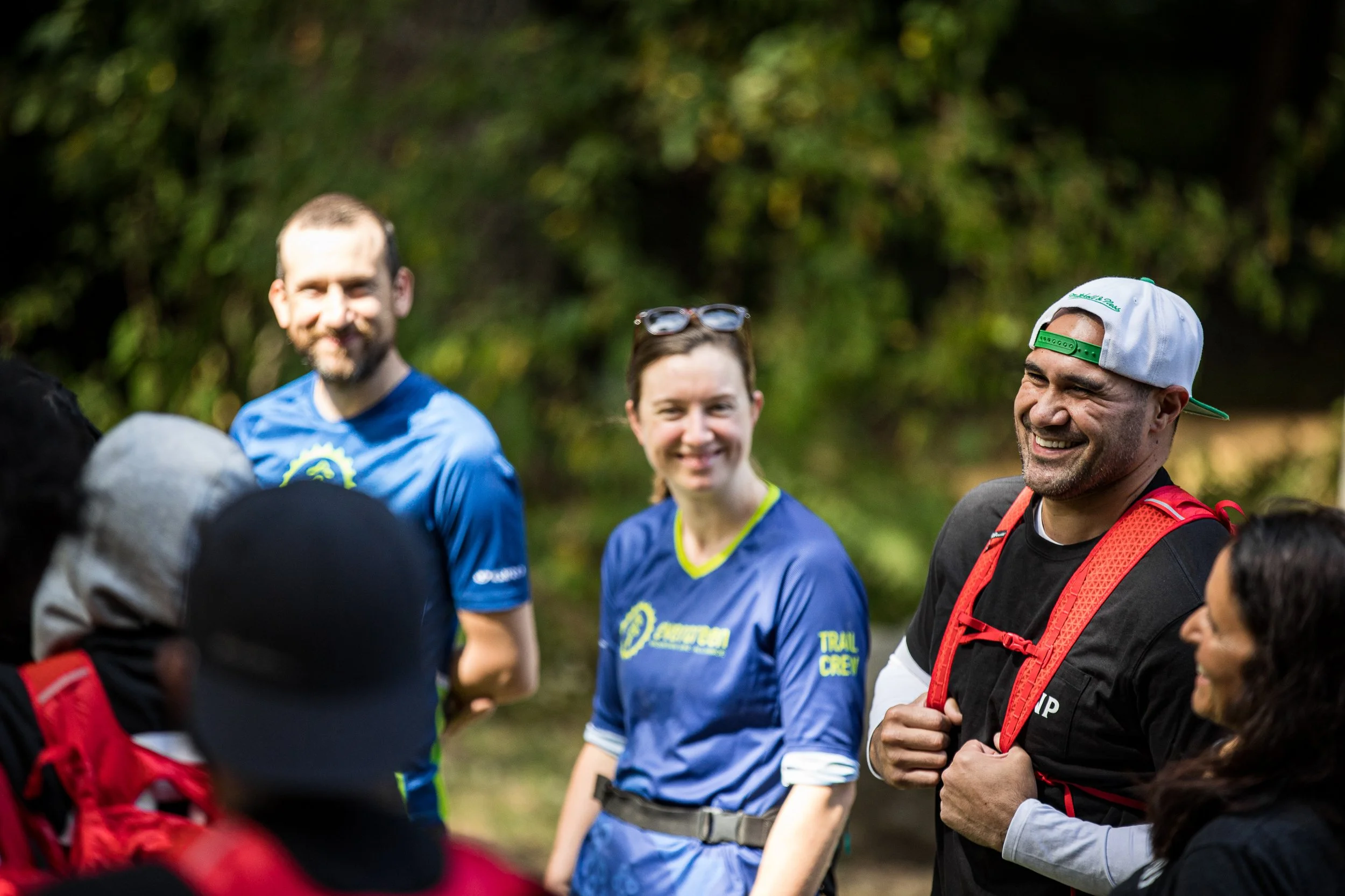
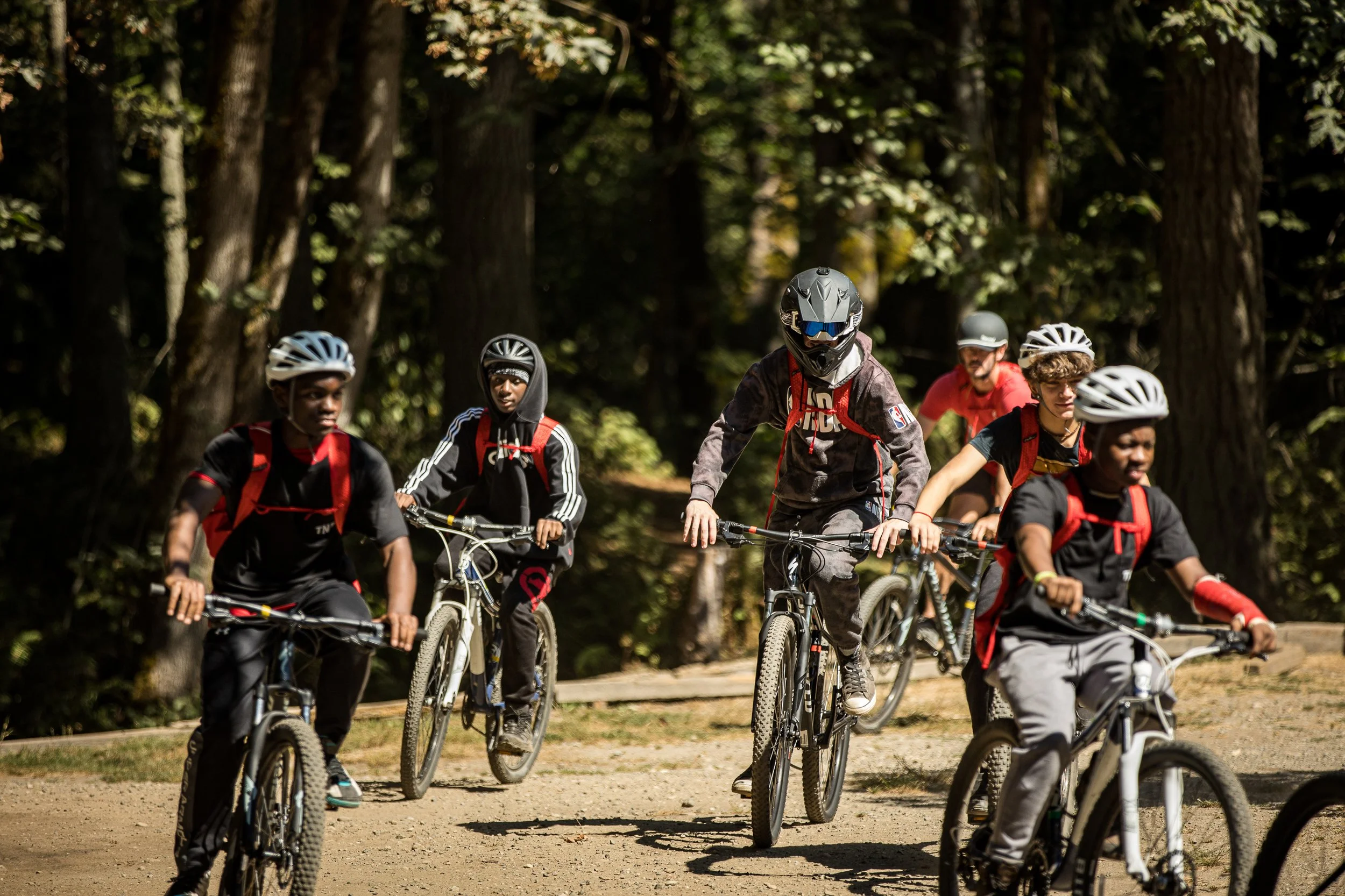
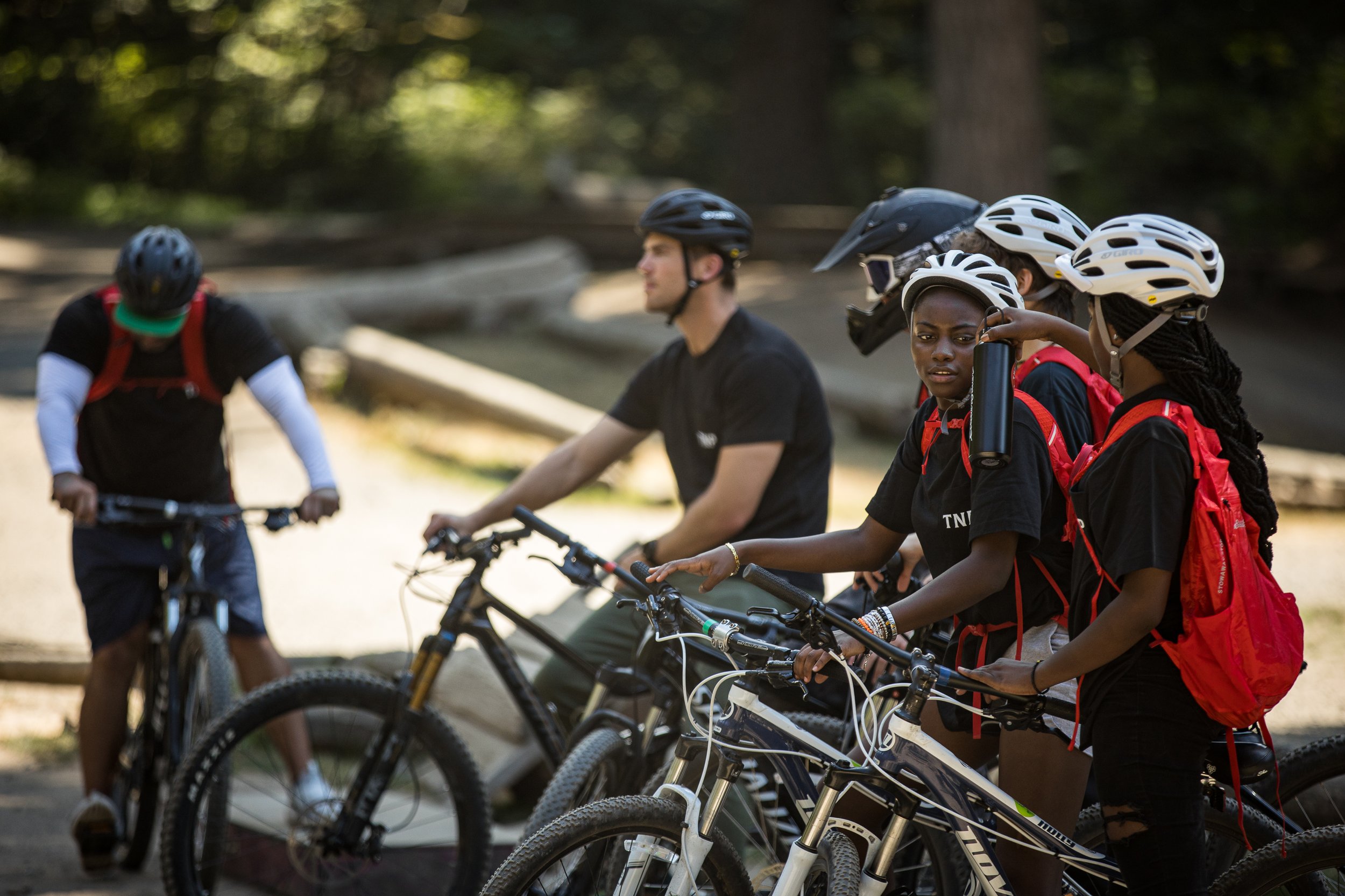
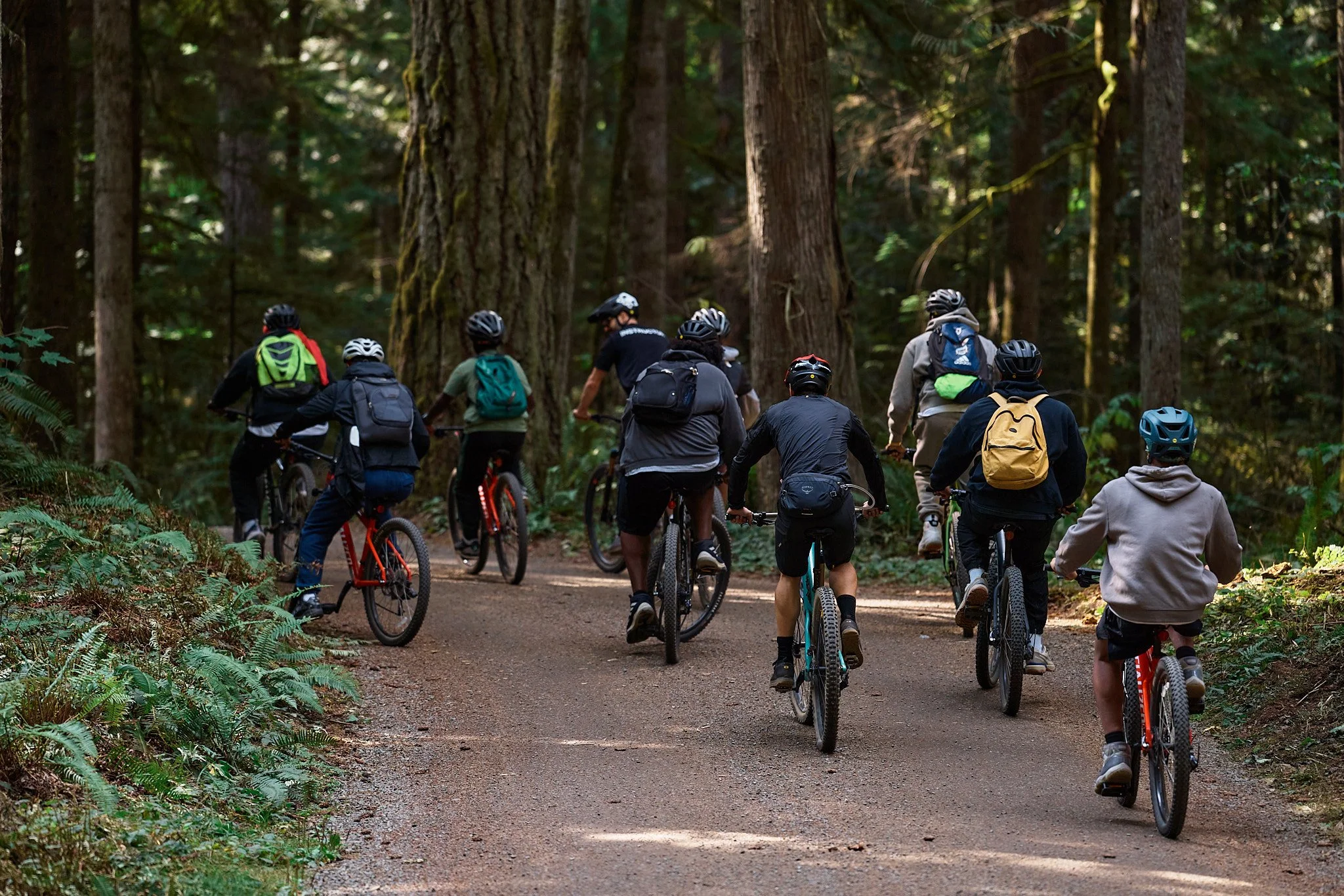
The Nature Project partnered with M.U.S.T. (Mentoring Urban Students and Teens), a Seattle organization serving young Black men, for two days of adventure, community, and growth in the forest. Participants arrived with their near-peer mentors and were met by volunteer instructors from the Evergreen Mountain Bike Alliance, who guided all 24 riders safely through the forested trails of Duthie Park with skills instruction and steady encouragement.
Every Teen Said Yes
The Nature Project x M.U.S.T. x Evergreen Mountain Bike Alliance
Duthie Hill sits inside a forest that feels removed from everything. That was the point. Two days, 24 riders, and a group of young men who showed up ready for something they had never done before.
The Nature Project partnered with M.U.S.T. (Mentoring Urban Students and Teens), a Seattle organization serving young Black men, to bring teens into the forest for two days of adventure, community, and growth. Participants arrived with their near-peer mentors and were met by volunteer instructors from the Evergreen Mountain Bike Alliance, who guided everyone safely through the forested trails of Duthie Park with skills instruction and steady encouragement alongside them the entire way.
The day started with a walk. A boardwalk winding through the forest, ferns spreading out on either side, large trees rising overhead, the trail climbing uphill until it opened into the clearing where everything would begin. That walk through the woods was its own kind of arrival.
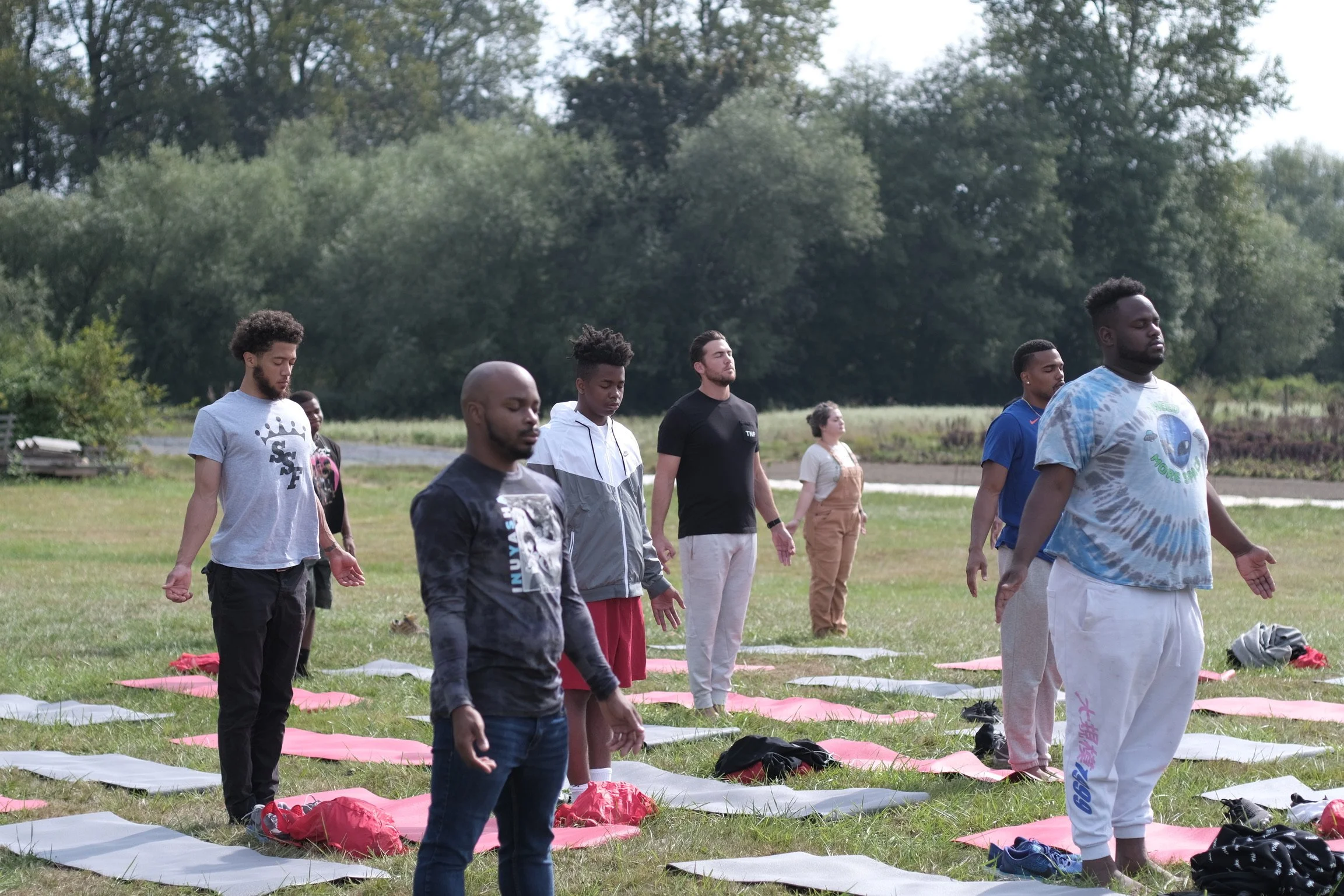
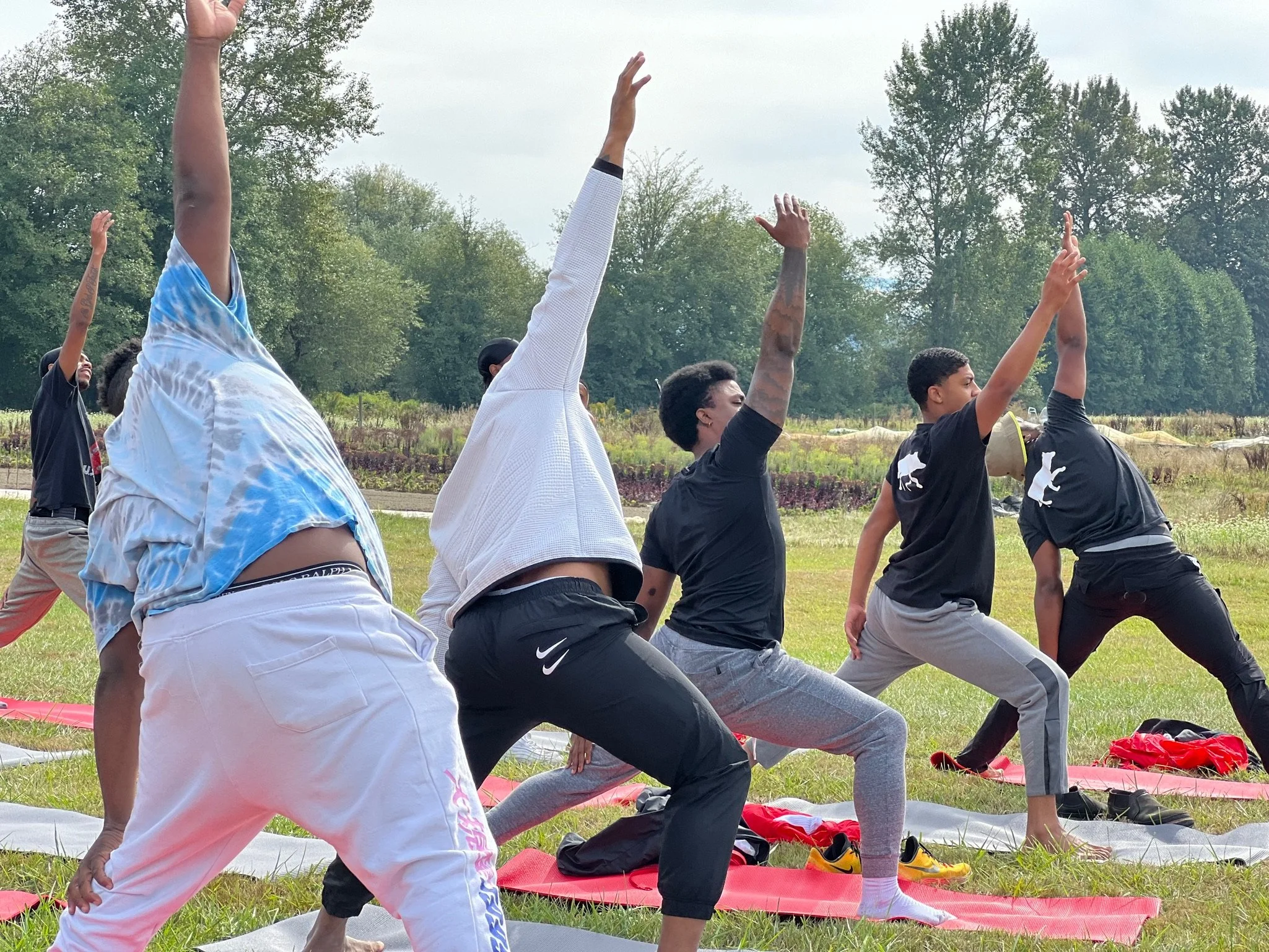
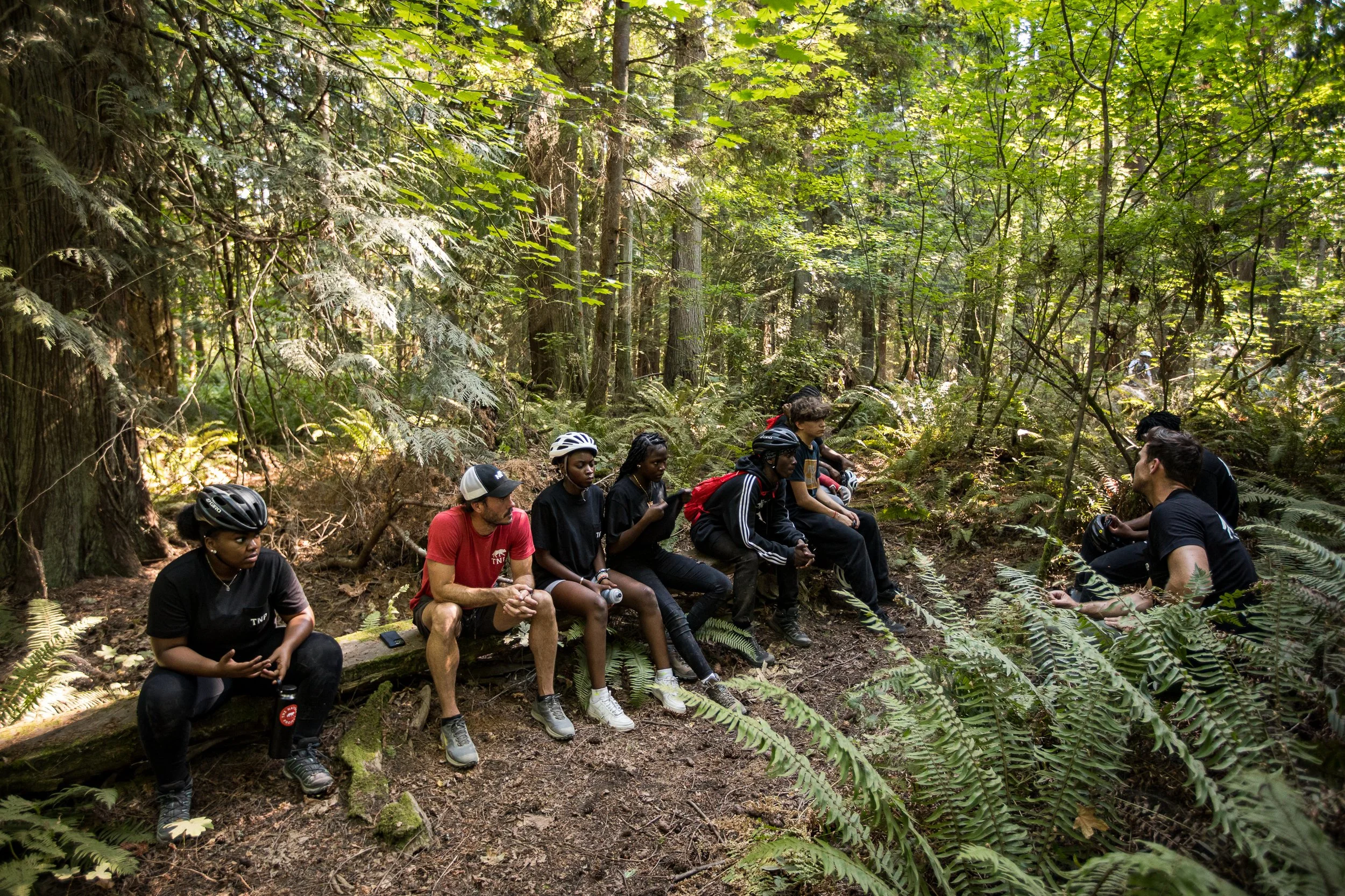
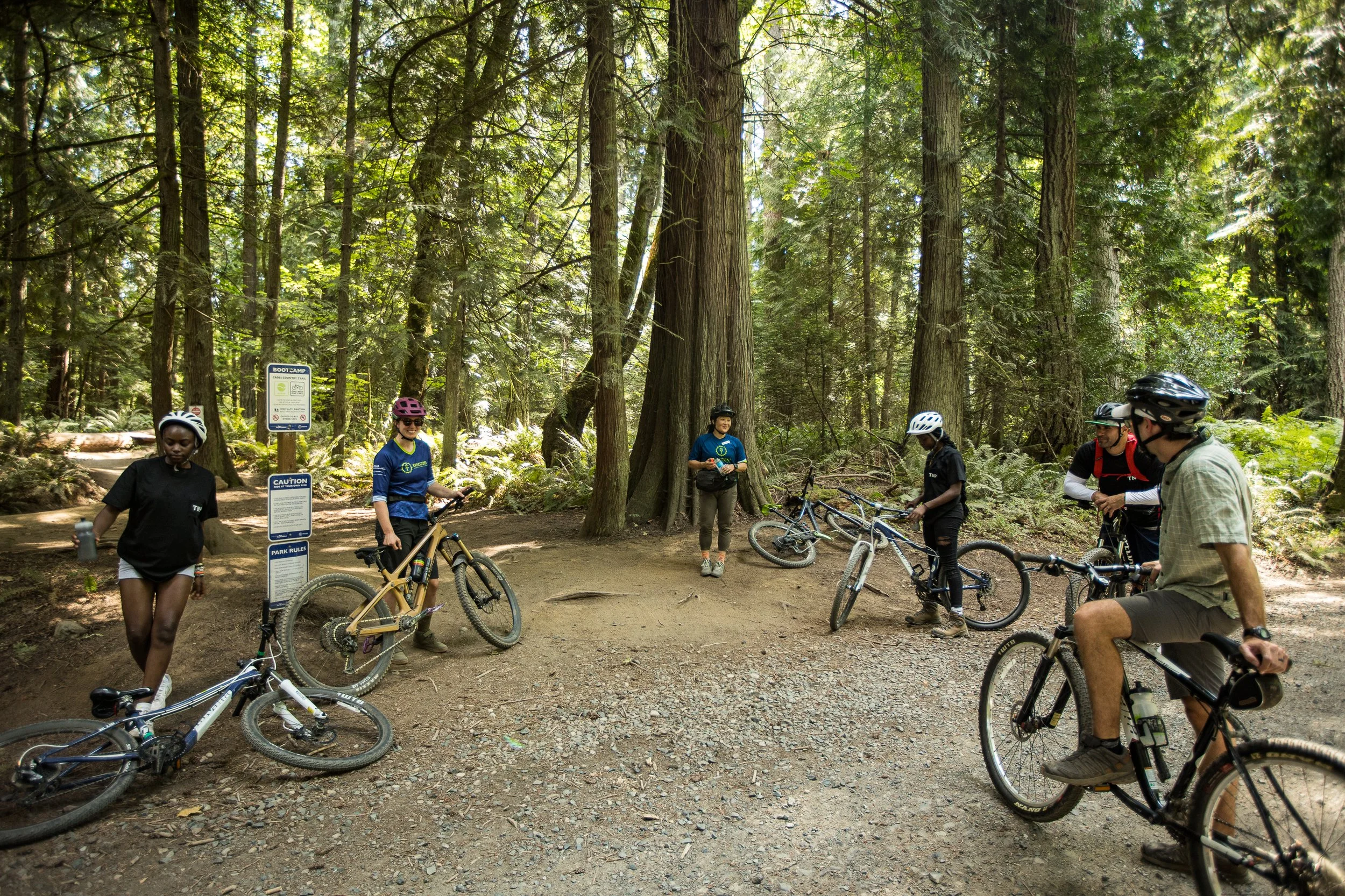
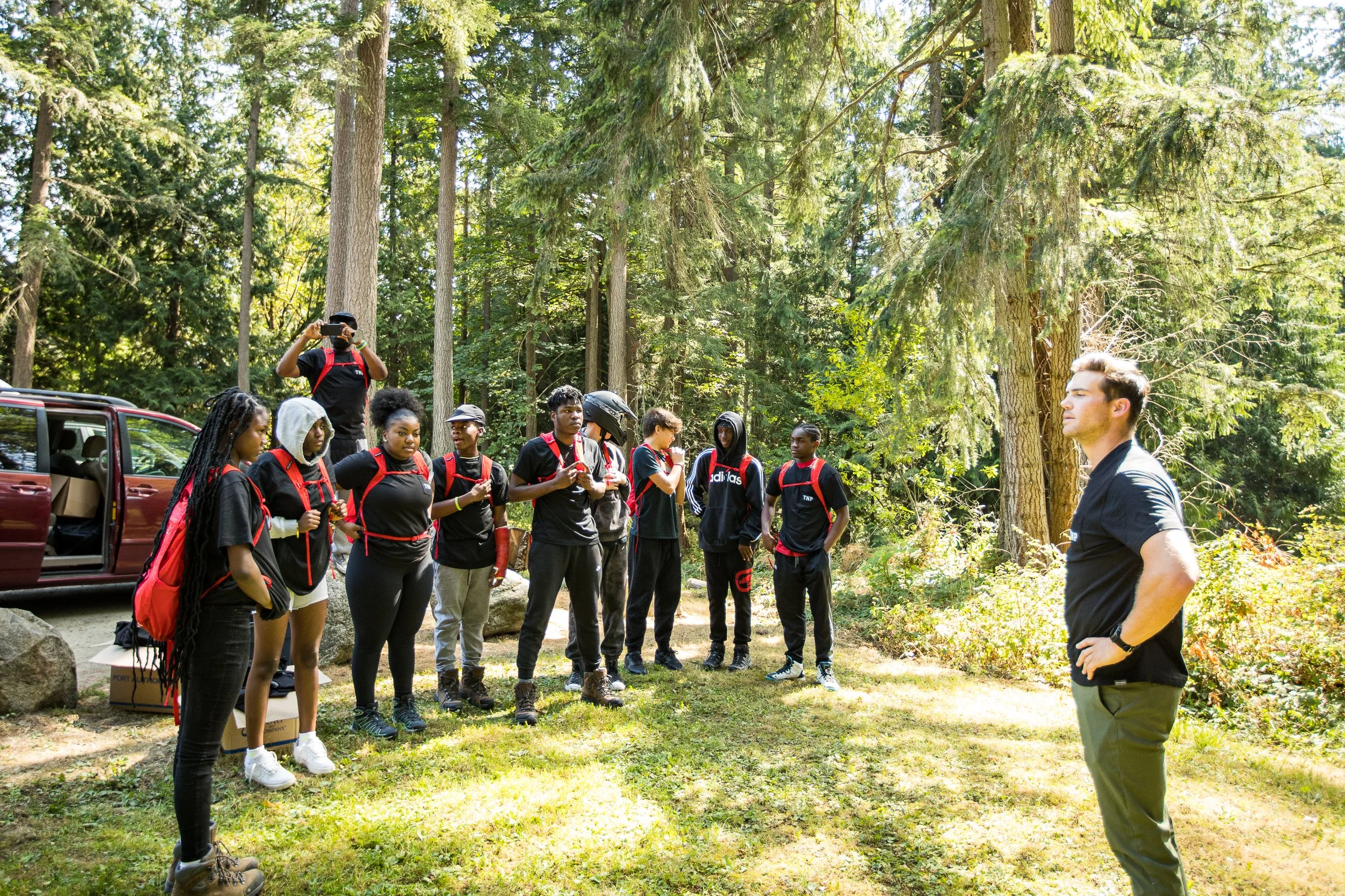
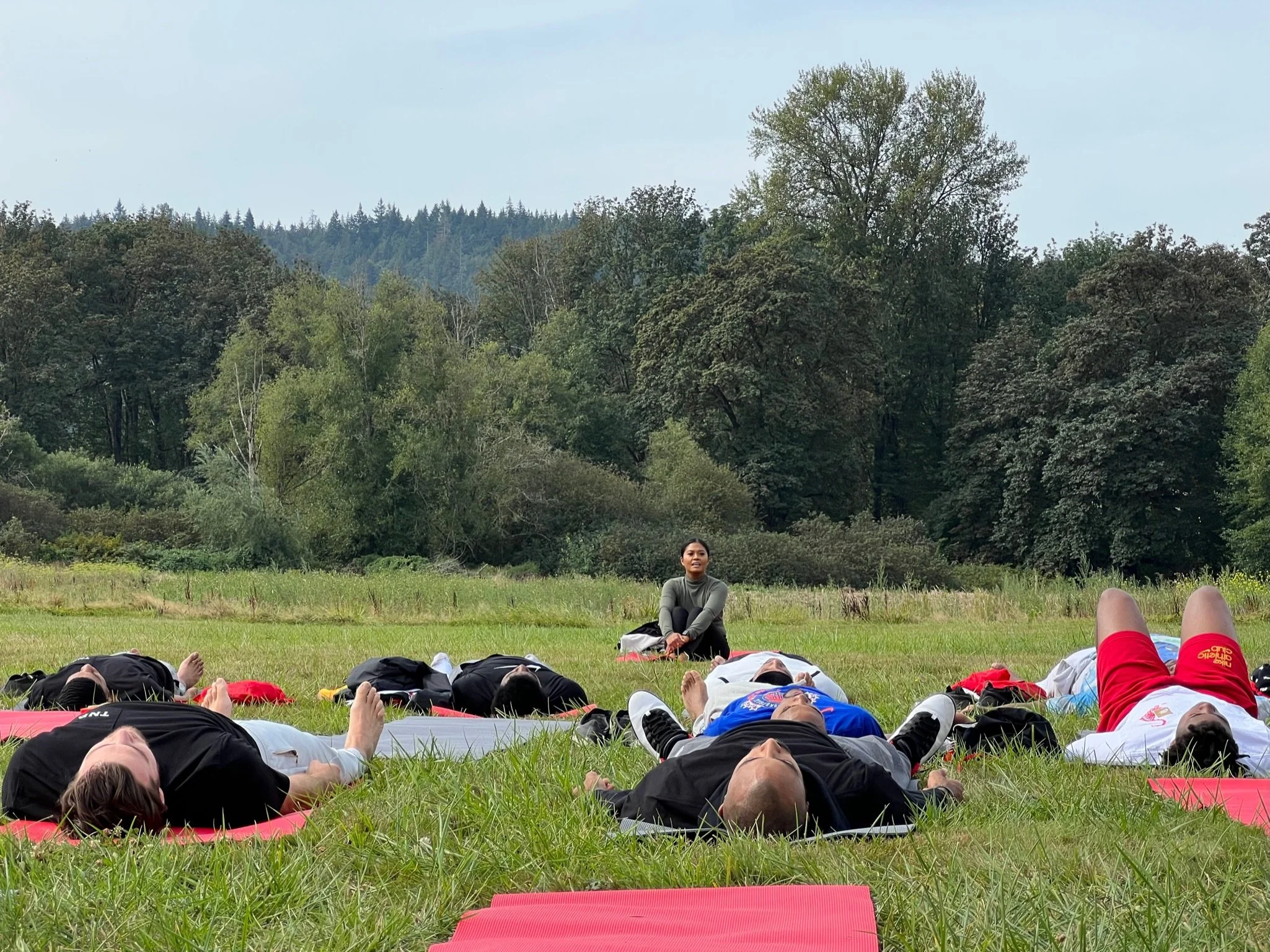
Before anyone touched a bike, TNP mindset and yoga instructor Angeline Corpuz led the group in breathwork and intention-setting among the trees. There, standing in the forest before the trails opened up, everyone got grounded in the moment and in the mission. What were they here for? What did they want to take with them when the day was done?
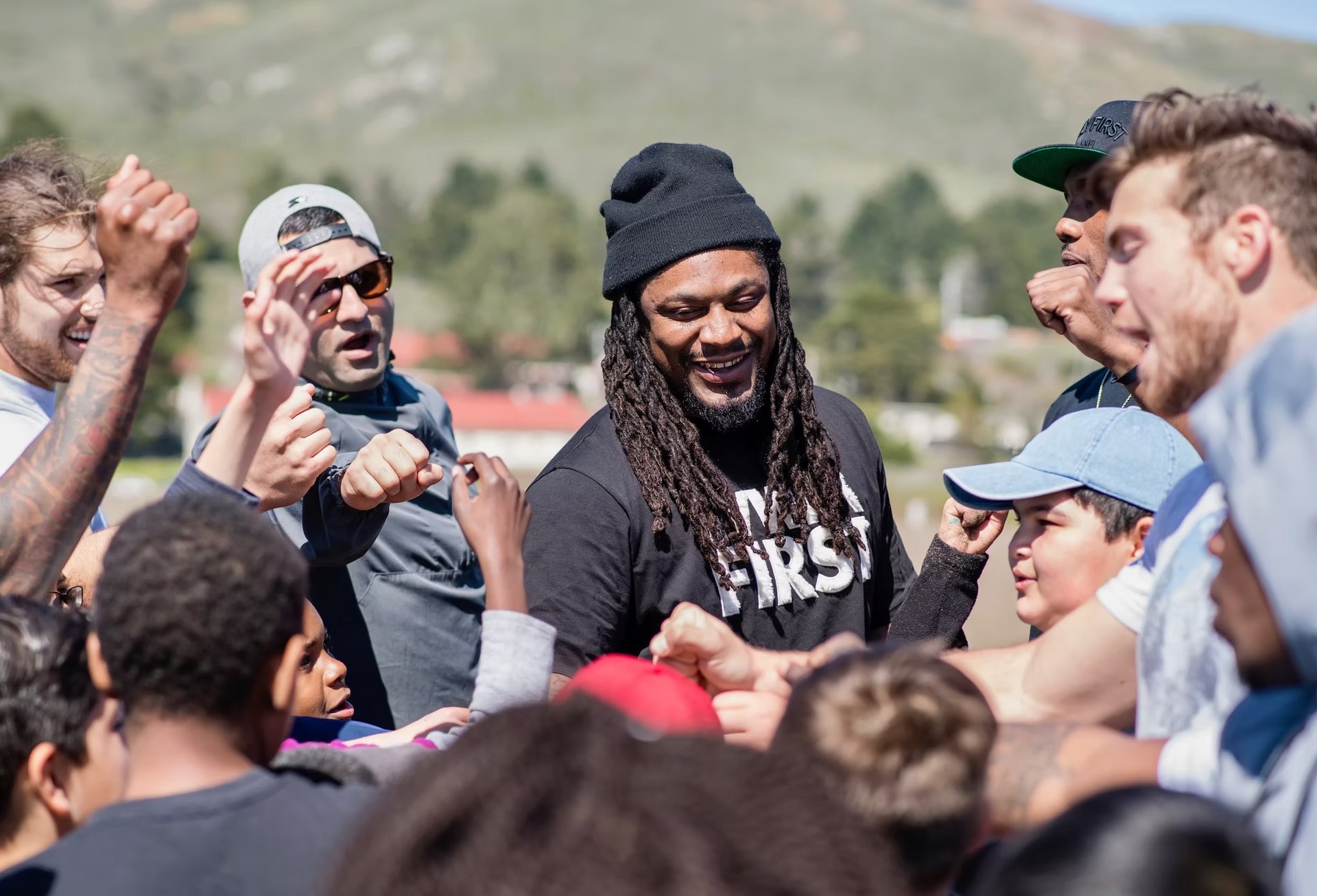
Then the stories started. TNP volunteer and Seattle Seahawk Lofa Tatupu joined the group and shared what the outdoors has meant in his own life, the growth he has found in nature, and what it looks like to keep choosing hard things. Professional women's soccer player Zjada Baydass spoke about how nature grounds her from the chaos and busyness of everyday life and competition. Two athletes, two different worlds, one shared truth: being outside changes something in you.
What made the day different was what happened in between. Lofa moved through the group one on one, sitting down with teens along the trail, talking the way you only talk when you're outside and the pressure is off. He was honest about the hard things: injuries as a teen athlete, the moments of doubt, what it felt like when your body let you down or the game didn't go the way you needed it to. The teens who are athletes themselves heard something in that they don't often get to hear from someone who has been where they are. That it's hard for everyone. That asking for help is part of the game. That getting back up is the whole thing.
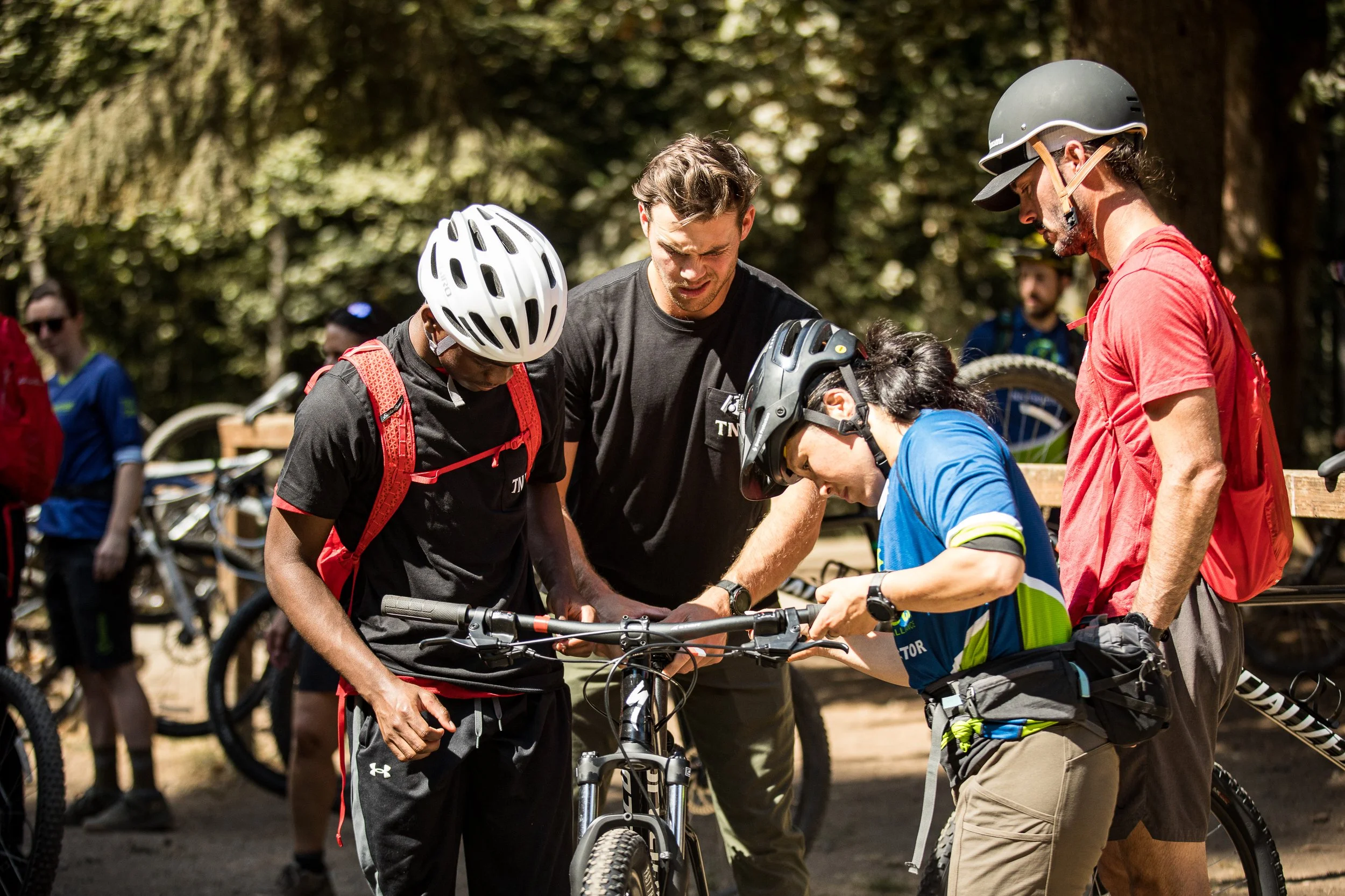
Everything the teens needed was there waiting for them. Helmets, bikes, gear — all provided. Evergreen Mountain Bike Alliance volunteers who came not just to teach but to share, opening up about their own experiences on the trails and what this sport has given them. They taught safety first, built the foundation, and then introduced something that doesn't come from a manual: that feeling of standing at the edge of something a little scary and choosing to try it anyway. That edge is where the real learning lives, and the volunteers knew exactly how to hold it.
Then they rode.
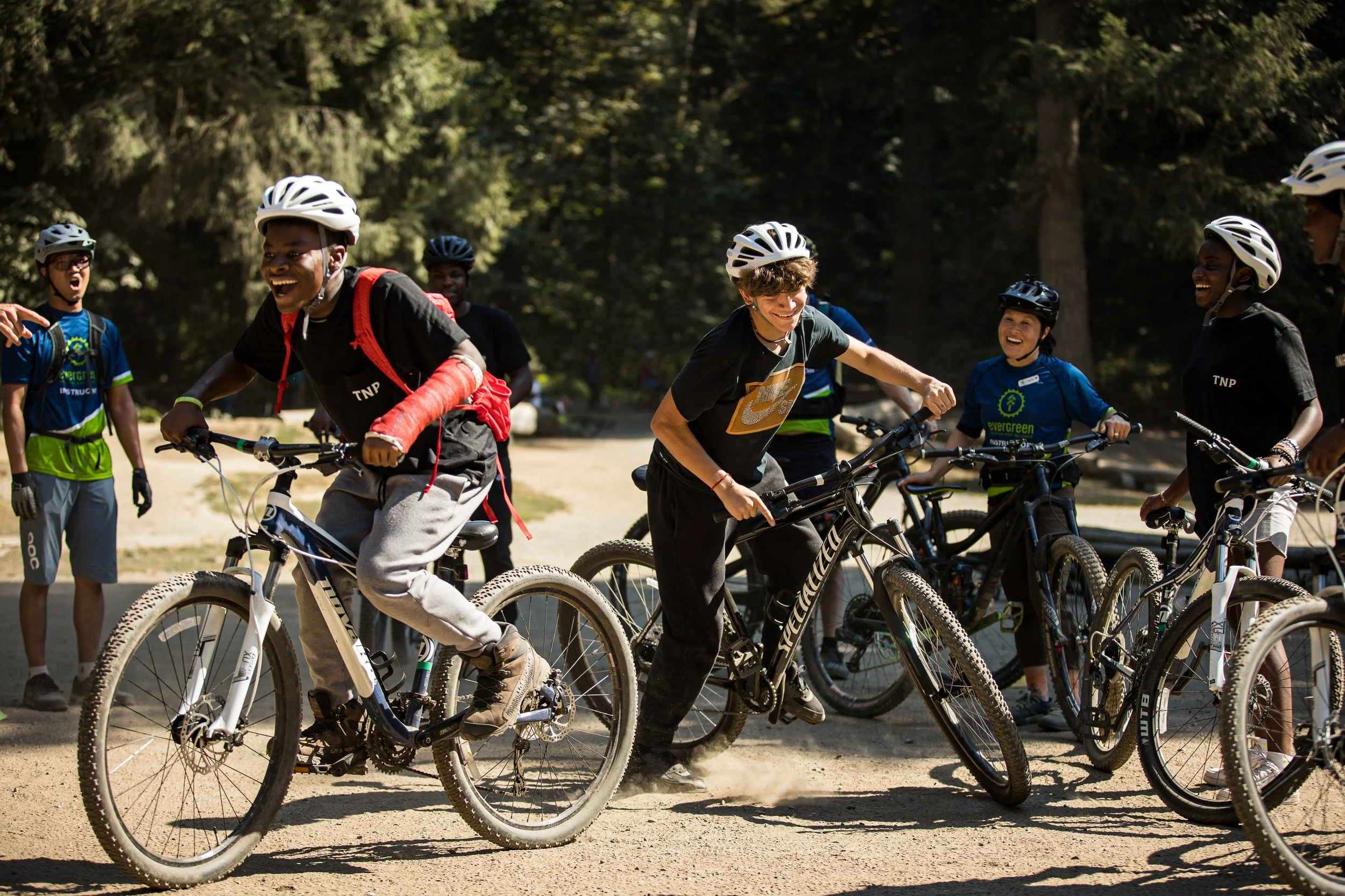
All 24 of them. Through forested trails, with instructors beside them and mentors behind them and something building inside them with every turn. Some had never been on a mountain bike. None of them stopped.
Every teen said yes that day. Yes to showing up, yes to something new, yes to something bigger than themselves. On the trails they said yes to physical challenges that pushed them past what they thought was possible. And in the quiet moments between, they said yes to thinking about the harder things too: difficult times, family struggles, the pressures of school, and carrying the confidence they built in those woods back into their everyday lives.
And then there was the pure joy.
One young man shared his intention word at the start of the day: try. Just that one word. Later, at the top of the hill, he said he remembered it. And then he flew down laughing like an eight year old kid, all the way to the bottom. The others knew exactly what he meant. That laugh, that hill, that moment of just going for it — that was the whole day in one breath.
That confidence belongs to them now.
At The Nature Project, this is what we do. We go outside, we have fun, and we make space to share and reflect. Not as an afterthought but as the whole point. Nature has a way of opening people up, and when you pair that with honest conversation and real connection, something shifts. We believe that being in nature together, really together, is one of the most powerful things we can offer young people. The fun and the reflection are not separate. They are the same thing.
A day at Oxbow Farm with the Congolese Integration Network
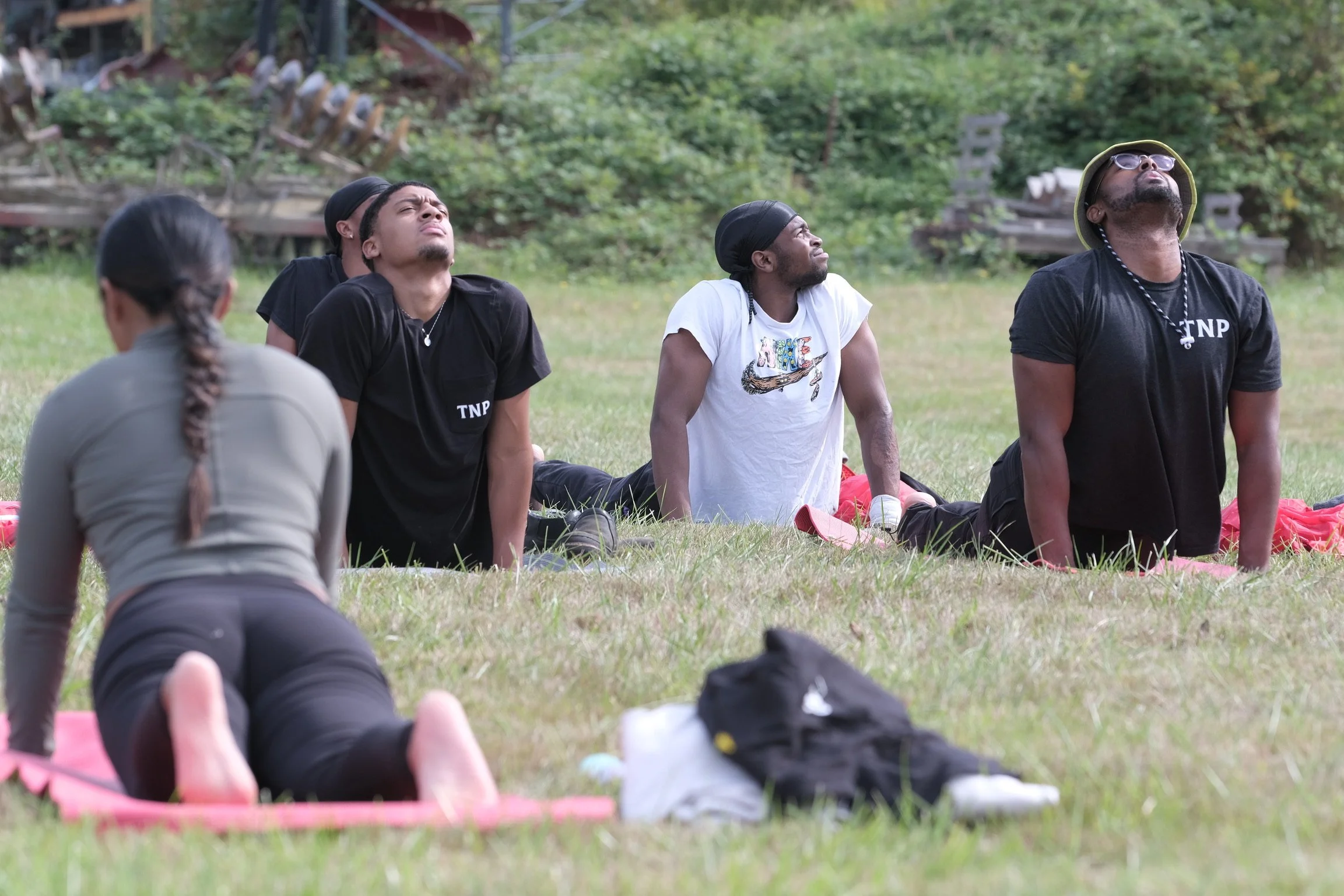
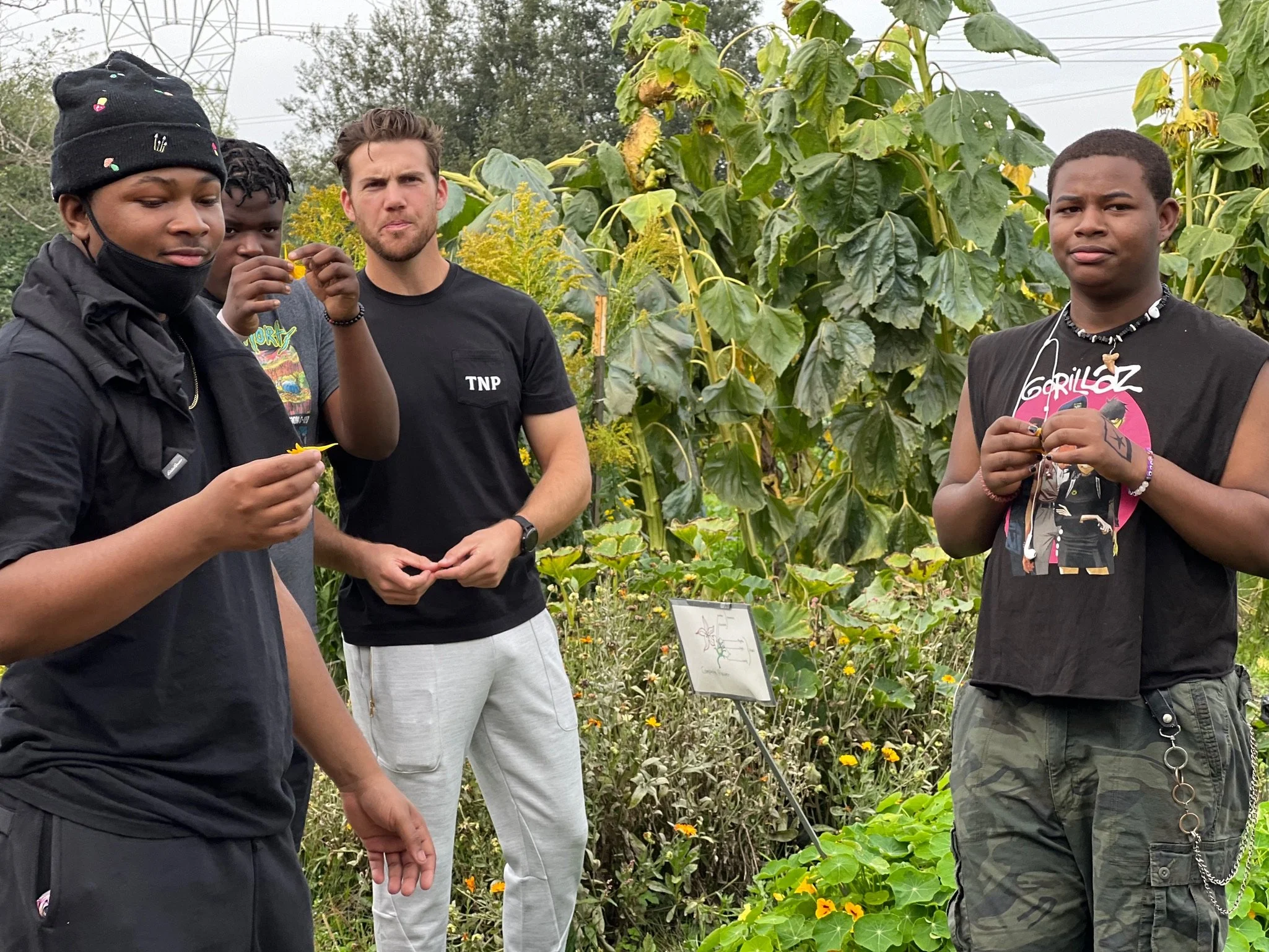
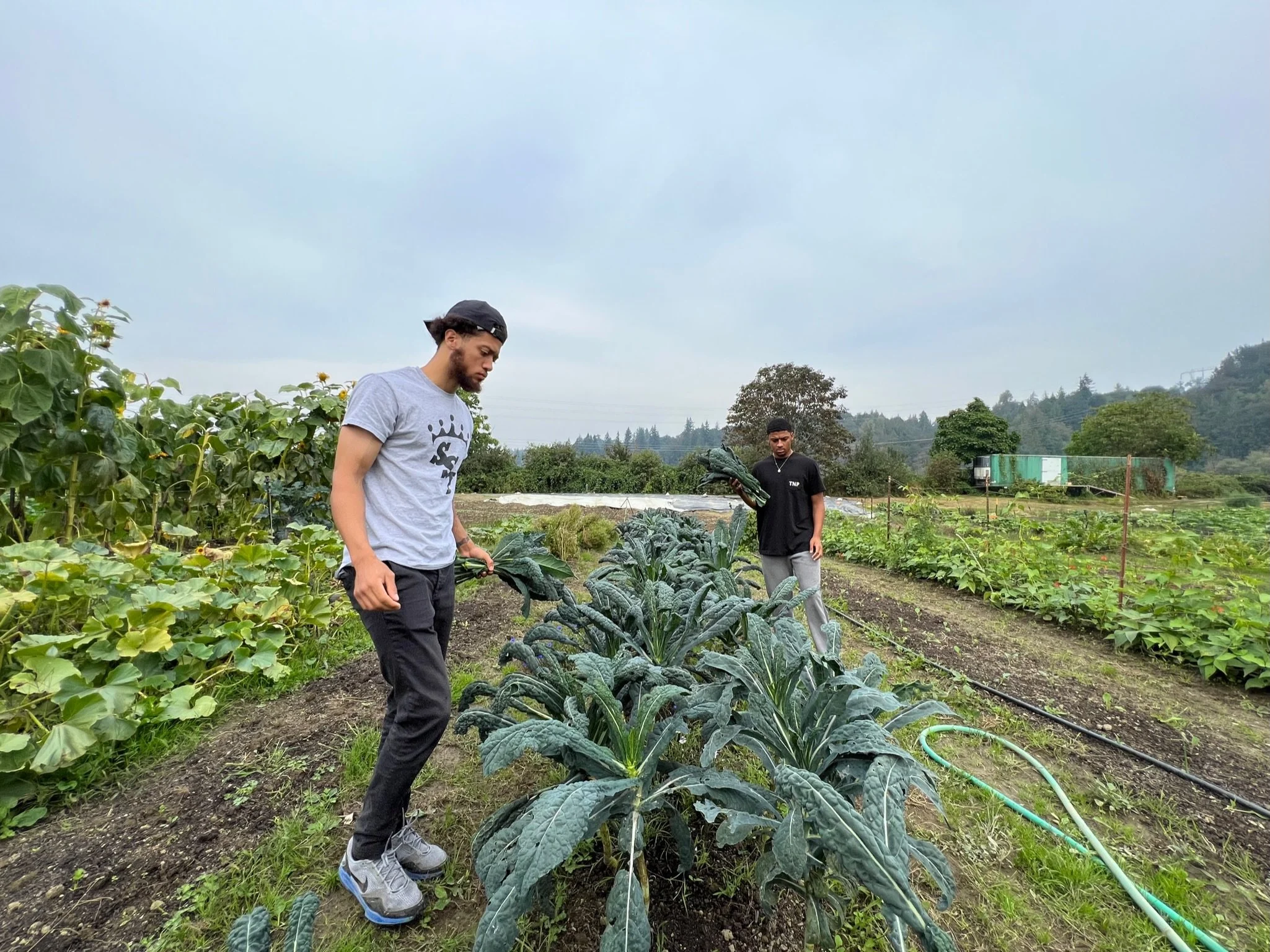
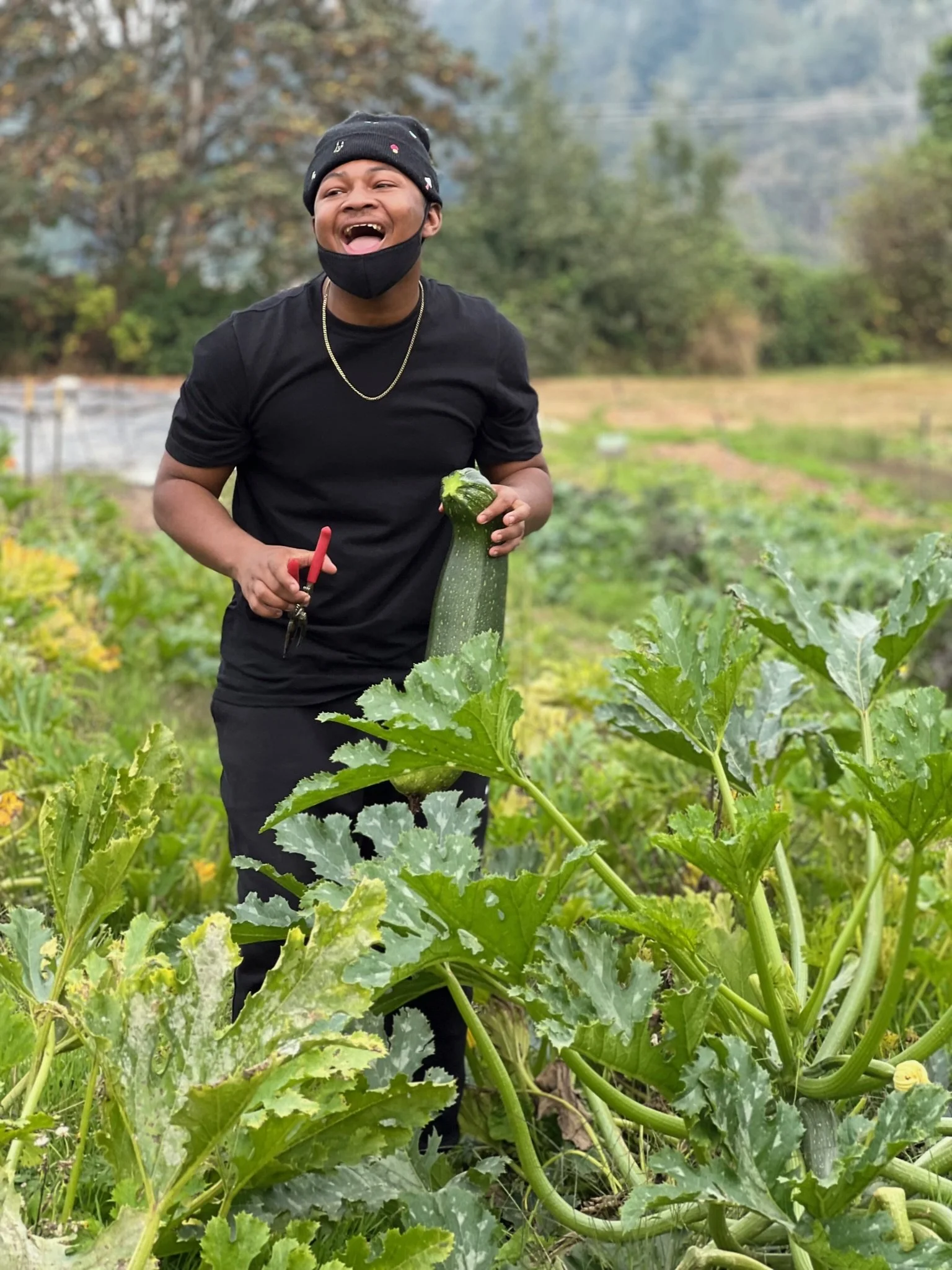
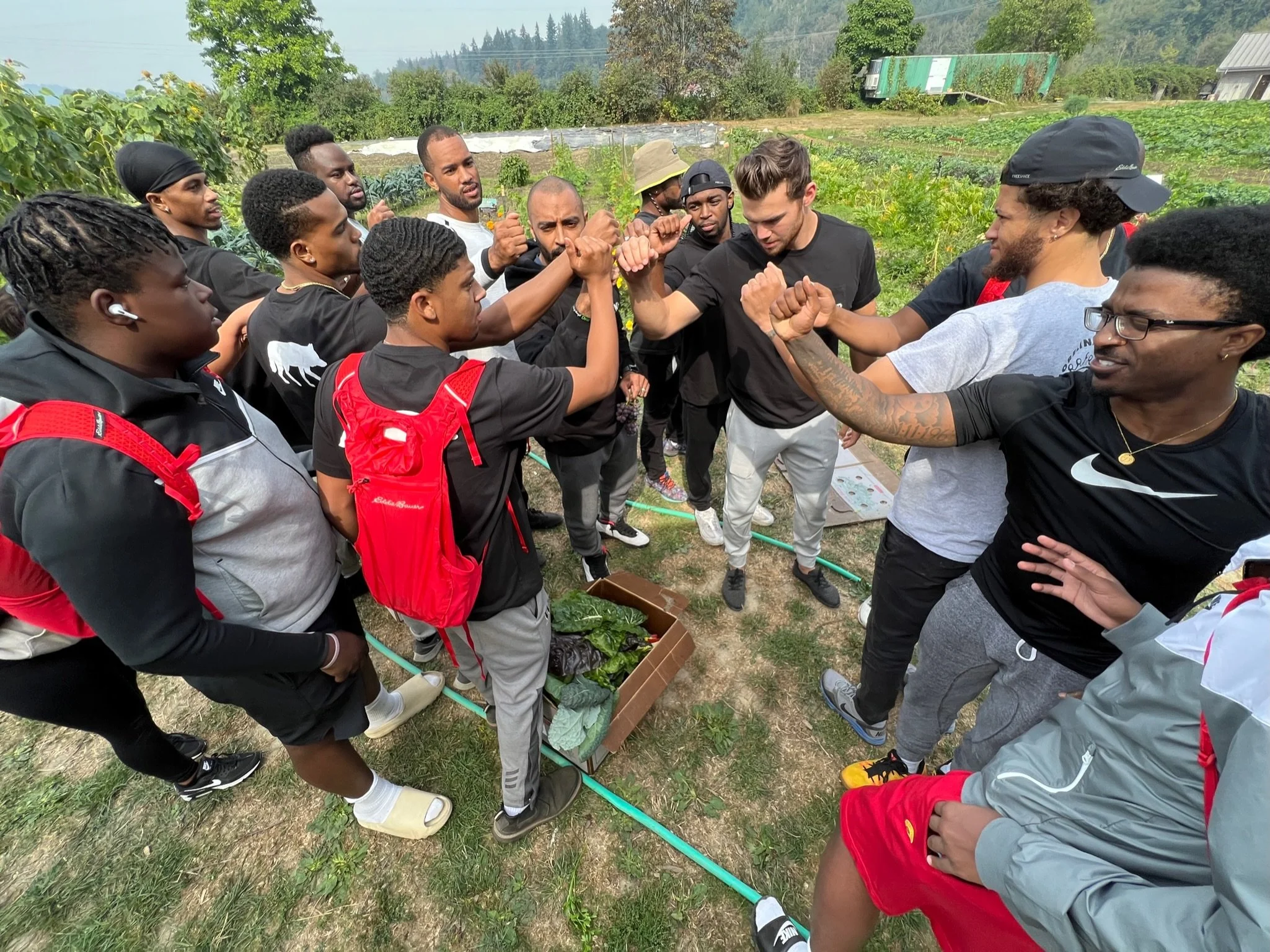
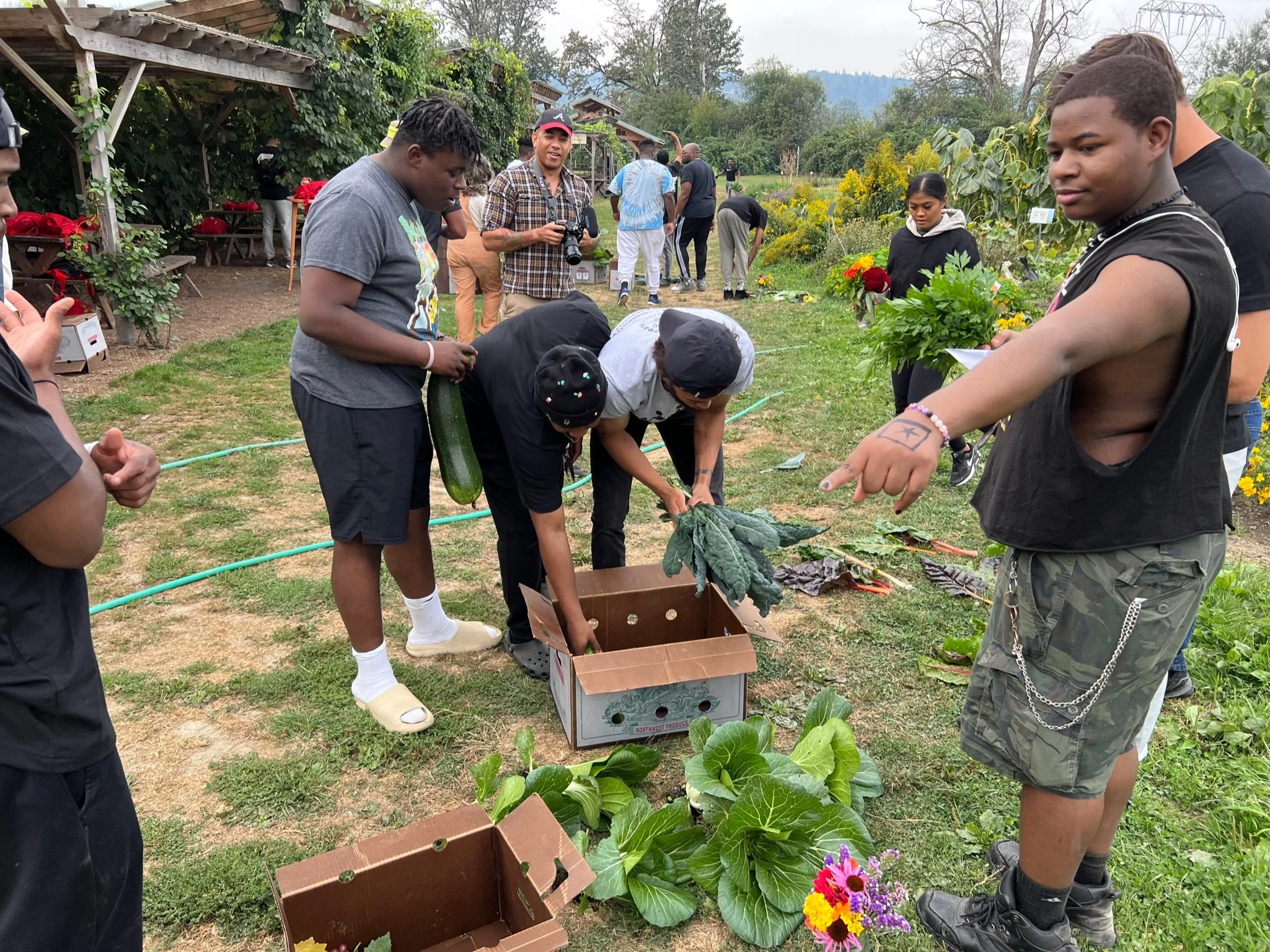
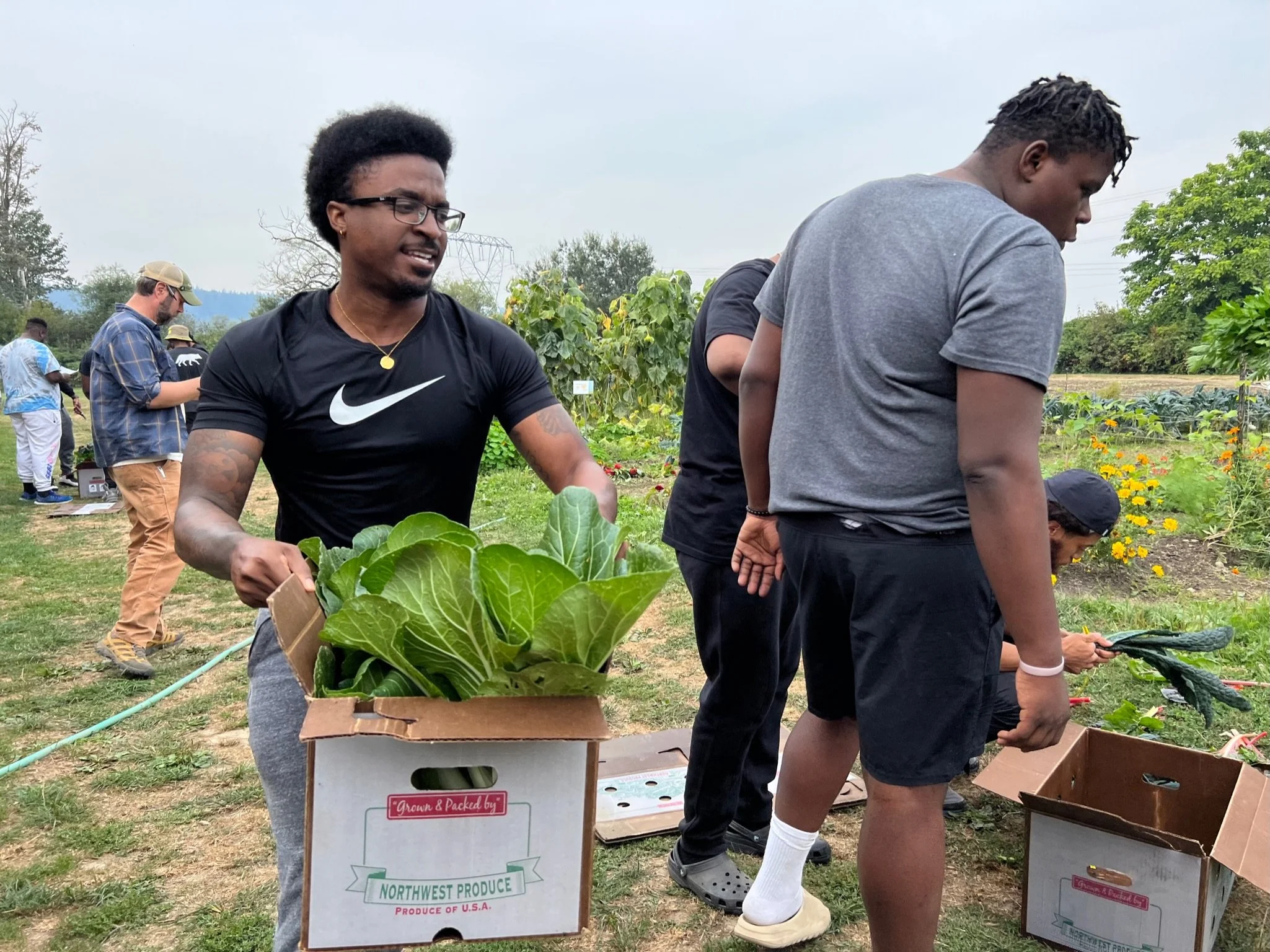
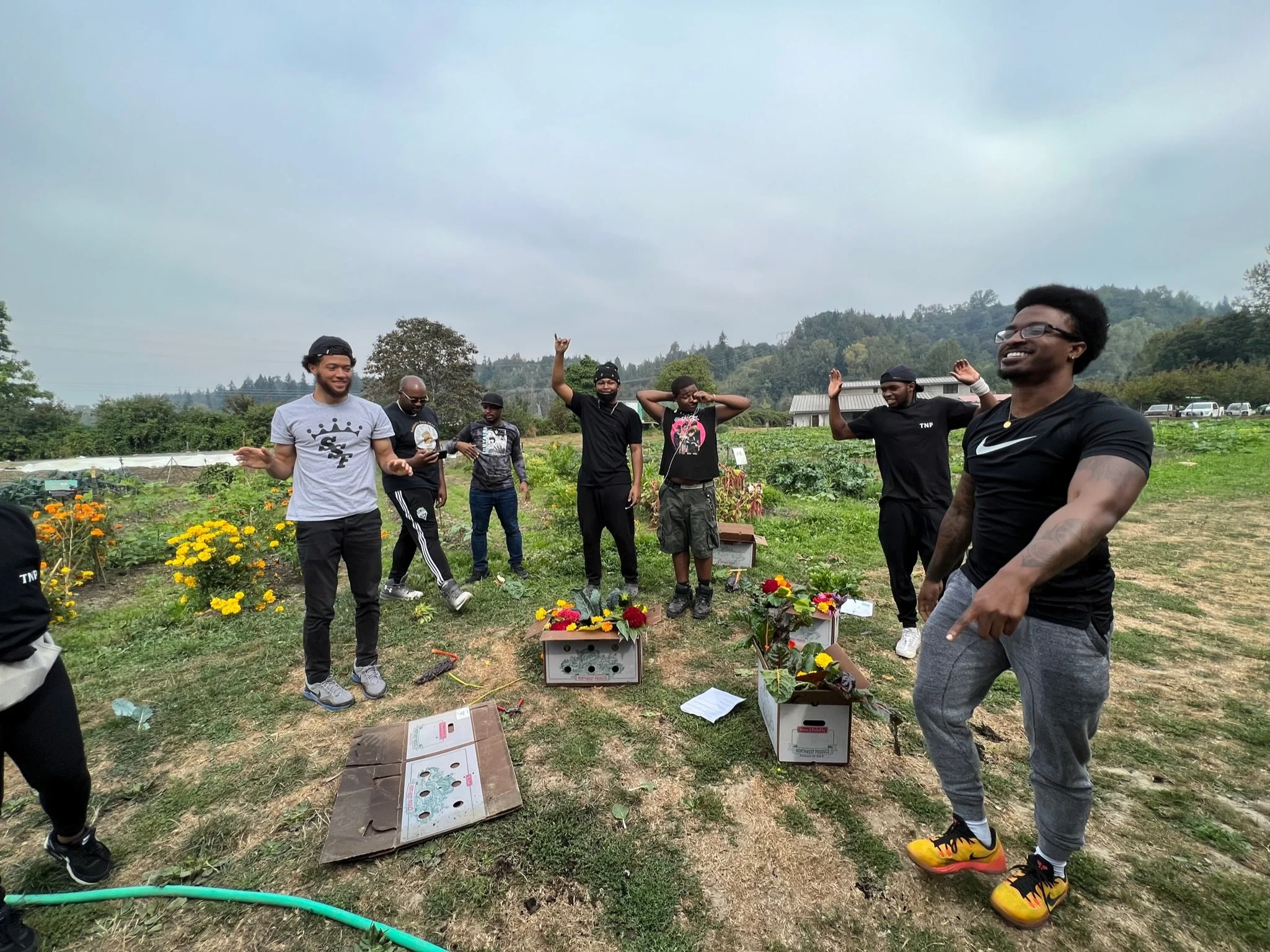
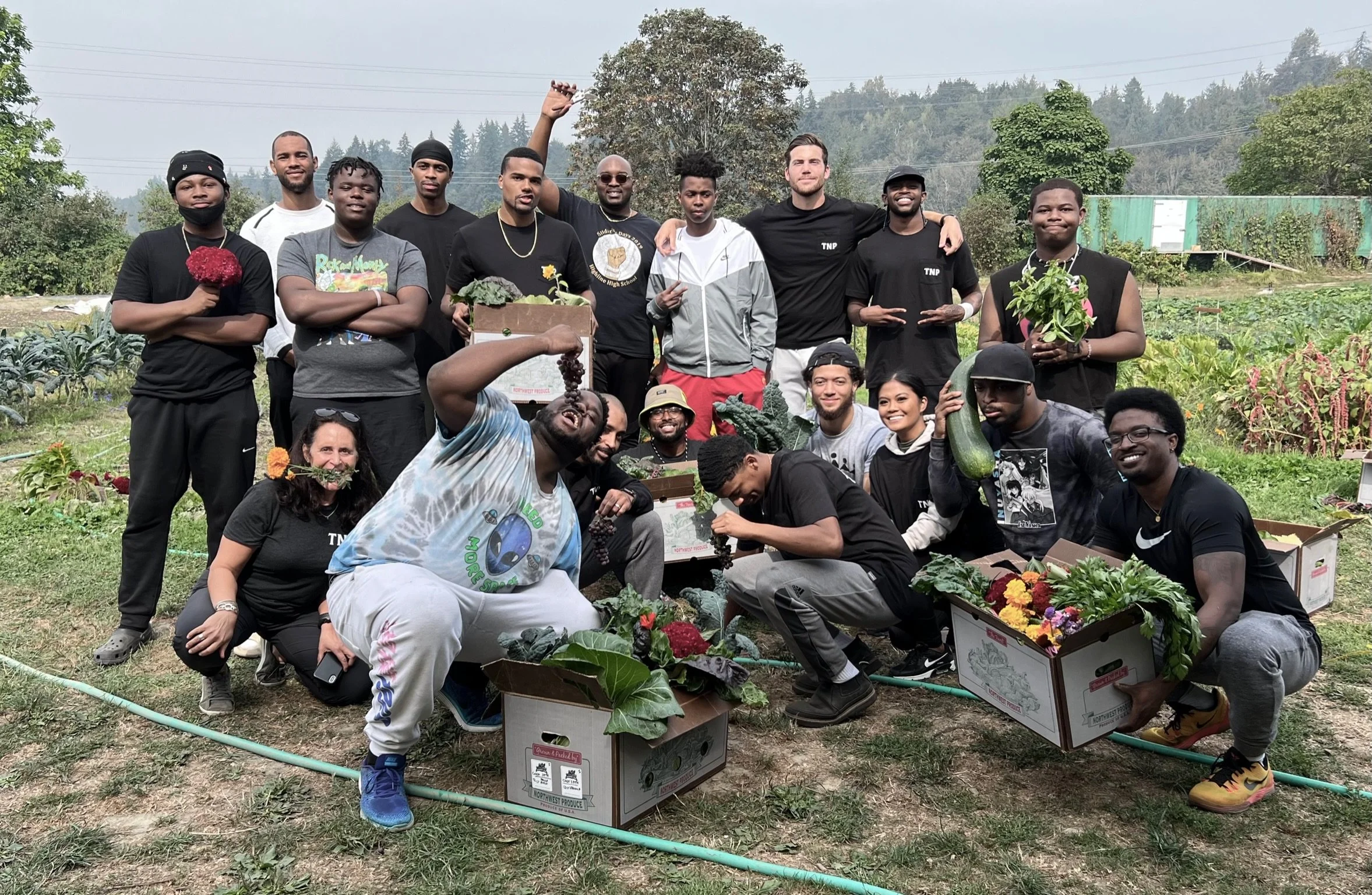
The Nature Project partnered with the Congolese Integration Network to bring teens into a full day of connection, nature, and good food. The day began in the greenhouse with TNP volunteer Angeline Corpuz leading the group in breathwork and mindset work, exploring how we talk to ourselves and setting intentions for the day. From there, the teens worked with a chef to harvest and cook vegetable curries, sharing the meal while opening up about their own heritage, food traditions, and what culture means to them.
Oxbow Farm, Carnation WA
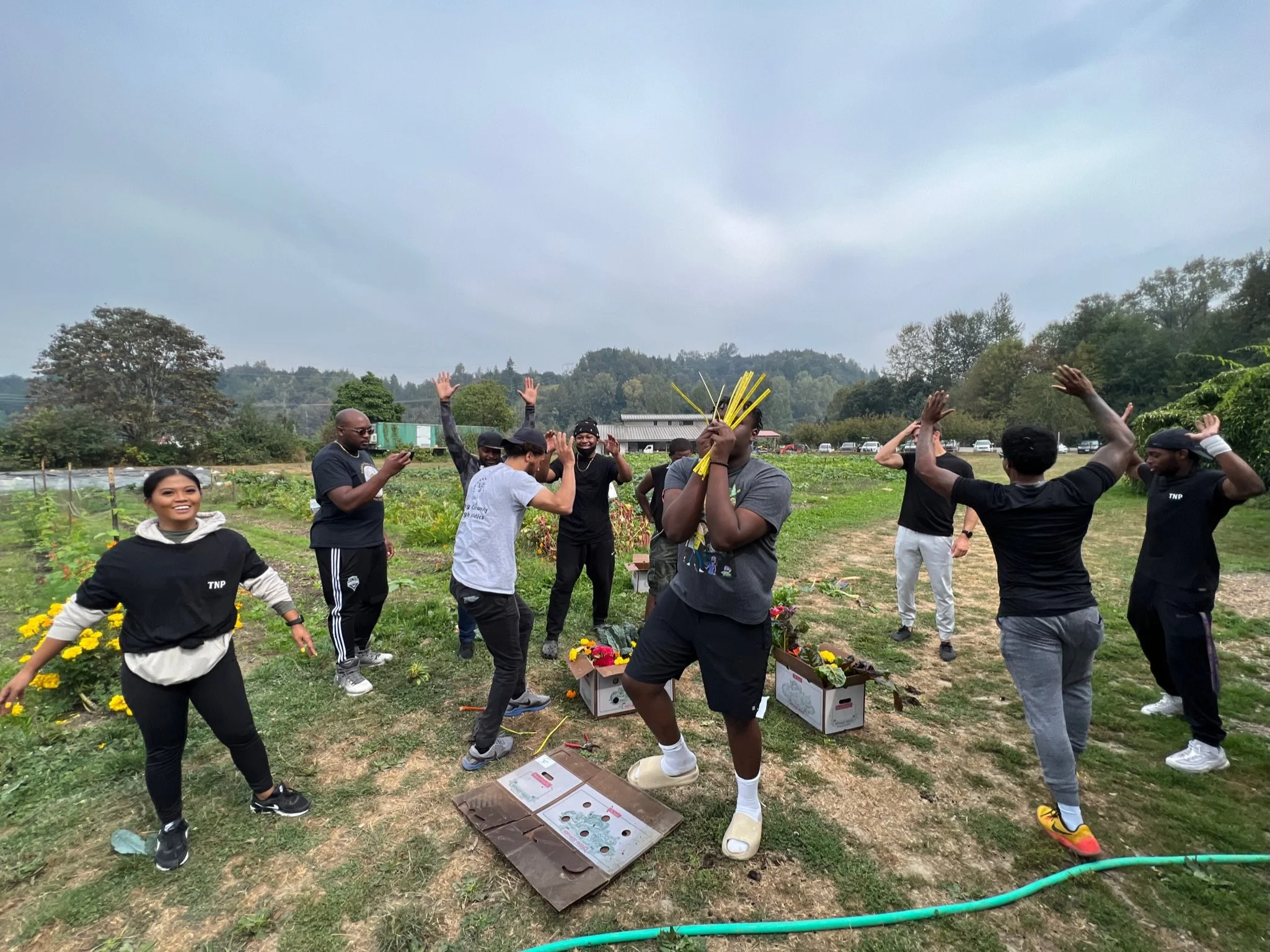
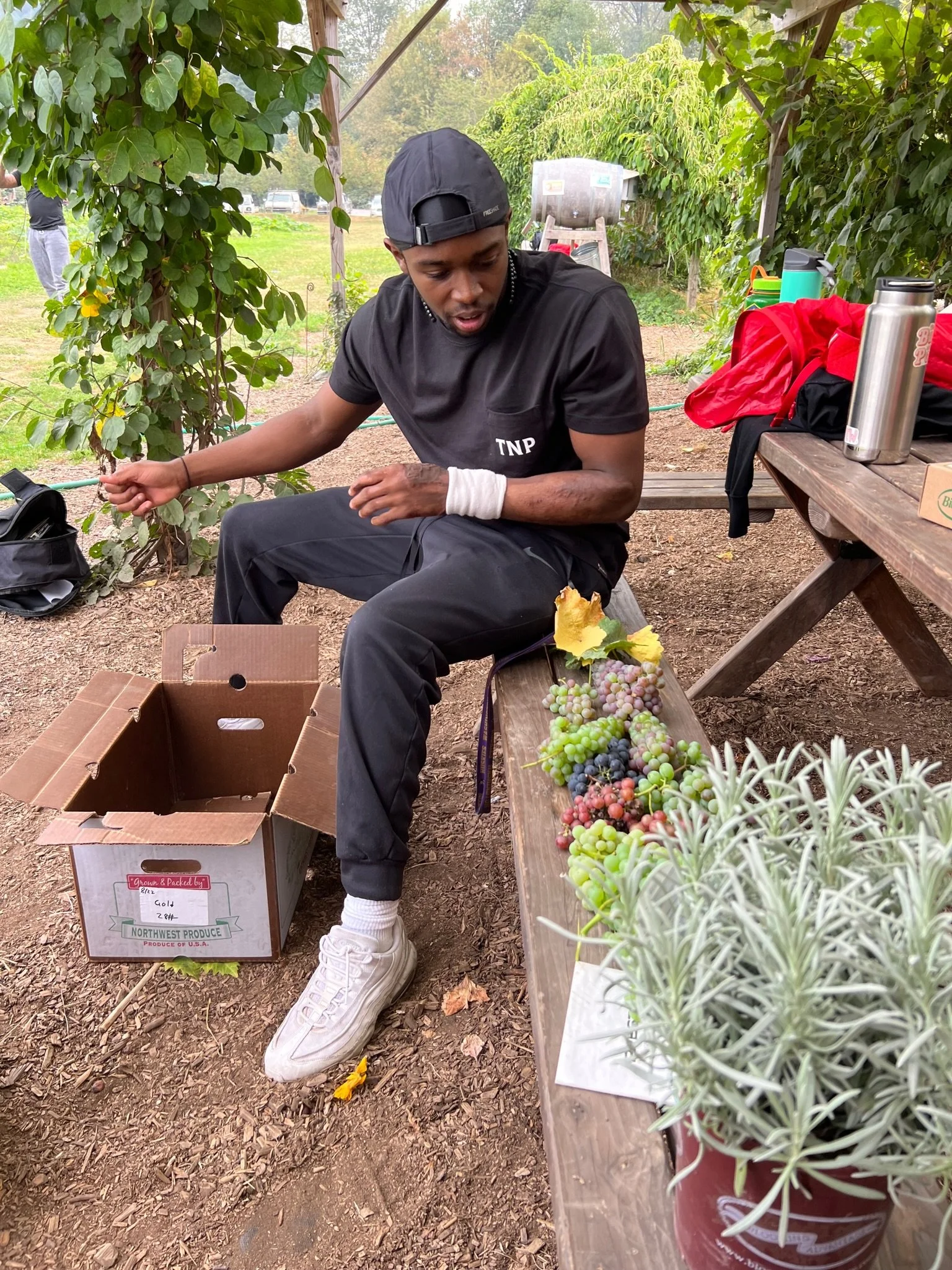
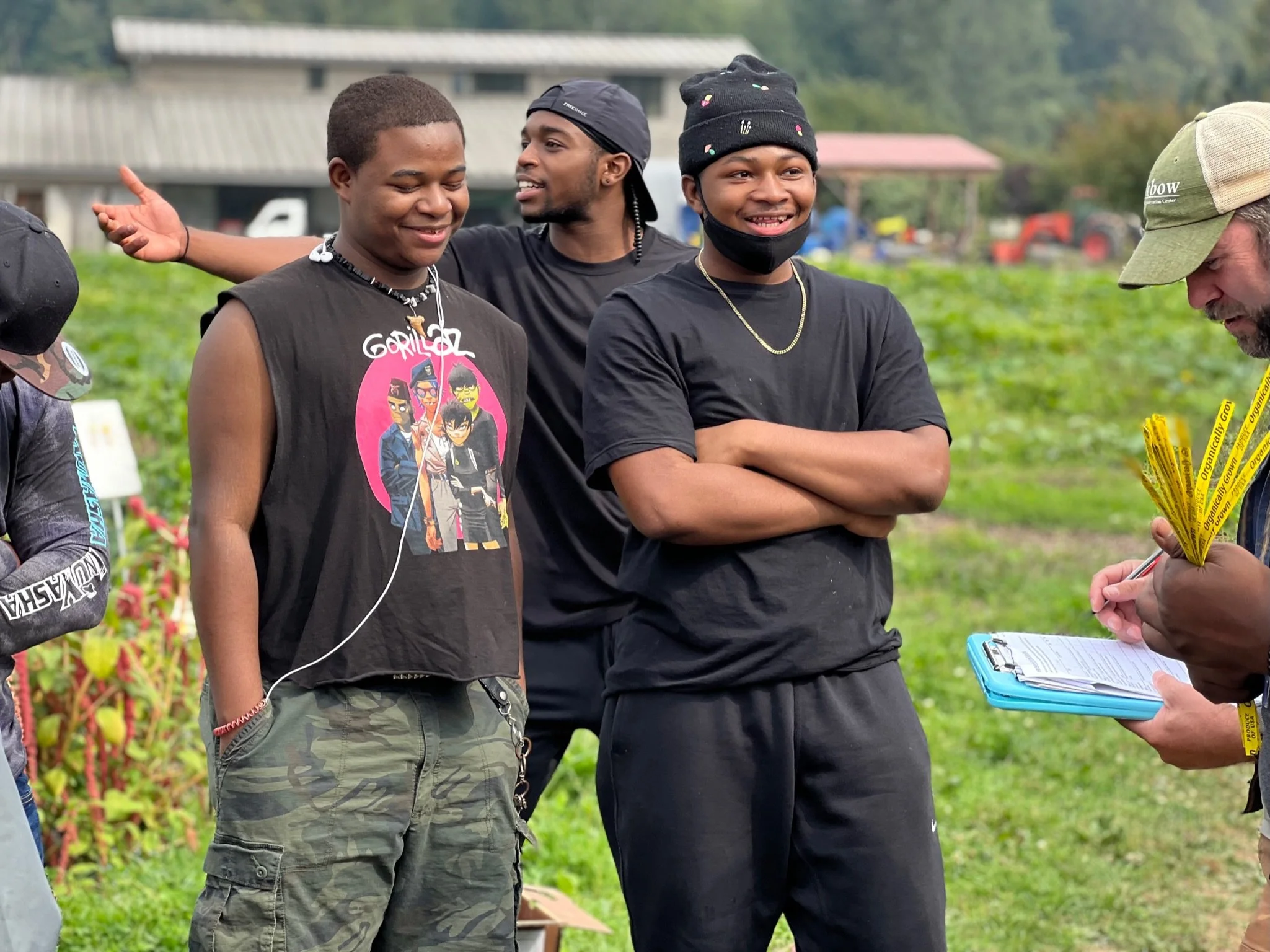
On October 4, The Nature Project brought teens from the Congolese Integration Network to Oxbow Farm for a full day of connection, culture, and nature. The day began in the greenhouse with TNP volunteer Angeline Corpuz leading the group in breathwork and mindset work, exploring how we talk to ourselves and setting intentions for the day. From there, the teens worked with Chef Sudeepa Prakesh to harvest vegetables and cook vegetarian curries, sharing a meal alongside TNP athletes who opened up about their own heritage, food traditions, and what culture means to them. In the orchard, everyone took part in a practice of releasing what's not serving them anymore, writing it on an apple and launching it with a slingshot, full of laughter and meaning. The day was rooted in the simple power of being in nature together, quiet and present, connected to the land, to each other, and to who they are. "Being out there in the quiet, cooking together, laughing in the orchard — you remember who you are. That's not something you forget."
TNP athletes joined the table and opened up, sharing their own stories of food, shared meals, and the traditions that shaped them. They reflected on their heritage, the dishes that carry memory, and what it means to hold onto that sense of identity wherever life takes you. Their honesty and openness made space for the teens to see themselves in those stories too.
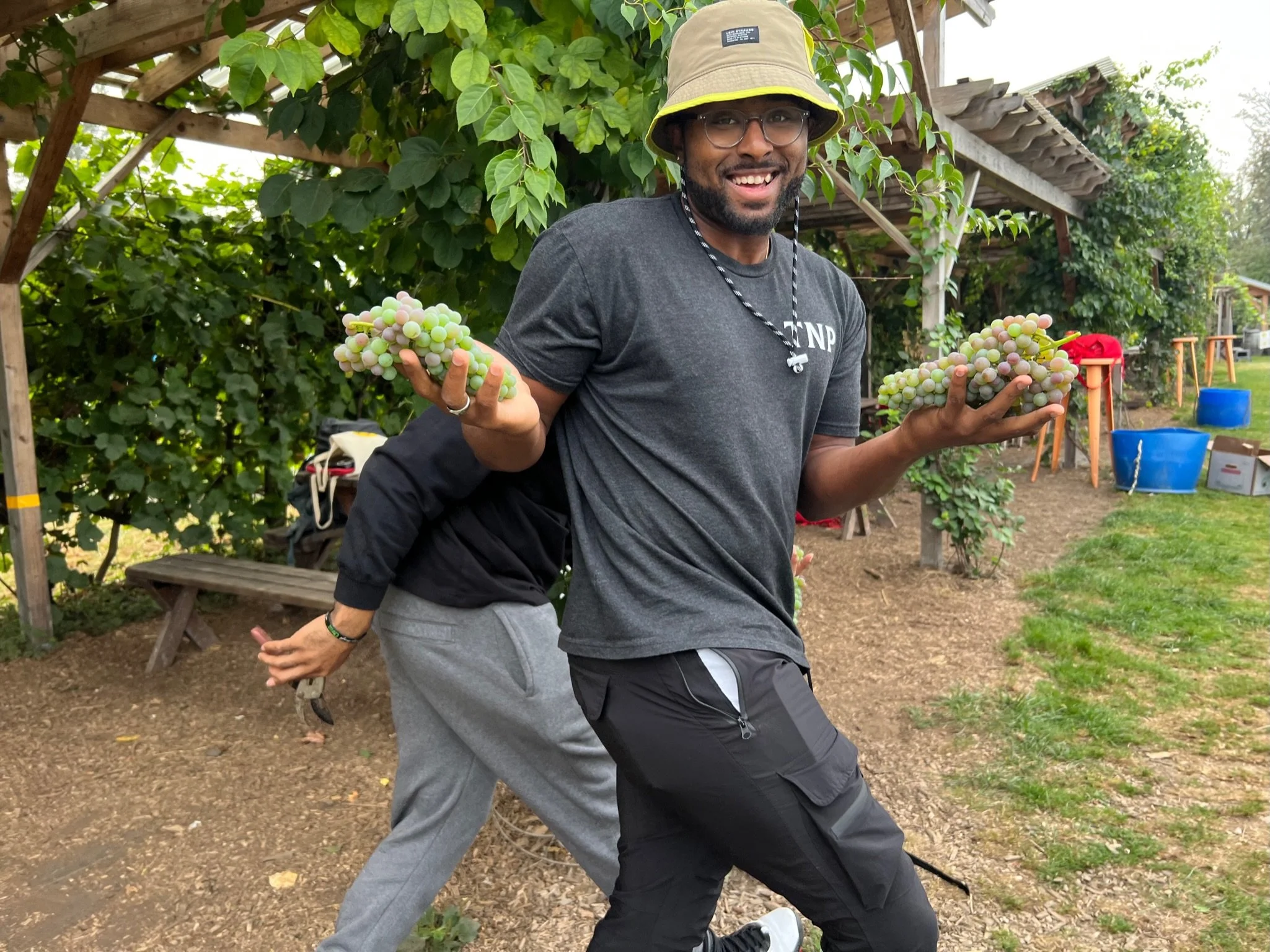
In the orchard, the group harvested apples and took part in a meaningful ritual: each person wrote on an apple something they no longer wanted to carry, something to release, and launched it with the big slingshot. Stress, sadness, fear were written in bold sharpie on the apples and launched far into the field. There were plenty of giggles and laughs, but the intention behind it was real.
Being out in nature, in the quiet and the peace, gave everyone space to connect: with the land, with each other, and with their own culture. That sense of belonging and rootedness was at the heart of the day.